
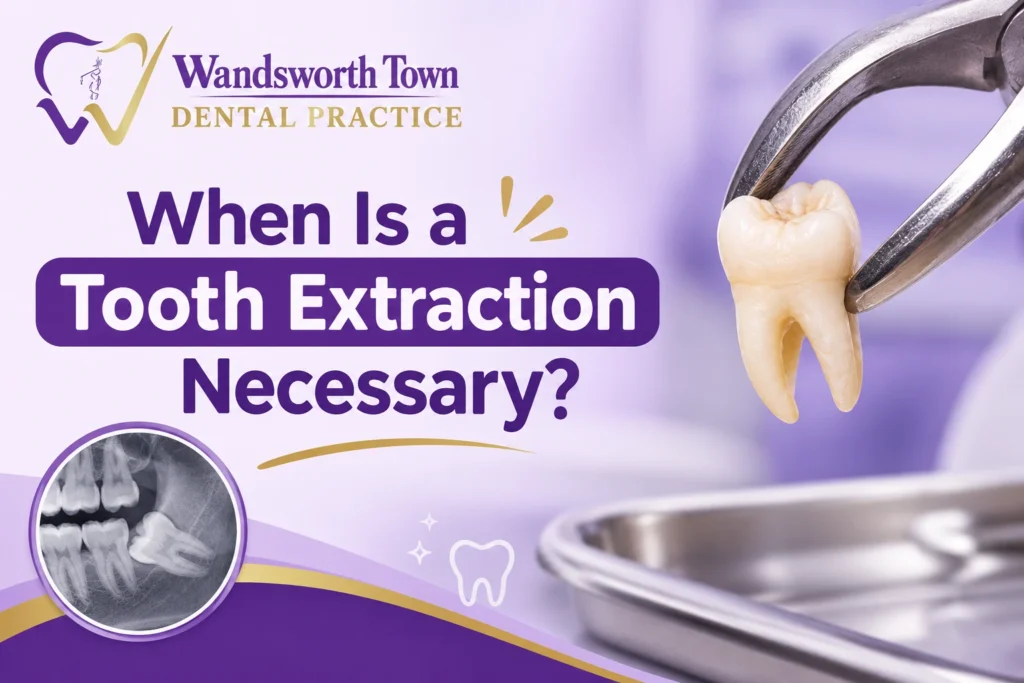
When Is a Tooth Extraction Necessary?
At Wandsworth Town Dental Practice, we always try to save your natural teeth first. However, sometimes removing a tooth is the safest choice for your health. In this guide, we explain when a tooth extraction is necessary, so you know what to expect.
Why Do We Try to Save Teeth First?
Your natural teeth help you chew, speak and smile with confidence. Therefore, we only suggest an extraction when other treatments will not work. For example, we may offer a filling, a crown or a root canal first. Even so, some teeth are too damaged or unhealthy to keep.
Common Reasons for a Tooth Extraction
1. Severe Tooth Decay
Decay starts small, but it can spread deep inside the tooth. Usually, a filling or root canal can fix the problem. Yet if the decay is too deep, the tooth cannot be repaired. As a result, removing it protects the teeth around it.
2. Gum Disease
Advanced gum disease damages the bone that holds your teeth in place. Over time, the teeth can become loose. In that case, extraction may be needed to stop the infection from spreading. Also, early treatment can often prevent this, so regular check-ups matter.
3. Tooth Infection or Abscess
A bad infection can cause pain, swelling and a bad taste in your mouth. Often, a root canal can clear it. However, if the tooth cannot be saved, we may need to remove it. Besides that, leaving an infection untreated can affect your general health.
4. Broken or Cracked Teeth
An accident or a hard bite can crack a tooth. Sometimes the crack is small and easy to repair. On the other hand, a break below the gum line often cannot be fixed. Consequently, extraction becomes the best option.
5. Impacted Wisdom Teeth
Wisdom teeth often do not have enough room to grow. Because of this, they can get stuck under the gum. They may then cause pain, swelling or infection. Furthermore, they can push on nearby teeth. For these reasons, many people have them removed.
6. Overcrowded Teeth
Sometimes your mouth is too small for all your teeth. In addition, orthodontic treatment, such as braces, may need extra space. Therefore, we may remove one or more teeth to help the rest line up properly.
7. Before Certain Medical Treatments
Some treatments, like radiotherapy or organ transplants, raise the risk of infection. Because of this, your medical team may ask for a dental check first. As a result, a weak tooth may be removed beforehand.
Signs You May Need an Extraction
Please book a visit if you notice any of these signs:
- Ongoing toothache that does not go away
- Swollen gums or face
- A loose adult tooth
- Pain when you bite or chew
- A bad taste or pus around a tooth
Meanwhile, do not wait for the pain to get worse. Early advice often makes treatment simpler.
What Happens During a Tooth Extraction?
First, your dentist checks your tooth and takes an X-ray. Next, we numb the area so you feel no pain. Then, we gently remove the tooth. Finally, we explain how to care for your mouth at home. Most people feel only light pressure during the visit.
Aftercare Tips
After your extraction, a few simple steps help you heal quickly:
- Rest for the first day.
- Avoid hot drinks and hard food at first.
- Do not rinse hard or use a straw.
- Keep brushing your other teeth gently.
Also, call us if the pain gets worse or the bleeding does not stop.
Replacing a Missing Tooth
After an extraction, you may want to fill the gap. Otherwise, nearby teeth can shift over time. Luckily, there are several choices, such as dental implants, bridges and dentures. Together, we can find the best fit for you.
Need a Tooth Extraction in Wandsworth?
Our friendly team at Wandsworth Town Dental Practice is here to help. We explain every step clearly, and we keep you comfortable throughout. If you have a painful or damaged tooth, please get in touch today. Book your appointment with Wandsworth Town Dental Practice and get the care you deserve.