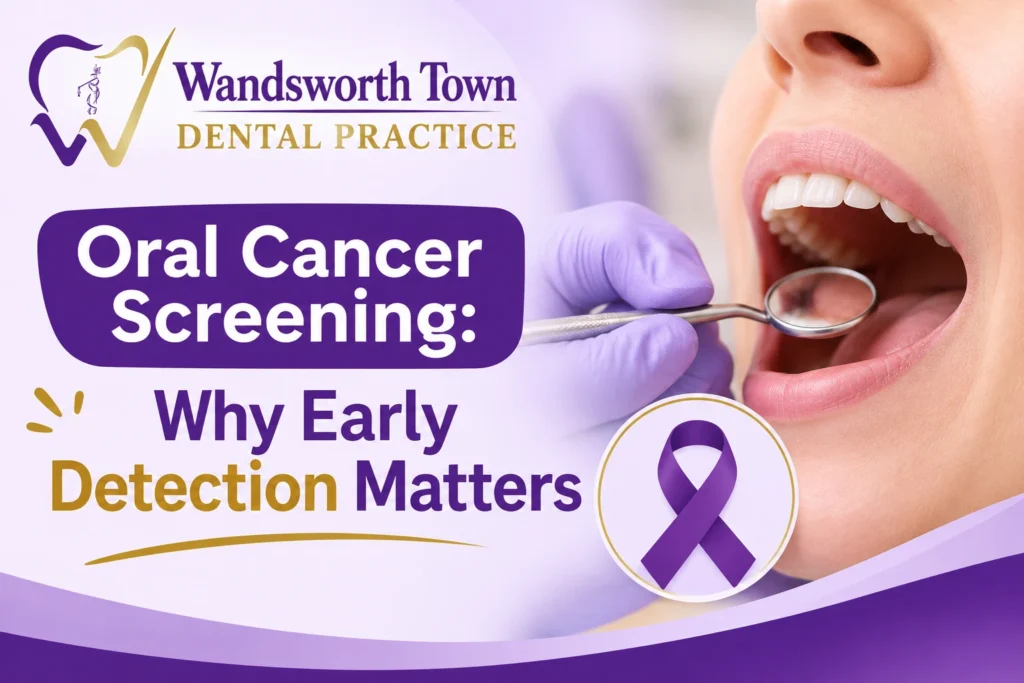
Oral Cancer Screening: Why Early Detection Matters
Oral cancer can affect different parts of the mouth, such as the lips, tongue, gums, cheeks and the area under the tongue. In the early stages, it may not cause pain or clear signs. Therefore, regular dental check-ups are important for keeping your mouth healthy.
Oral cancer screening helps dentists find unusual changes inside the mouth. Finding these changes early can help patients get the right medical advice and treatment sooner.
At Wandsworth Town Dental Practice, we encourage patients to visit their dentist regularly and talk about any unusual changes in their mouth. If you are looking for dental care in Wandsworth, learning about oral cancer screening is an important step towards better oral health.
What Is Oral Cancer Screening?
Oral cancer screening is a simple check of your mouth. It helps your dentist look for unusual signs that may need further attention.
During the check-up, your dentist will look at different areas of your mouth, including:
- Your lips and the inside of your cheeks
- Tongue and the sides of your tongue
- Your gums and the roof of your mouth
- The area under your tongue
- Your throat and nearby areas, if needed
Your dentist will look for unusual patches, sores, lumps, swelling or other changes inside your mouth.
If something looks unusual, your dentist may suggest more tests or refer you to a specialist. However, a screening cannot confirm cancer. A biopsy or other tests may be need to find out the cause.
Why Is Early Oral Cancer Detection Important?
Finding oral cancer early is important because treatment may be easier when the disease is found at an early stage.
Here are some reasons why regular oral cancer checks are important.
1. Helps Find Unusual Changes Early
Some early signs of oral cancer are difficult to notice. For example, a small white patch, red patch or painless sore may not seem serious.
However, your dentist can check these changes during a dental examination. This helps you get the right advice without delay.
2. Helps You Get Medical Advice on Time
If your dentist finds something unusual, they may suggest further tests or refer you to a specialist.
As a result, you can get the right medical care and avoid ignoring signs that may need attention.
3. Helps Keep Your Mouth Healthy
Regular dental check-ups are not only about checking your teeth and gums. Your dentist also checks the soft areas inside your mouth.
Therefore, routine dental visits help you look after your overall oral health.
4. Gives You Advice and Peace of Mind
Not every mouth ulcer, lump or patch is a sign of cancer. These changes can happen for many other reasons.
A dental check-up can help find the possible cause and let you know if you need further tests.
What Are the Common Signs of Oral Cancer?
Knowing the warning signs can help you take action at the right time.
Some common signs of oral cancer include:
- A mouth ulcer that does not heal within three weeks
- Red or white patches inside the mouth
- A lump or thick area inside the mouth or on the lips
- Bleeding in the mouth without a clear reason
- Pain that does not go away
- Difficulty chewing or swallowing food
- A sore throat that does not get better
- A hoarse voice that lasts for a long time
- Numbness in the mouth or lips
- A lump in the neck
However, these signs do not always mean you have oral cancer. They can also happen because of other health problems.
Important: If you have a mouth ulcer that lasts more than three weeks, a lump or any unusual change in your mouth, book an appointment with your dentist or GP. Do not wait for your next routine check-up.
What Are the Risk Factors for Oral Cancer?
Oral cancer can affect anyone. However, some habits and health conditions can increase the risk.
Tobacco Use
Smoking and using other tobacco products can increase the risk of oral cancer. The risk becomes higher when someone uses tobacco for many years.
Alcohol Consumption
Drinking too much alcohol regularly can also increase the risk of oral cancer.
Using tobacco and drinking alcohol together can increase this risk even more.
HPV Infection
Some types of Human Papillomavirus (HPV), especially HPV-16, are link to certain cancers in the mouth and throat.
Age
Oral cancer is more common in older adults. However, younger people can also develop it.
Previous Oral Cancer
People who have had oral cancer before may need regular dental checks and follow-up care.
Knowing these risk factors can help you make better choices and take care of your oral health.
What Happens During an Oral Cancer Screening?
Oral cancer screening is usually a quick and simple part of a dental check-up.
During your visit, your dentist may:
- Ask about your medical history and any problems you have noticed.
- Check your lips, cheeks, tongue, gums and other areas inside your mouth.
- Look for unusual sores, patches, lumps or swelling.
- Check your neck for any unusual lumps or swelling, if needed.
- Suggest further tests or a specialist visit if something needs more attention.
The check is usually quick and does not cause pain.
However, a normal screening result does not mean that oral cancer is completely ruled out. If you notice any new or unusual changes later, contact your dentist.
How Often Should You Have an Oral Cancer Screening?
An oral cancer check can be part of your regular dental examination.
The number of dental visits you need depends on your age, oral health, medical history and risk factors. Your dentist can suggest how often you should visit.
If you have a higher risk of oral cancer or notice unusual changes in your mouth, your dentist may suggest more checks or further tests.
How Can You Reduce the Risk of Oral Cancer?
You cannot prevent every case of oral cancer. However, some healthy habits may help lower your risk.
Here are a few simple steps:
- Stop smoking and avoid all tobacco products.
- Limit alcohol consumption.
- Ask your healthcare professional about HPV vaccination.
- Brush your teeth twice a day and keep your mouth clean.
- Eat a healthy diet with plenty of fruits and vegetables.
- Visit your dentist for regular check-ups.
- Check your mouth for unusual changes.
- Get advice about sores or patches that do not heal.
Most importantly, never ignore unusual changes in your mouth, even if they do not cause pain.
Oral Cancer Screening at Wandsworth Town Dental Practice
Taking care of your mouth involves more than brushing and flossing. Regular dental check-ups also help your dentist check the health of your mouth and look for unusual changes.
At Wandsworth Town Dental Practice, we encourage patients to attend regular dental check-ups and discuss any concerns about their oral health.
Whether you live in Wandsworth Town or nearby areas of London, regular dental visits can help you take better care of your teeth, gums and mouth.
If you notice a mouth ulcer that does not heal, an unusual patch, a lump or any other change, contact our dental practice for an appointment.
Book your dental check-up at Wandsworth Town Dental Practice and take a positive step towards better oral health.
Follow up Instagram and Facebook for more information.
Frequently Asked Questions (FAQs)
What is an oral cancer screening?
Oral cancer screening is a check of your mouth. Your dentist looks for unusual signs such as lumps, sores, red patches or white patches that may need further tests.
Is oral cancer screening painful?
No. A normal mouth check is quick and painless. Your dentist may also gently feel certain areas of your mouth or neck to check for lumps.
How long does an oral cancer screening take?
Therefore, an oral cancer check usually takes just a few minutes and can be done as part of your regular dental check-up. The time may vary depending on your needs.
Can a dentist find oral cancer early?
Yes. A dentist can notice unusual changes that may be early signs of oral cancer. However, a dental screening cannot confirm cancer. Further tests, such as a biopsy, may be needed.
What are the early signs of oral cancer?
Some early signs include a mouth ulcer lasting more than three weeks, red or white patches, unusual lumps, mouth pain or difficulty swallowing.
Who should have an oral cancer screening?
Adults can discuss oral cancer checks during their regular dental visits. People who smoke, use tobacco or drink too much alcohol should pay special attention to changes in their mouth.
When should I visit a dentist for a mouth ulcer?
If your mouth ulcer does not heal within three weeks, visit a dentist or GP. You should also get advice if you notice a lump, unexplained bleeding or difficulty swallowing.