
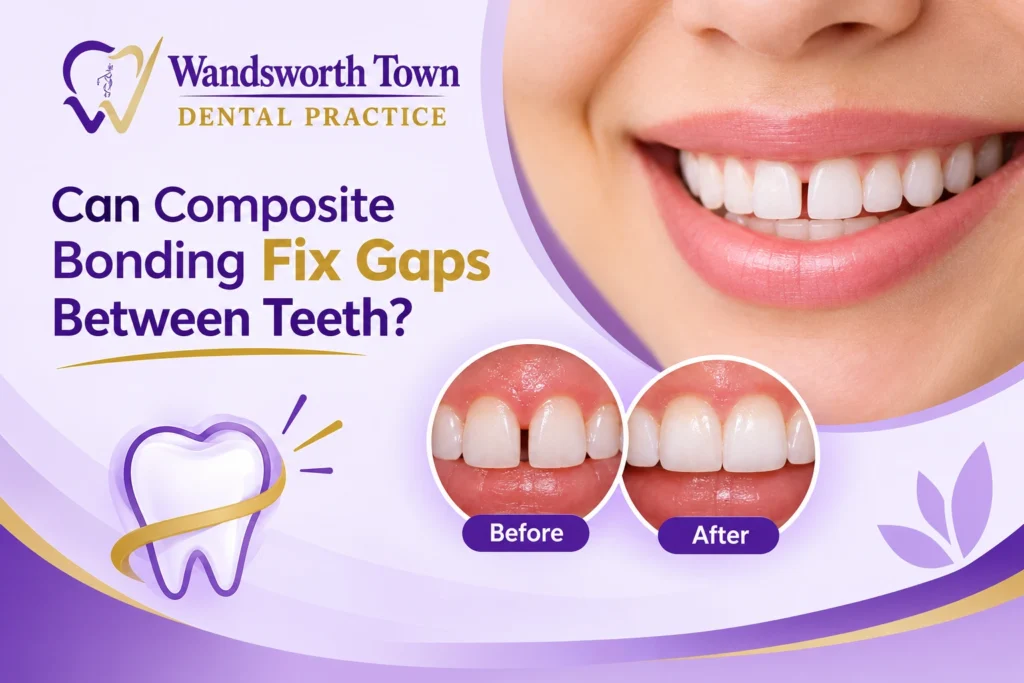
Can Composite Bonding Fix Gaps Between Teeth?
Introduction
Gaps between teeth can change the look of your smile. Some people naturally have gaps between their teeth, while others develop them over time. However, modern cosmetic dental treatments can help close these gaps and make your smile look better.
Composite bonding can help close small gaps between teeth. It usually needs little or no preparation of your teeth. The dentist applies a tooth-coloured material to fill the gaps and improve the shape and look of your teeth.
At Wandsworth Town Dental Practice, we want you to understand your dental treatment options. This helps you make the right choice for your teeth. However, the best treatment depends on the condition of your teeth, gums, and overall dental health.
What Is Composite Bonding?
Composite bonding is a cosmetic dental treatment that uses a tooth-coloured material called composite resin. The dentist applies it to your teeth and shapes it to improve their look.
For example, composite bonding can help:
- Close small gaps between teeth.
- Repair chipped or slightly damaged teeth.
- Improve uneven tooth shapes.
- Make teeth look more balanced.
- Create a more even-looking smile.
The resin can also be match to the natural colour of your teeth. As a result, your teeth can look more natural after treatment.
How Does Composite Bonding Fix Gaps Between Teeth?
Composite bonding works by adding a small amount of resin to the teeth next to a gap. The dentist shapes the resin carefully to make the gap smaller or close it completely.
Here is how the treatment usually works.
1. Dental Assessment
First, the dentist checks your teeth and gums. They look at the size of the gap, the shape of your teeth, and how your teeth fit together when you bite. This helps them decide if composite bonding is right for you.
2. Choosing the Right Shade
Next, the dentist chooses a resin colour that matches your natural teeth. This helps the treated teeth blend in with the rest of your smile.
3. Applying the Composite Resin
The dentist prepares the tooth surface if needed and applies the composite resin. Then, they shape it carefully to make the gap smaller and improve the shape of your teeth.
4. Hardening and Polishing
A special dental light hardens the resin. Finally, the dentist polishes the material and checks the shape, bite, and finish.
As a result, small gaps can often be treated with little tooth preparation. The treatment time depends on how many teeth need bonding and how complex the case is.
Which Types of Tooth Gaps Can Composite Bonding Fix?
Composite bonding may be suitable for several types of small gaps.
Small Gaps Between Front Teeth
Small gaps between the front teeth are a common reason for choosing composite bonding. The dentist adds resin to the teeth next to the gap to make the space less visible.
Gaps Caused by Tooth Shape
Sometimes, teeth are naturally narrow or have uneven edges. Composite bonding can help improve their shape and make the gaps between them smaller.
Small Spaces Between Multiple Teeth
Composite bonding can also help close several small gaps between teeth. However, the dentist must check the size and shape of all your teeth to help create a natural and balanced smile.
Important: Composite bonding does not move teeth into a new position. Larger gaps or spaces caused by significant tooth misalignment may require orthodontic treatment instead.
What Are the Benefits of Composite Bonding?
Composite bonding offers several potential benefits for suitable patients.
- Natural appearance: The resin can be match to the colour of your teeth.
- Conservative treatment: Little or no tooth structure may need to be removed in suitable cases.
- Improved smile appearance: Bonding can make small gaps less noticeable.
- Repairable material: Minor chips or damage can sometimes be repaired.
- Convenient treatment: Many straightforward cases can be complete in one appointment.
However, the resin can chip, wear down, or become stained over time. Therefore, regular dental check-ups and good oral hygiene are important to keep your teeth healthy and maintain your results.
Is Composite Bonding Suitable for Everyone?
No. Composite bonding can help close many small gaps between teeth. However, it may not be the right choice for everyone.
Your dentist may recommend another treatment if:
- The gap is too large to close naturally with resin.
- Your teeth are significantly crook or misalign.
- You have untreated tooth decay or active gum disease.
- Your bite places excessive pressure on the bonded teeth.
- The teeth would look too wide after the gap is close.
Also, if a gap between your adult teeth is new or getting bigger, a dentist should check it before cosmetic treatment. This may be a sign of gum disease or a change in the position of your teeth.
Therefore, your dentist will check what is causing the gap and explain which treatment is best for your teeth.
What Are the Alternatives to Composite Bonding?
However, if composite bonding is not suitable, other treatments may help improve the appearance or position of your teeth.
Braces or Clear Aligners
Furthermore, orthodontic treatment gradually moves teeth into a better position. Therefore, it may be more suitable for larger gaps, several spaces, or problems with tooth alignment.
Porcelain Veneers
Veneers are thin coverings attach to the front surfaces of teeth. They may improve tooth shape and appearance in selected cases, but treatment can involve permanent removal of some enamel.
A Combined Treatment Approach
In some cases, your dentist may recommend orthodontic treatment followed by composite bonding. This approach can help correct tooth positions first and then refine the final appearance.
Overall, the best treatment option depends on your dental health, personal goals, and your dentist’s clinical assessment.
How Can You Care for Composite Bonding?
Good aftercare helps keep bonded teeth looking their best.
Follow these simple tips:
- Brush twice daily with fluoride toothpaste.
- Clean between your teeth every day.
- Attend regular dental check-ups.
- Avoid biting hard objects or using your teeth to open packaging.
- Avoid nail-biting and chewing pens.
- Ask your dentist about protection if you grind your teeth.
Also, remember that composite resin does not respond to whitening treatment in the same way as natural teeth. Therefore, if you are considering teeth whitening, discuss the correct order of treatment with your dentist.
Is Composite Bonding Available on the NHS?
Composite bonding use purely to improve the appearance of teeth is generally not available on the NHS.
However, restorative treatment may be available on the NHS when it is clinically necessary. Eligibility depends on the dental problem and the treatment required.
If you are considering closing a gap between your teeth, ask your dentist about the available options and any associated costs before starting treatment.
Conclusion
Composite bonding can be an effective way to reduce small gaps between teeth and improve the appearance of your smile. It offers a conservative option for suitable patients, although larger gaps and alignment problems may need a different approach.
Therefore, the first step is to understand why the gap has developed and which treatment can provide a healthy, natural-looking result.
Thinking about improving your smile? Contact Wandsworth Town Dental Practice to discuss your concerns and arrange a dental assessment. Our team can help you understand your treatment options and decide on the next steps for your dental care.
Follow up Instagram and Facebook for more information.
Frequently Asked Questions
Can composite bonding close a gap between two front teeth?
Yes. Composite bonding can often close or reduce a small gap between the front teeth. However, suitability depends on the gap size, tooth proportions, gum health, and bite.
Does composite bonding look natural?
Yes. When carefully planned and shaped, composite bonding can blend with your natural teeth. The dentist selects a suitable shade and creates a shape that complements your smile.
Is composite bonding painful?
Composite bonding is generally comfortable and often requires little or no tooth preparation. However, your experience depends on your individual dental condition and the procedure needed.
How long does composite bonding last?
Composite bonding can last several years, but its lifespan varies. Oral hygiene, biting habits, grinding, and regular dental care can all affect how long it lasts.
Can large gaps be fix with composite bonding?
Some larger gaps may be improve with bonding, but simply adding resin can make teeth look too wide. Your dentist may recommend braces, clear aligners, or a combination of treatments.
Can composite bonding damage natural teeth?
Composite bonding is a conservative option in many cases. However, some preparation may be require, and the suitability of treatment depends on the condition of your teeth. Your dentist can explain the benefits and limitations before proceeding.