
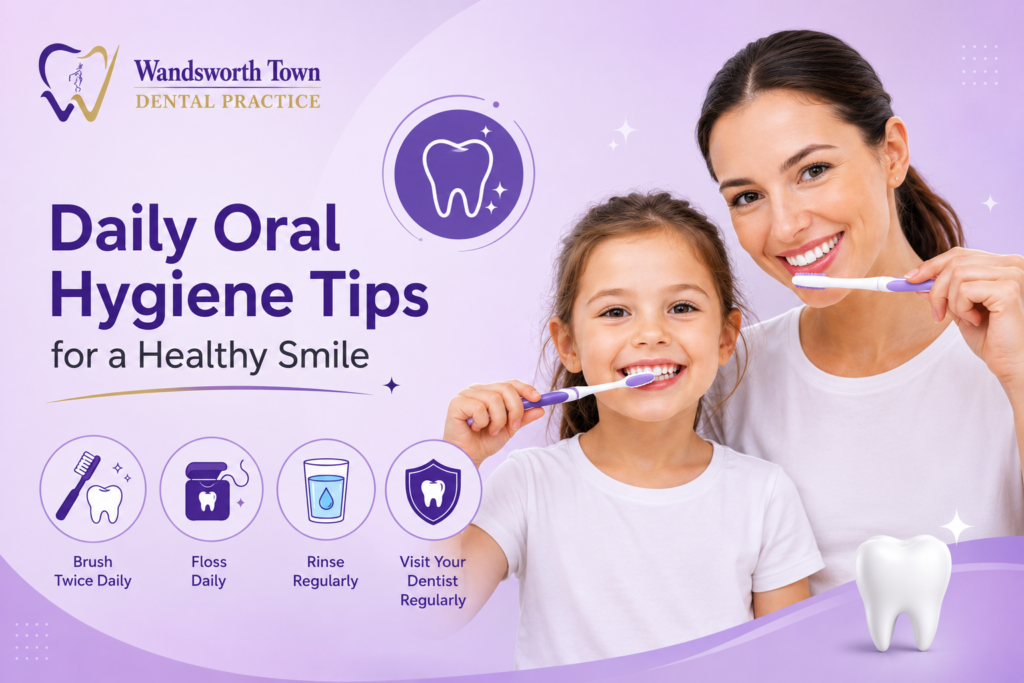
Daily Oral Hygiene Tips for a Healthy Smile
A healthy smile starts with a consistent daily oral hygiene routine. While regular dental check-ups are important, what you do at home every day plays the biggest role in protecting your teeth and gums. Simple habits such as brushing correctly, flossing daily, and eating a balanced diet can help prevent cavities, gum disease, and bad breath.
At Wandsworth Town Dental Practice, we encourage patients of all ages to follow good oral hygiene practices to maintain strong teeth and healthy gums. In this guide, you’ll discover practical daily oral hygiene tips that can help you maintain a healthy, confident smile for years to come.
Why Is Daily Oral Hygiene Important?
Your mouth naturally contains bacteria. Throughout the day, these bacteria combine with food particles and saliva to form sticky layer of germs, a sticky film that builds up on your teeth. Over time, if plaque isn’t remove regularly, it can harden into sticky layer of germs, increasing your risk of tooth decay and gum disease.
A proper daily oral hygiene helps:
- Prevent cavities
- Less plaque build-up
- Protect your gums
- Prevent bad breath
- Maintain a bright smile
- Lower the risk of oral infections
- Support your overall health
- Healthy teeth and gums also contribute to better eating, speaking, and confidence.
Brush Your Teeth Twice Every Day
Brushing is the foundation of good oral hygiene. Dentists advice brushing your teeth twice a day for at least two minutes using fluoride toothpaste.
Tips for Better Brushing
- Use a soft-bristled toothbrush.
- Hold the brush at a 45-degree angle to your gums.
- Brush all tooth surfaces gently.
- Clean your tongue to remove bacteria.
- Most importantly, replace your toothbrush every three months or sooner if the bristles become frayed or worn.
Brushing regularly removes plaque before it causes damage.
Use Fluoride Toothpaste
Additionally, fluoride strengthens tooth enamel and helps protect against cavities.
When choosing toothpaste:
- Look for fluoride as an active ingredient.
- Use a pea-sized amount for adults.
- Supervise young children during brushing.
- Ignore rinsing quickly after brushing to allow fluoride to remain on your teeth longer.
Most importantly, fluoride is one of the most effective ways to less tooth decay.
Don’t Skip Flossing
However, your toothbrush cannot reach the tight spaces between your teeth. Furthermore, flossing removes plaque and food particles that your toothbrush cannot reach.
Daily flossing helps:
- Prevent gum disease
- Less bad breath
- Lower the risk of cavities between teeth
- Keep gums healthy
If traditional floss feels difficult, then consider using floss picks or interdental brushes as advisor by your dentist.
Clean Your Tongue
Many people forget to clean their tongue, yet it can hold bacteria that contribute to bad breath.
Use:
- A tongue scraper
- The back of your toothbrush
- A soft toothbrush
Cleaning your tongue every day helps change your breath and supports overall daily oral hygiene.
Rinse with Mouthwash
A fluoride or antibacterial mouthwash provides additional protection after brushing and flossing.
Mouthwash can:
- Reduce harmful bacteria
- Freshen breath
- Strengthen enamel
- Help prevent gum disease
However, mouthwash should never replace brushing or flossing.
Drink Plenty of Water
Water naturally helps wash away food particles and bacteria throughout the day.
Drinking water also:
- Less dry mouth
- Supports saliva production
- Helps protect enamel
- Neutralises acids after meals
Whenever possible, choose water instead of sugary drinks.
Eat Foods That Support Healthy Teeth
Your diet has a significant impact on your oral health.
Choose foods such as:
- Cheese
- Yogurt
- Milk
- Leafy green vegetables
- Apples
- Carrots
- Celery
- Nuts
- Lean proteins
Additionally, these foods provide calcium, vitamins, and minerals that make your teeth and gums are stronger.
Limit Sugary Foods and Drinks
In fact, sugar feeds harmful bacteria that produce acids capable of damaging tooth enamel.
Try to less :
- Fizzy drinks
- Sweets
- Cakes
- Biscuits
- Sticky snacks
- Sugary coffee drinks
If you enjoy sugary treats, have them with meals rather than frequent snacks throughout the day.
Ignore Smoking and Tobacco
Smoking increases your risk of:
- Gum disease
- Tooth loss
- Stained teeth
- Bad breath
- Oral cancer
Quitting smoking changes both your oral health and your general wellbeing.
Protect Your Teeth from Damage
Daily oral hygiene can also prevent unnecessary tooth wear and injury.
Avoid:
- Chewing ice
- Opening packages with your teeth
- Biting hard objects
- Grinding your teeth without protection
Most importantly, if you play contact sports, wear a professionally fitted mouthguard to protect your teeth from injury.
Replace Your Toothbrush Regularly
Over time, old toothbrushes become less effective at removing plaque.
Replace your toothbrush:
- Every three months
- After recovering from illness
- When bristles become frayed
Electric toothbrush heads should also be replace according to the manufacturer’s guidance.
Visit Your Dentist Regularly
However, even with excellent home care, professional dental examinations remain essential.
Routine dental visits allow your dentist to:
- Detect problems early
- Remove tartar build-up
- Monitor gum health
- Check for signs of oral disease
- Provide personalised oral hygiene advice
Preventive care helps maintain a healthy smile while less the need for more extensive treatment later.
Encourage Daily Good Oral Hygiene in Children
Healthy habits begin early.
Help children by:
- Supervising brushing until they can brush effectively.
- Using age-appropriate fluoride toothpaste.
- Limiting sugary snacks.
- Scheduling regular dental check-ups.
- Making brushing fun and consistent.
Most importantly, establishing good habits early supports lifelong oral health.
Signs Your Daily Oral Hygiene Routine May Need Improvement
Speak with your dentist if you notice:
- Bleeding gums
- Persistent bad breath
- Tooth sensitivity
- Swollen gums
- Tooth pain
- Loose teeth
- Frequent mouth ulcers
Additionally, early treatment can prevent more serious dental problems and less the need for complex procedures.
Simple Daily Oral Hygiene Checklist
Follow these daily habits for a healthier smile:
- Brush twice daily for two minutes.
- Use fluoride toothpaste.
- Floss once every day.
- Clean your tongue.
- Drink plenty of water.
- Eat a balanced, low-sugar diet.
- Ignore smoking.
- Replace your toothbrush regularly.
- Visit your dentist for routine check-ups.
Small daily actions make a lasting difference to your oral health.
Conclusion
Fortunately, maintaining good oral hygiene doesn’t require complicated routines. Most importantly, by brushing correctly, flossing daily, eating a balanced diet, and attending regular dental appointments, you can greatly less your risk of tooth decay and gum disease. Ultimately, consistency is the key to protecting your smile and maintaining excellent oral health for years to come.
At Wandsworth Town Dental Practice, we’re committed to helping you achieve and maintain a healthy, confident smile. Whether you need preventive care, professional cleaning, or personalised oral hygiene advice, our experienced team is here to support you every step of the way. Follow up Instagram and Facebook for more information.