
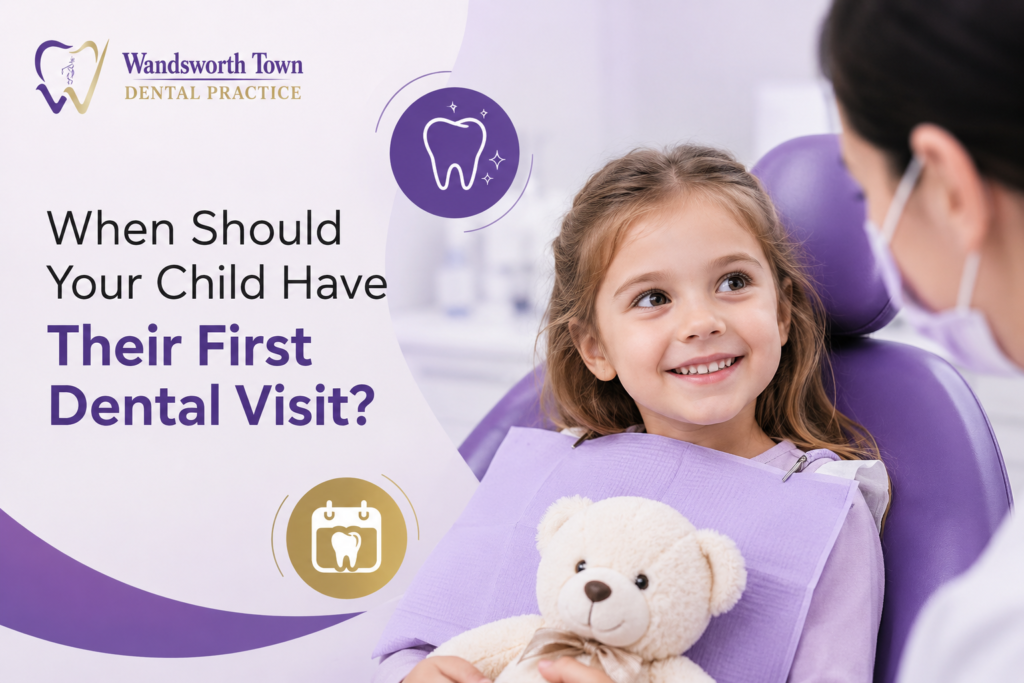
When Should Your Child First Dental Visit?
Many parents wonder, “When should my child have their first dental visit?” It is a common question, especially for first-time parents. Although baby teeth are temporary, they play an important role in your child’s oral health, speech, and eating habits. Therefore, starting dental care early helps prevent problems before they become serious.
Dental experts recommend scheduling your child’s first dental appointment by their first birthday or within six months after the first tooth appears, whichever comes first. Early visits help your child become comfortable with the dentist while allowing any concerns to be identify at an early stage.
At Wandsworth Town Dental Practice, we believe that positive dental experiences during childhood help create healthy habits that last a lifetime.
Why Are Baby Teeth So Important?
Some parents think baby teeth do not need much care because they eventually fall out. However, baby teeth have several important jobs.
They help your child:
- Chew food properly
- Learn to speak clearly
- Hold space for permanent teeth
- Develop healthy jaw growth
- Build confidence with a healthy smile
Furthermore, if baby teeth become damaged or develop cavities, they can cause pain, infections, and problems with the development of future adult teeth.
When Should You Book the Child First Dental Visit?
The British Society of Paediatric Dentistry and many dental professionals recommend that children visit the dentist:
- By 12 months of age
- Within 6 months of the first tooth erupting
- Earlier if you notice any concerns
Even if your child only has one or two teeth, the first visit is worthwhile.
Benefits of an Early Dental Visit
Helps Prevent Tooth Decay
Tooth decay is one of the most common childhood health conditions. Fortunately, early dental check-ups can identify problems before they become painful.
The dentist can also provide advice about:
- Proper brushing techniques
- Tooth-friendly foods
- Healthy feeding habits
- Fluoride use
- Bottle and dummy habits
Creates Positive Dental Experiences
Children who visit the dentist from an early age often feel more relaxed during future appointments.
Instead of only visiting when there is pain, they learn that dental visits are routine, safe, and comfortable.
As a result, they are less likely to develop dental anxiety later in life.
Monitors Healthy Tooth Development
Every child develops differently. During the first appointment, the dentist checks whether your child’s teeth, gums, and jaw are developing normally.
They will also monitor:
- Tooth eruption
- Bite development
- Jaw growth
- Gum health
- Early signs of oral conditions
Gives Parents Professional Advice
Parents often have many questions about caring for their child’s teeth.
Your dentist can offer guidance on:
- When to start brushing
- Which toothbrush to use
- How much toothpaste is appropriate
- Thumb sucking
- Dummy use
- Healthy snacks
- Preventing cavities
What Happens During the First Dental Visit?
The first appointment is usually short, gentle, and relaxed.
The dentist may:
- Count your child’s teeth
- Check the gums and mouth
- Look for signs of decay
- Examine jaw development
- Discuss home dental care
- Answer your questions
Most first visits focus on helping your child feel comfortable rather than providing treatment.
How Can You Prepare Your Child?
Preparing your child before the appointment can make the visit easier.
You can:
- Talk positively about the dentist.
- Read children’s books about dental visits.
- Schedule appointments when your child is well-rest.
- Bring their favourite toy or comfort item.
- Stay calm and encouraging.
Avoid using words like “pain,” “needle,” or “hurt,” as these may create unnecessary fear.
Daily Dental Care Tips for Young Children
Healthy habits begin at home.
Brush Twice Every Day
Use a soft children’s toothbrush and a fluoride toothpaste suitable for your child’s age.
Parents should supervise brushing until children can brush effectively on their own.
Limit Sugary Foods and Drinks
Frequent sugary snacks increase the risk of tooth decay.
Instead, choose healthier options such as:
- Cheese
- Plain yoghurt
- Fresh fruit
- Vegetables
- Water
- Milk
Avoid Bedtime Bottles
Additionally, putting your child to bed with milk or juice can increase the risk of early childhood tooth decay.
Water is the safest bedtime drink after brushing.
Attend Regular Dental Check-Ups
Additionally, regular dental visits allow the dentist to monitor your child’s oral health and provide preventive care as they grow.
Signs Your Child Should See a Dentist Sooner
Although regular visits are recommend, book an appointment promptly if your child has:
- Tooth pain
- Swollen gums
- White or brown spots on teeth
- Broken or chipped teeth
- Mouth injuries
- Difficulty eating
- Persistent bad breath
Early treatment often prevents more complex dental problems.
Frequently Asked Questions
Does my baby need a dentist if they only have one tooth?
Yes. Dental professionals recommend visiting the dentist once the first tooth appears or by your child’s first birthday.
Is the first dental visit painful?
No. In fact, the first appointment is usually a gentle examination design to help your child feel comfortable.
How long does the first appointment take?
In most cases, first dental visits last around 15 to 30 minutes, depending on your child’s needs.
Should I brush my baby's teeth every day?
Yes. Brush twice daily using a soft toothbrush and a small amount of fluoride toothpaste appropriate for your child’s age.
How often should children visit the dentist?
Your dentist will recommend a schedule based on your child’s oral health, but regular check-ups every six to twelve months are common for many children.