
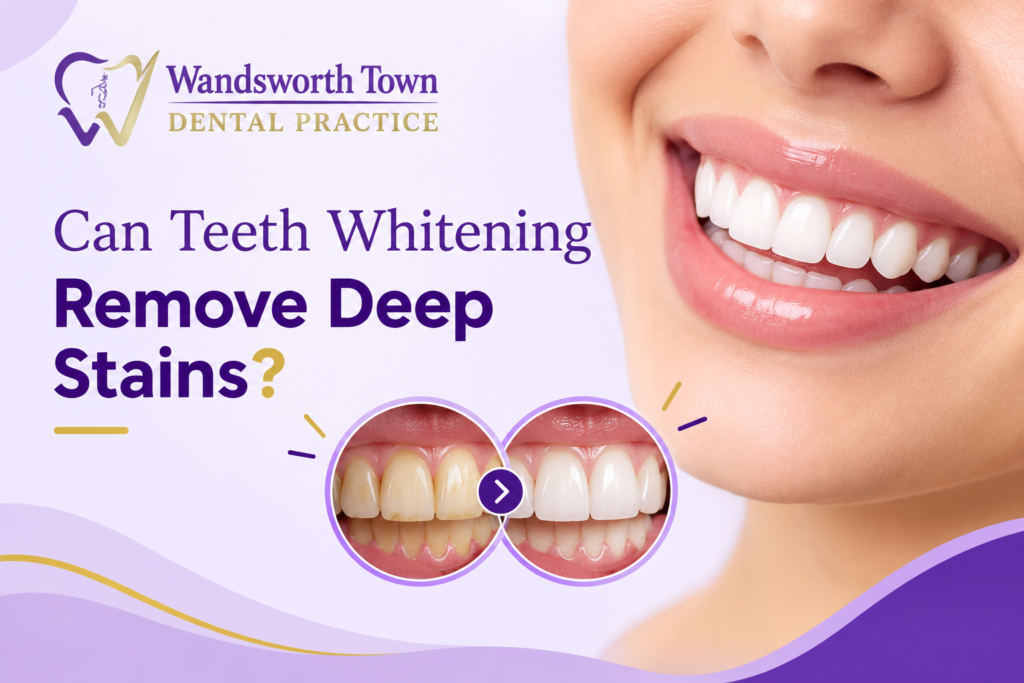
Can Teeth Whitening Remove Stains?
A bright smile can help you feel more confident. However, deep stains on your teeth may make you feel less happy with your smile. These stains can happen due to ageing, smoking, certain foods and drinks, or changes inside your teeth.
Many people ask, can teeth whitening remove deep stains? The answer depends on what causes the stains. Professional teeth whitening can help remove many types of tooth stains. However, some deep stains may need other dental treatments.
In this guide, we explain how teeth whitening works, which stains it can remove, and when you may need a different dental treatment.
What Causes Deep Stains on Teeth?
Tooth stains can appear on the outside or inside of your teeth. Knowing what causes the stains helps your dentist choose the right treatment.
Common causes include:
- Tea and coffee: Regular consumption can cause brown or yellow stains.
- Red wine and dark-coloured foods: These can contribute to surface discolouration over time.
- Smoking: Tobacco can leave stubborn yellow or brown stains.
- Ageing: Teeth may become darker as the outer enamel wears down and the underlying dentine becomes more visible.
- Certain medicines: Some medications can affect tooth colour, particularly during tooth development.
- Dental trauma: An injury may cause a tooth to become darker from within.
- Fluorosis: Excess fluoride exposure while teeth develop can cause white marks or, in more severe cases, brown discolouration.
So, finding out what causes the stain is the first step before choosing the right teeth whitening treatment.
Can Teeth Whitening Remove Deep Stains?
Yes, professional teeth whitening can improve some deep stains. However, it may not remove all types of tooth discolouration.
Teeth whitening products use bleaching agents, such as hydrogen peroxide or carbamide peroxide, to make natural teeth look whiter. These agents can help lighten some stains inside the tooth, not just marks on the surface.
However, the results depend on several factors:
- Type of stain: Yellow and brown discolouration may respond better than some grey or medication-related stains.
- Depth of the stain: Deeper discolouration may need longer treatment or an alternative approach.
- Tooth condition: Existing fillings, crowns, veneers, and other restorations do not whiten in the same way as natural teeth.
- Cause of the discolouration: Stains caused by injury or changes inside a tooth may need specific dental treatment.
Therefore, your dentist should check your teeth before recommending whitening. This helps ensure the treatment is right for you and gives you a clear idea of the results you can expect.
What Types of Stains Can Teeth Whitening Treat?
Professional teeth whitening can help make several types of tooth stains look lighter.
1. Surface Stains
Surface stains form on the outer layer of your teeth due to tea, coffee, red wine, smoking, and certain foods. Professional dental cleaning can help remove some surface stains and deposits.
If your teeth still look stained after cleaning, whitening may help make their natural colour lighter.
2. Yellow Teeth Caused by Ageing
Teeth often become more yellow as you get older. This is because the outer layer of your teeth (enamel) wears down over time, allowing the darker layer underneath (dentine) to show through.
Professional teeth whitening may help make these stains look lighter. However, the results can vary from person to person.
3. Deep Brown Stains
Brown stains can develop due to smoking, certain medicines, too much fluoride during tooth development, or other reasons. Whitening may lighten some brown stains, but others may not disappear completely.
Your dentist can assess the type of staining and discuss suitable treatment options.
4. Grey or Medication-Related Stains
Grey stains and stains caused by certain medicines can be harder to treat. Teeth whitening may only lighten them a little or may leave some areas looking uneven.
In these cases, your dentist may suggest other treatments, such as composite bonding, veneers, or other suitable options to improve the look of your teeth.
When Does Teeth Whitening Not Work Well?
Teeth whitening is not always the best solution for every type of stain.
It may be less effective when:
- A tooth has become dark following an injury.
- Discolouration is cause by certain medicines take during tooth development.
- White or brown patches are related to fluorosis.
- A tooth has severe internal discolouration.
- The colour difference comes from fillings, crowns, or veneers.
A single dark tooth may be a sign of a dental problem. Therefore, your dentist should check it before you start any teeth whitening treatment.
Depending on the cause, your dentist may recommend whitening from inside the tooth, composite bonding, veneers, or another treatment to improve its appearance.
What Are the Alternatives to Teeth Whitening?
If teeth whitening is unlikely to give you the results you want, your dentist may suggest another suitable treatment.
Professional Dental Cleaning
A professional dental cleaning removes plaque, tartar, and some surface stains. It helps your teeth look cleaner and brighter. However, it does not change the natural colour of your teeth.
Composite Bonding
Composite bonding uses a tooth-coloured material to cover stains and improve the look of your teeth. It may be a good option for certain stains in specific areas of a tooth.
Porcelain Veneers
Veneers are thin covers place on the front of your teeth. They can help hide stubborn stains and uneven tooth colour when your dentist recommends them.
Internal Tooth Whitening
If a tooth becomes darker after root canal treatment, whitening from inside the tooth may help in some cases. However, your dentist must check the tooth first to make sure this treatment is suitable.
Each treatment has different benefits, limits, costs, and care needs. Your dentist can help you choose the best option for your teeth.
Is Professional Teeth Whitening Safe?
Professional teeth whitening is usually safe when your dentist checks your teeth and gums and recommends the right treatment for you.
However, some people may have temporary tooth sensitivity or sore gums after whitening. These effects often get better with time. Your dentist can advise you on how to manage them.
Before whitening, your dentist should check for tooth decay, gum disease, cracks, and other dental problems that may need treatment first.
Avoid unapproved whitening products and harsh home remedies. Lemon juice and rough powders can damage your tooth enamel and irritate your gums.
For safe and effective results, always seek advice from a dental professional.
How Can You Prevent Deep Stains on Your Teeth?
Some tooth stains develop naturally over time. However, a few simple daily habits can help prevent new stains from forming.
- Brush twice daily with fluoride toothpaste.
- Clean between your teeth every day.
- Reduce frequent consumption of tea, coffee, and other strongly coloured drinks.
- Rinse your mouth with water after consuming staining foods or drinks.
- Avoid smoking and tobacco products.
- Visit your dentist regularly for check-ups and professional cleaning.
- Follow your dentist’s advice before using whitening products.
These simple steps can help keep your teeth healthy and your smile looking cleaner for longer.
Teeth Whitening in Wandsworth: When Should You See a Dentist?
If deep stains affect your smile, a dental check-up can help find the cause and identify the right treatment for your teeth.
At Wandsworth Town Dental Practice, you can discuss your tooth stains with the dental team and find out if professional teeth whitening is right for you.
Your dentist can check your teeth, explain the results you can expect, and suggest other treatments if whitening cannot remove the stains completely.
Remember, if your tooth suddenly changes colour, especially just one tooth, your dentist should check it before any cosmetic treatment.
Conclusion
Can teeth whitening remove deep stains? It can help lighten many stains, but it may not remove them completely. The right treatment depends on what caused the stains and how deeply they affect your teeth.
Depending on the type of stain, your dentist may recommend professional cleaning, teeth whitening, composite bonding, veneers, or whitening from inside the tooth.
If you are worry about deep tooth stains, contact Wandsworth Town Dental Practice to discuss your options. A dental check-up can help you find a safe and suitable treatment for a brighter, more confident smile.
Follow up Instagram and Facebook for more information.
Frequently Asked Questions
Can teeth whitening remove years of deep stains?
Professional teeth whitening can improve some old stains. However, the results depend on what caused the stains and how deep they are. Some stains may need other treatments.
Are deep brown stains harder to remove than yellow stains?
Not always. Whitening can help lighten yellow and brown stains, depending on their cause and depth. However, grey stains and stains cause by certain medicines can be harder to treat.
Can whitening remove stains caused by smoking?
Teeth whitening may help lighten stains caused by smoking. Professional cleaning can also remove some surface stains. However, heavy or old stains may need further treatment.
Can teeth whitening remove stains inside a tooth?
Teeth whitening may help lighten stains caused by smoking. Professional cleaning can also remove some surface stains. However, heavy or old stains may need further treatment.
Do crowns and fillings become whiter with teeth whitening?
Yes, some whitening treatments can help lighten stains inside a tooth. However, if a tooth becomes dark after an injury or root canal treatment, your dentist may recommend a specific treatment.
How long do teeth whitening results last?
No. Teeth whitening can lighten natural teeth, but it does not change the colour of crowns, veneers, or fillings. Your dentist can suggest ways to help your teeth look more evenly coloured.
Should I get my teeth check before whitening?
The results depend on your diet, smoking habits, oral hygiene, and the treatment you choose. Avoiding tobacco, limiting drinks like tea and coffee, and following your dentist’s advice can help keep your teeth whiter for longer.