
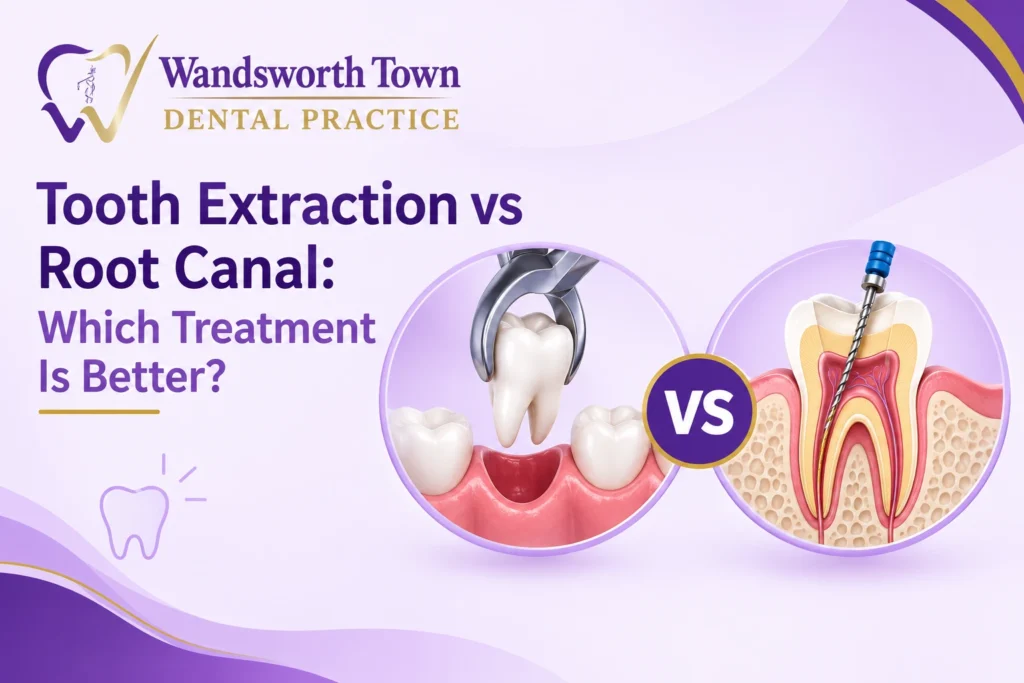
Tooth Extraction vs Root Canal: Which Treatment Is Better?
Tooth pain can make eating, drinking and speaking uncomfortable. If your tooth has severe decay or an infection, your dentist may recommend a root canal or tooth extraction. But which treatment is right for you?
Understanding tooth extraction vs root canal can help you make an informed decision. Both treatments can address dental problems, but they work in different ways. Your dentist will examine your tooth and recommend the most suitable option.
At Wandsworth Town Dental Practice, we aim to provide personalised NHS and private dental care based on your needs and oral health.
What Is Root Canal Treatment?
Root canal treatment helps save a natural tooth when the soft tissue inside it becomes infected or damaged. This tissue, called the dental pulp, contains nerves and blood vessels.
Deep tooth decay, cracks or dental injuries can damage the pulp. Without treatment, the infection may spread and cause further problems.
During root canal treatment, your dentist will:
- Numb the tooth with local anaesthetic.
- Remove the infected or damaged pulp.
- Clean and disinfect the root canals.
- Fill and seal the inside of the tooth.
- Restore the tooth with a filling or crown when needed.
The main benefit of root canal treatment is that it can save your natural tooth. However, the tooth must have a reasonable chance of lasting after treatment.
What Is Tooth Extraction?
Tooth extraction is a dental procedure that removes a tooth from its socket. Your dentist may recommend it when the tooth is too damage to repair or cannot be save with predictable results.
Common reasons for tooth extraction include:
- Severe tooth decay that leaves too little healthy tooth structure.
- A badly broken or fractured tooth.
- Advanced gum disease that causes tooth looseness.
- An infection in a tooth that cannot be treat successfully with root canal treatment.
- Certain other dental problems where removal is clinically necessary.
During the procedure, your dentist will use local anaesthetic to numb the area. They will then carefully remove the tooth. Afterward, you will receive advice on caring for the extraction site.
Depending on your needs, you may also discuss options to replace the missing tooth, such as a bridge, denture or dental implant.
Tooth Extraction vs Root Canal: Key Differences
Both treatments can relieve dental problems, but there are important differences.
Feature | Root Canal Treatment | Tooth Extraction |
Main purpose | Treat infection inside the tooth and preserve it | Remove a tooth that cannot be save or needs removal |
Natural tooth | Keeps the natural tooth | Removes the natural tooth |
Treatment process | Cleans and seals the root canals | Removes the tooth from its socket |
Number of visits | May require one or more appointments | May be complete in one appointment, depending on the case |
Aftercare | The tooth may need a filling or crown | The socket needs time to heal |
Future treatment | The tooth needs ongoing care and monitoring | Replacement may be consider if appropriate |
The best option depends on the condition of your tooth, your gum health and the expected success of treatment.
When Is Root Canal Treatment the Better Option?
Your dentist may recommend root canal treatment if the infection has reached the pulp but the tooth can still be restored.
It may be suitable when:
- Your tooth has deep decay but enough healthy structure remains.
- You have ongoing toothache caused by pulp damage.
- Your tooth has an infection or abscess that can be treat while retaining the tooth.
- The roots and surrounding bone provide suitable support.
Root canal treatment can help preserve your natural bite and avoid a gap in your smile. However, the treated tooth may need a crown to protect it from further damage.
Your dentist will explain the likely benefits, risks and long-term outlook before treatment.
When Is Tooth Extraction Necessary?
Sometimes, saving a tooth is not a realistic option. In these cases, extraction may provide the most appropriate treatment.
Your dentist may recommend extraction when:
- Decay has destroyed too much of the tooth.
- A fracture extends into a part of the tooth that cannot be repair.
- Advanced gum disease has severely weakened the tooth’s support.
- Root canal treatment is unlikely to succeed or previous treatment has failed.
- Removing the tooth is the safest way to manage the problem.
Extraction does not automatically mean that you will need a replacement. Your dentist can discuss whether replacing the tooth would benefit your oral health, chewing function or appearance.
Is a Root Canal More Painful Than Tooth Extraction?
Many people worry about pain before dental treatment. Fortunately, dentists use local anaesthetic to numb the area during both root canal treatment and tooth extraction.
You should not feel sharp pain during treatment, although you may notice pressure or movement. Tell your dentist if you feel pain so they can assess and manage it.
After a root canal, your tooth may feel tender for a few days. After an extraction, you may experience soreness, swelling or mild bleeding as the area heals.
Recovery varies from person to person. Following your dentist’s aftercare instructions can help support healing.
Which Treatment Costs More: Root Canal or Extraction?
The cost depends on the tooth involved, the complexity of treatment and whether you need additional procedures.
Root canal treatment may involve the cost of a permanent filling or crown. Extraction may have additional costs if you choose to replace the missing tooth with a bridge, denture or implant.
In England, NHS root canal treatment and tooth extraction generally fall under Band 2 when provided as part of standard NHS dental treatment. However, the treatment plan and applicable charges depend on your clinical needs and circumstances.
Ask your dentist to explain the available NHS and private options, including any additional costs, before treatment begins.
Can You Avoid Tooth Extraction?
In some cases, yes. Early dental assessment can help identify problems before they become more severe.
To help protect your natural teeth:
- Brush twice a day with fluoride toothpaste.
- Clean between your teeth daily.
- Limit sugary foods and drinks.
- Attend regular dental check-ups.
- Seek dental advice if you notice persistent pain, swelling or sensitivity.
Do not ignore toothache because the pain has temporarily stopped. An infected tooth may still need treatment even when the symptoms improve.
Choose the Right Dental Treatment for Your Smile
Choosing between tooth extraction and root canal treatment depends on your individual dental condition. Whenever possible, preserving a natural tooth can help maintain your bite and chewing function. However, extraction may be the right choice when a tooth cannot be saved safely.
At Wandsworth Town Dental Practice, we provide personalised dental care to help you understand your treatment options. Our team can assess your symptoms and, in addition, explain the benefits and risks. We can then discuss suitable NHS or private care options with you.
Book a dental appointment today if you have persistent toothache, swelling or concerns about a damaged tooth. Early assessment can help you understand your options. Moreover, it allows you to receive appropriate treatment as soon as possible.
If you need urgent dental advice outside normal practice hours, contact NHS 111. If you have difficulty breathing or swallowing due to swelling, call 999.
Follow up Instagram and Facebook for more information.
Frequently Asked Questions
Is a root canal better than tooth extraction?
A root canal may be preferable when your dentist can save the tooth and expects a reasonable outcome. However, extraction may be necessary if the tooth is too damage to restore. Your dentist can help you compare both options.
Can an infected tooth heal without treatment?
An infection inside the dental pulp generally needs dental treatment. Without appropriate care, it may worsen or spread. Contact your dentist if you have persistent pain, swelling or signs of infection.
How long does root canal treatment take?
Root canal treatment may require one or more appointments. The time depends on the tooth, the number of canals and the complexity of the infection.
How long does it take to recover from a tooth extraction?
Initial healing usually takes several days, but complete healing of the socket takes longer. The recovery time depends on the type of extraction and your overall oral health.
Can I eat normally after either treatment?
After root canal treatment, follow your dentist’s advice, especially if you have a temporary filling. After an extraction, choose soft foods initially and avoid chewing directly on the extraction site while it heals.
What should I do if I have severe tooth pain?
Contact your dental practice promptly for an assessment. If you have severe swelling that affects breathing or swallowing, seek emergency medical care immediately.