
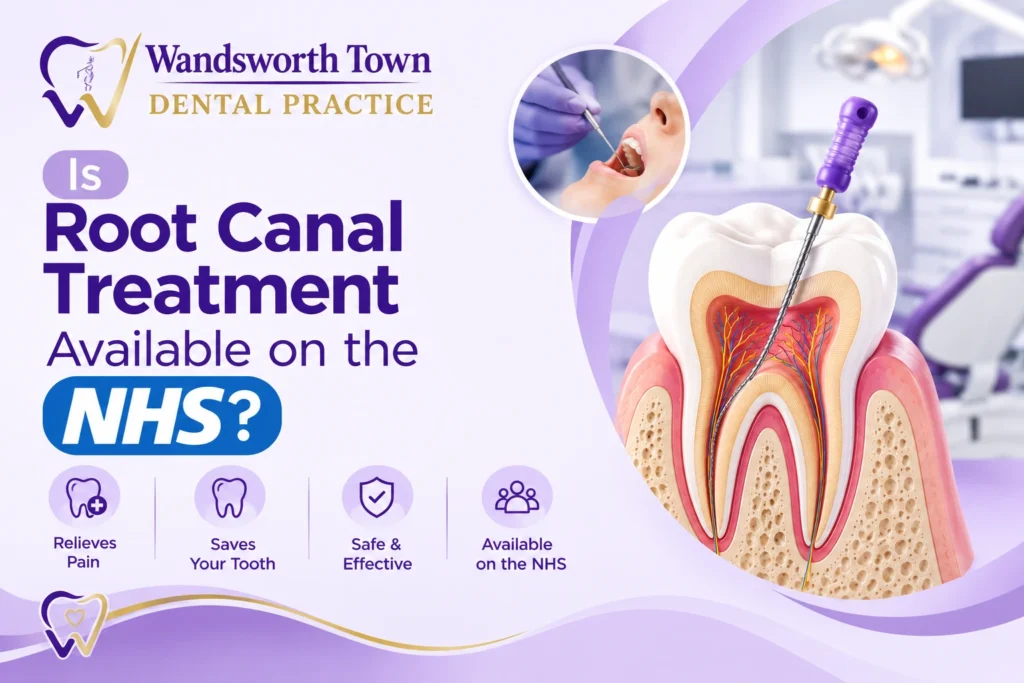
Is Root Canal Treatment Available on the NHS?
Tooth pain can make everyday life difficult. It may affect your eating, sleep, and concentration. If your tooth has an infection, your dentist may suggest root canal treatment. However, many patients ask, “Can I get root canal treatment on the NHS?”
The good news is that you can get root canal treatment on the NHS in England if it is need for your dental health. However, the treatment you receive will depend on your tooth’s condition and your dentist’s advice.
At Wandsworth Town Dental Practice, we believe that understanding your treatment options helps you make informed decisions about your oral health.
What Is Root Canal Treatment?
Root canal treatment helps treat an infection inside your tooth. The soft part inside the tooth is the dental pulp. It contains nerves and blood vessels.
Sometimes, deep tooth decay, cracks, injuries, or a dental abscess can cause this tissue to become infected.
As a result, you may experience pain, swelling, or sensitivity. If left untreated, the infection may worsen and could lead to tooth extraction.
During root canal treatment, your dentist removes the infected tissue from inside your tooth. Next, they clean and seal the tooth with a filling. In some cases, you may also need a dental crown to protect the tooth and make it stronger.
Is Root Canal Treatment Available on the NHS in England?
Yes, NHS root canal treatment is available in England when your dentist considers it clinically necessary to maintain your oral health.
The NHS offers dental treatments to keep your teeth and gums healthy. Therefore, you may be able to get root canal treatment on the NHS if your dentist thinks it is the right way to treat your infected or inflamed tooth.
However, not every dental practice provides every type of NHS treatment. More complex cases may require referral to another dentist or an endodontic specialist.
Your dentist will check your tooth and see how serious the infection is. Then, they will explain the treatment options available. You can also discuss the benefits, risks, and costs before starting treatment.
How Much Does Root Canal Treatment Cost on the NHS?
The cost of NHS root canal treatment depends on the treatment band that applies to your course of dental care.
From 1 April 2026, the NHS dental charges in England are:
- Band 1: £27.90 — Covers examinations, diagnosis, and preventive care.
- Band 2: £76.60 — Covers Band 1 care plus treatments such as fillings, root canal treatment, and extractions.
- Band 3: £332.10 — Covers Band 1 and Band 2 care plus treatments such as crowns, bridges, and dentures.
Root canal treatment is usually cover under NHS Band 2 charges when it is part of your NHS dental treatment. However, if you also need a dental crown, your dentist will explain the cost and treatment plan.
You usually pay one NHS charge for your full course of treatment, even if you need several appointments. Additionally, some patients can get free NHS dental care or help with the costs, depending on their circumstances.
Therefore, ask your dentist to confirm the charges before treatment begins.
Who Is Eligible for NHS Root Canal Treatment?
NHS dental treatment is intend to address clinically necessary dental problems. Your dentist will assess whether root canal treatment is suitable for your tooth.
You may be consider for NHS root canal treatment if you have:
- A tooth with deep decay affecting the dental pulp.
- An infection inside the tooth.
- Persistent toothache caused by pulp inflammation or infection.
- A cracked or damaged tooth with an affected pulp.
- A dental abscess that requires treatment of the underlying tooth infection.
However, the final decision depends on your clinical examination and the condition of your tooth.
In some cases, root canal treatment may not be the most suitable option. Your dentist may discuss alternative treatments, including tooth extraction, if the tooth cannot be restored successfully.
What Is the Difference Between NHS and Private Root Canal Treatment?
Both NHS and private root canal treatments aim to remove the infection and save your natural tooth. However, the treatment options, costs, and referrals may differ depending on your dental needs.
NHS root canal treatment
- Available when clinically necessary and offered by an NHS dental provider.
- Usually covered by the Band 2 charge in England.
- May involve a referral if the case is particularly complex.
- Focuses on meeting your clinical dental needs.
Private root canal treatment
- Fees are set by the private dental provider.
- May offer additional treatment options depending on the practice.
- May provide access to a specialist endodontist when appropriate.
- Can involve different materials, techniques, or appointment arrangements.
Private treatment is not always better than NHS treatment. Instead, your dentist will explain which options are right for your tooth. They will also help you understand the differences so you can make an informed decision.
Does NHS Root Canal Treatment Include a Dental Crown?
Not every tooth needs a crown after root canal treatment. However, a crown may be recommend when a tooth has lost significant structure because of decay, damage, or previous dental work.
A crown covers the tooth and helps protect it from further damage.
Under NHS dentistry in England, crowns are generally include in Band 3 treatment when clinically necessary and provide as part of an NHS course of treatment.
Your dentist will assess the remaining tooth structure and explain whether a filling or crown is more appropriate. If you need both root canal treatment and a crown, ask for a clear treatment plan outlining the applicable charges.
How Do You Know If You Need Root Canal Treatment?
An infected tooth does not always cause severe pain. Nevertheless, certain symptoms may indicate that you need a dental assessment.
Look out for:
- Persistent or severe toothache.
- Sensitivity to hot or cold foods and drinks.
- Pain when biting or chewing.
- Swelling around the tooth or gums.
- A darkened or discoloured tooth.
- A small gum swelling or a recurring bad taste in your mouth.
These symptoms can have different causes, so a dental examination is important.
If you have facial swelling, fever, or worsening pain, seek urgent dental advice. If swelling affects your breathing or swallowing, seek emergency medical care immediately.
What Happens During Root Canal Treatment?
Root canal treatment usually involves several steps to remove infection and protect the tooth.
- Dental examination
First, your dentist examines your tooth and may take X-rays to assess the affected area.
- Local anaesthetic
Next, your dentist usually numbs the area to help keep you comfortable during the procedure.
- Removal of infected tissue
The dentist creates an opening in the tooth and removes the infected or inflamed pulp.
- Cleaning and sealing
The root canals are carefully clean, shape, and fill to help prevent reinfection.
- Final restoration
Finally, your dentist places a suitable filling or recommends a crown if additional protection is need.
Treatment often requires two or more appointments, depending on the tooth and the complexity of the infection.
How Can You Protect Your Tooth After Root Canal Treatment?
Good oral hygiene helps protect your treated tooth and surrounding gums. Therefore, follow your dentist’s aftercare instructions and attend any recommended follow-up appointments.
Here are some simple steps to follow:
- Brush twice daily with fluoride toothpaste.
- Clean between your teeth every day.
- Avoid chewing hard foods on the treated tooth until your dentist advises it is safe.
- Complete any recommended restoration, such as a crown.
- Attend regular dental check-ups.
- Contact your dentist if pain, swelling, or other symptoms persist or return.
With appropriate treatment and care, a tooth that has undergone root canal treatment can often remain functional for many years.
Get Advice About Root Canal Treatment in Wandsworth
If you have persistent tooth pain or suspect a dental infection, arranging a dental assessment is an important first step.
At Wandsworth Town Dental Practice, we provide personalised NHS and private dental care in Wandsworth, London. Our team can assess your dental concerns, explain suitable treatment options, and help you understand the costs involved.
NHS treatment is subject to clinical assessment and availability. If your case requires more complex care, your dentist can discuss appropriate referral options.
Do not ignore persistent toothache. Early dental advice can help identify the cause of your symptoms and reduce the risk of further complications.
Contact Wandsworth Town Dental Practice to discuss your dental concerns and find out about the treatment options available to you.
Follow up Instagram and Facebook for more information.
Frequently Asked Questions
Can I get a root canal on the NHS?
Yes. Root canal treatment is available on the NHS in England when it is clinically necessary and the treating provider can offer it.
Is NHS root canal treatment free?
Not always. Most adults pay the applicable NHS dental charge. However, eligible patients may receive free treatment or help with dental costs.
How much does an NHS root canal cost in 2026?
From 1 April 2026, root canal treatment is generally include in the Band 2 charge of £76.60 in England. Additional treatment, such as a clinically necessary crown, may affect the applicable charge.
Can I choose private root canal treatment instead?
Yes. You can discuss private treatment with your dentist. Ask about the fees, treatment options, and whether a referral to an endodontist may be appropriate.
Can a root canal save my natural tooth?
In many cases, yes. Root canal treatment removes infected tissue and helps preserve the natural tooth. However, success depends on the tooth’s condition and whether it can be restored.
How long does root canal treatment take?
Root canal treatment often requires two or more appointments. The exact number depends on the tooth, the severity of the infection, and the complexity of the procedure.
Do I need a crown after root canal treatment?
Not always. Your dentist will assess how much healthy tooth structure remains and recommend a suitable restoration. A crown may be need to protect a weakened tooth.
What should I do if I have severe toothache?
Contact a dentist for urgent advice, especially if you have swelling, fever, or worsening pain. If you have difficulty breathing or swallowing because of swelling, seek emergency medical care immediately.