
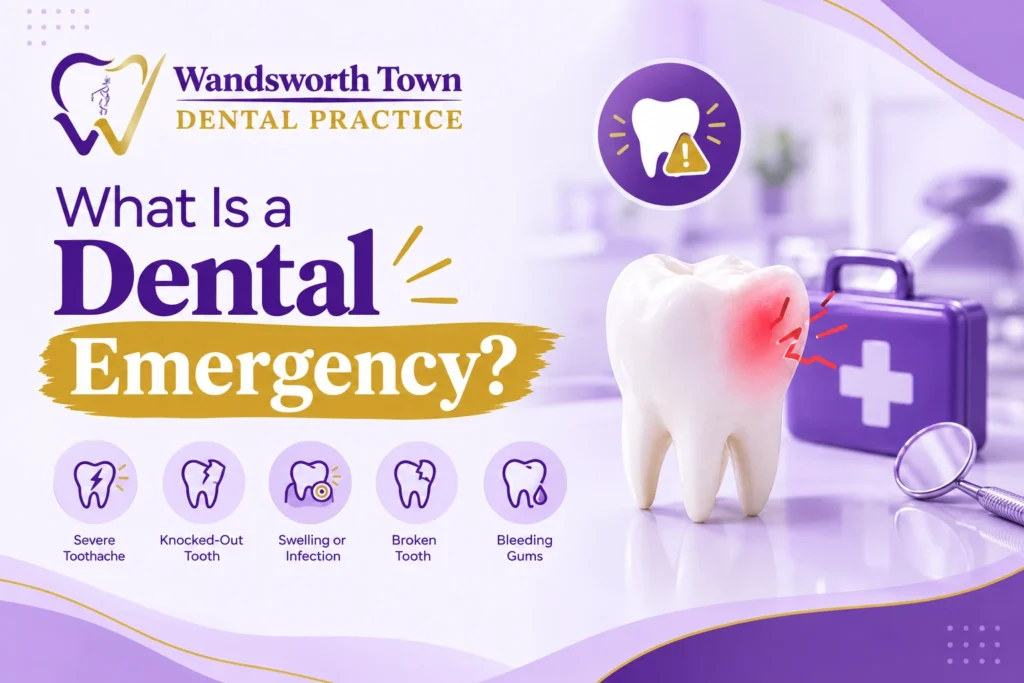
What Is a Dental Emergency? Signs, Causes and When to See a Dentist
Dental problems can happen at any time. For example, you may have a sudden toothache, a broken tooth, swollen gums, or an injury to your mouth. Some problems need quick care to reduce pain and prevent further damage.
But how do you know if you have a dental emergency?
A dental emergency is a problem affecting your teeth, gums, or mouth that needs urgent professional attention. For example, it may involve severe pain, infection, bleeding, or damage to a tooth.
Knowing these warning signs can help you get the right care on time. If you have a dental problem in Wandsworth, London, contact your dentist for advice and a check-up.
What Are the Common Signs of a Dental Emergency?
Not every dental problem requires immediate treatment. However, certain symptoms should never be ignored.
To help you recognise a dental emergency, here are some common signs that you may need emergency dental care.
1. Severe or Persistent Toothache
A sudden or severe toothache can make it hard to eat, sleep, or do daily tasks. It may be caused by tooth decay, an infection, a cracked tooth, or damage inside the tooth.
Contact your dentist if your toothache is severe, lasts a long time, or does not get better with pain relief. Also, seek advice if you have a fever, swelling, or a bad taste in your mouth.
2. Swelling in the Face, Jaw or Gums
Swelling around a tooth or gum may be a sign of a dental infection, such as a dental abscess. You may also have throbbing pain, red gums, a fever, or difficulty chewing.
A dental abscess needs urgent dental treatment and will not go away on its own.
Most importantly, if you have severe or spreading swelling that makes it difficult to breathe, swallow, or speak, call 999 or go to A&E immediately.
3. A Broken, Cracked or Chipped Tooth
For instance, a tooth can break or crack after an accident, a sports injury, or biting something hard. Therefore, even a small crack may need a dental examination.
A damaged tooth may cause pain or sensitivity to hot and cold food and drinks. Furthermore, in some cases, the damage may expose the inner part of the tooth.
Contact your dentist as soon as possible if you break a tooth, especially if you have severe pain or bleeding. If you can, keep the broken piece of tooth in milk or saliva and take it with you to your dental appointment.
4. A Knocked-Out Tooth
Therefore, a knocked-out permanent tooth is a time-sensitive dental emergency. Quick action may improve the chances of saving it.
If this happens:
- Pick up the tooth by the crown, not the root.
- If it is dirty, gently rinse it with milk or saline. Do not scrub it.
- If possible, place it back in its socket without forcing it.
- If you cannot replace it safely, keep it in milk or a suitable tooth-preservation solution.
- Seek emergency dental care immediately.
Do not put a knocked-out baby tooth back into its socket. Contact a dentist for advice.
5. Bleeding After a Dental Injury or Extraction
A small amount of bleeding may occur after some dental procedures. However, heavy or persistent bleeding needs urgent attention.
In this situation, if bleeding starts after a tooth extraction, follow your dentist’s instructions. Apply firm pressure with clean gauze if advised.
However, seek urgent dental help if the bleeding does not stop. Moreover, if the bleeding is heavy or you feel faint, seek emergency medical care immediately.
6. A Lost Filling, Crown or Bridge
Similarly, a filling, crown, or bridge can become loose or fall out unexpectedly. As a result, this may expose sensitive areas of the tooth and cause discomfort.
Not every lost filling or crown is an emergency. However, you should contact your dentist for advice. You may need quick treatment if you have pain, sharp edges, or trouble eating.
Avoid chewing on the affected side until you receive professional advice.
7. Dental Pain After an Injury
An accident can damage your teeth, gums, or jaw, even when there is no visible break. You may notice pain when biting, looseness, swelling, or bleeding.
Seek prompt dental assessment after a significant dental injury.
In addition, if you have a serious facial or jaw injury, uncontrolled bleeding, or symptoms of a head injury, seek emergency medical care immediately.
What Is the Difference Between a Dental Emergency and a Routine Dental Problem?
Some dental problems need urgent care, while others can wait for a regular appointment. The level of care you need depends on your symptoms and your dentist’s assessment.
Dental problem | Recommended action |
Difficulty breathing or swallowing due to swelling | Call 999 or go to A&E immediately |
Heavy, uncontrolled bleeding | Seek emergency medical care |
Knocked-out permanent tooth | Seek emergency dental care immediately |
Severe toothache or suspected dental abscess | Contact a dentist urgently |
Broken or cracked tooth | Contact a dentist promptly |
Lost filling or crown without severe pain | Arrange dental advice and an appointment |
Mild sensitivity without other warning signs | Book a routine dental assessment if it persists |
This table provides general guidance. If your symptoms worsen, seek help sooner.
What Should You Do During a Dental Emergency?
Taking the right steps can help protect your teeth while you arrange professional care.
Step 1: Assess Your Symptoms
Check for severe pain, swelling, bleeding, a broken tooth, or signs of infection. If you have trouble breathing or swallowing, get emergency medical help immediately.
Step 2: Contact a Dentist
Explain your symptoms and when they started. Your dentist can advise whether you need an urgent appointment or another type of care.
Alternatively, if you cannot contact your usual dentist or need urgent dental advice in England, call NHS 111 or visit the NHS 111 website.
Step 3: Protect the Affected Tooth
Alternatively, if you cannot contact your usual dentist or need urgent dental advice in England, call NHS 111 or visit the NHS 111 website.
Do not attempt to repair a broken tooth yourself. Also, avoid placing aspirin directly on your tooth or gums, as this can damage the tissue.
Step 4: Follow Professional Advice
Your dentist will check your symptoms and suggest the right treatment. Depending on the problem, you may need a filling, a crown, root canal treatment, treatment to drain an infection, or tooth removal if necessary.
The right treatment depends on the condition of your tooth and your overall oral health.
When Should You Contact an Emergency Dentist in Wandsworth?
For this reason, you should seek urgent dental advice if you have severe toothache, a suspected dental abscess, a knocked-out permanent tooth, or a dental injury.
Therefore, if you live in or around Wandsworth, London, contacting a local dental practice can help you understand the next steps and receive appropriate dental advice.
Wandsworth Town Dental Practice offers personalised NHS and private dental care. If you have a dental problem, contact the practice to discuss your symptoms and appointment options. Urgent appointments depend on availability and your dental assessment.
For urgent NHS dental care, you can also call NHS 111 or use NHS 111 online.
How Can You Reduce the Risk of Dental Emergencies?
Although not every dental emergency can be prevent, good oral care can reduce the risk of many dental problems.
Follow these simple tips:
- Brush your teeth twice a day with fluoride toothpaste.
- Clean between your teeth daily using floss or interdental brushes.
- Attend regular dental check-ups as recommended by your dentist.
- Wear a suitable mouthguard during contact sports.
- Avoid biting hard objects, such as ice or hard sweets.
- Seek dental advice early if you notice pain, swelling, or sensitivity.
Early treatment can help prevent some dental problems from becoming more serious.
Get Advice for a Dental Emergency in Wandsworth
Dental emergencies can be painful and stressful. However, recognising the warning signs and seeking help early can reduce the risk of further complications.
If you experience severe toothache, swelling, a broken tooth, or another urgent dental problem, contact a dentist for advice.
At Wandsworth Town Dental Practice, patients can discuss their dental concerns and receive guidance on suitable NHS or private treatment options, depending on their individual needs.However, all treatment recommendations are subject to clinical assessment and appointment availability.
Finally, do not ignore severe pain, swelling, or dental injuries. Instead, seek professional advice promptly to protect your oral health and prevent potential complications.
Follow up Instagram and Facebook for more information.
Frequently Asked Questions About Dental Emergencies
What is consider a dental emergency?
A dental emergency may include severe toothache, a dental abscess, a knocked-out permanent tooth, a serious dental injury, or uncontrolled bleeding. Difficulty breathing or swallowing due to oral swelling requires immediate emergency medical help.Lorem ipsum dolor sit amet, consectetur adipiscing elit. Ut elit tellus, luctus nec ullamcorper mattis, pulvinar dapibus leo.
Should I visit a dentist for severe toothache?
Yes. Severe or persistent toothache may indicate decay, infection, or damage to the tooth. Contact your dentist urgently, especially if you also have swelling, fever, or a bad taste in your mouth.
Can a dental abscess go away on its own?
No. A dental abscess requires urgent professional treatment. Pain may sometimes reduce temporarily, but the underlying infection can remain. Contact a dentist promptly.
What should I do if my tooth gets knocked out?
Handle the tooth by its crown, avoid touching the root, and seek emergency dental care immediately. If possible, place the tooth back into its socket without forcing it. Otherwise, keep it in milk or a suitable tooth-preservation solution. Do not reinsert a baby tooth.
Can I get urgent dental care in Wandsworth?
You can contact Wandsworth Town Dental Practice to discuss your symptoms and available appointments. Urgent appointments depend on availability and clinical assessment. If you cannot access a dentist, NHS 111 can advise you about urgent dental services.