
What Is a Dental Crown? Benefits, Types and Procedure
A damaged or weakened tooth can affect your smile, comfort, and ability to chew. Fortunately, a dental crown can help protect the tooth and restore its shape. But what is a dental crown, and when might you need one?
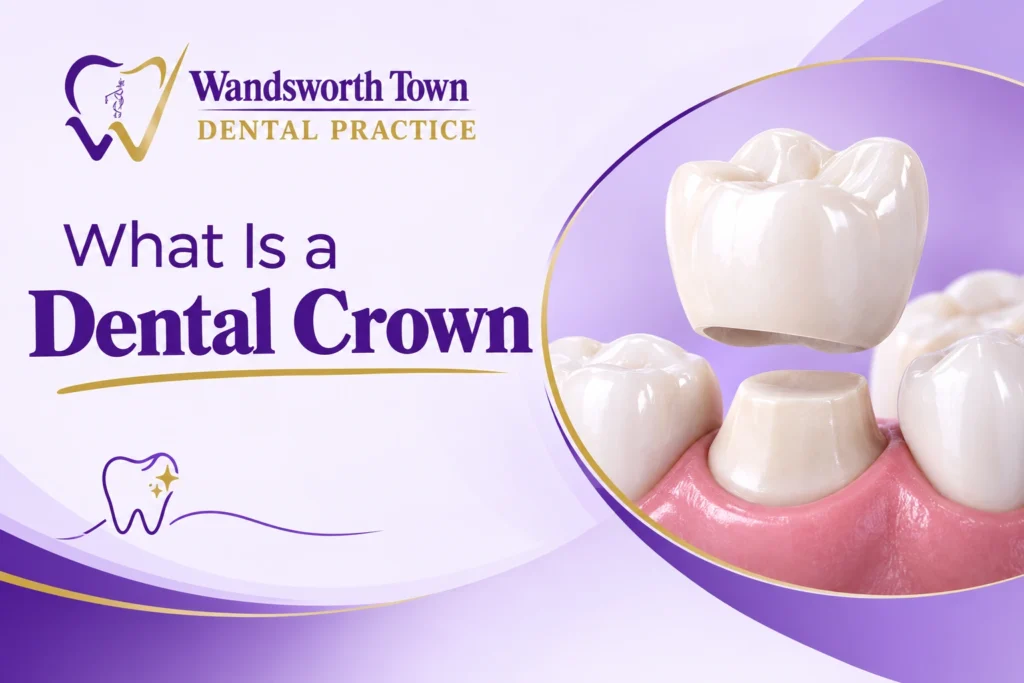
A dental crown is a custom-made covering that fits over a tooth. It helps protect the remaining tooth structure and improves its appearance. Depending on your dental needs, your dentist may recommend a crown to restore a damaged, weakened, or heavily filled tooth.
At Wandsworth Town Dental Practice, patients can discuss suitable dental treatment options based on their oral health and clinical assessment.
What Is a Dental Crown?
A dental crown is a cap that covers the visible part of a tooth above the gum line. It is design to restore the tooth’s shape, size, strength, and appearance. As a result, it can help protect a damaged tooth and improve its overall look.
In addition, a dental crown can help protect a tooth from further damage when a standard filling may not provide enough support.
Therefore, your dentist will examine the tooth and explain whether a dental crown is suitable for your needs.
When Do You Need a Dental Crown?
Your dentist may recommend a dental crown for several reasons.
1. To Protect a Damaged Tooth
A cracked, broken, or weakened tooth may need extra support. A crown covers the tooth and helps protect the remaining structure.
2. After Root Canal Treatment
Root canal treatment removes infected or damaged tissue from inside a tooth. In some cases, the tooth may become more vulnerable to fracture. Therefore, your dentist may recommend a crown to provide additional protection.
3. To Restore a Tooth With a Large Filling
A tooth with a large filling may have less natural structure remaining. A crown can help restore its strength and function when clinically appropriate.
4. To Improve the Appearance of a Tooth
Some crowns can improve the appearance of badly worn, misshapen, or discoloured teeth. However, your dentist will discuss the most suitable option based on your dental health and cosmetic goals.
5. To Support a Dental Implant
A dental crown can be attach to a dental implant to replace the visible part of a missing tooth. The implant supports the crown and helps restore chewing function.
What Are the Different Types of Dental Crowns?
Dental crowns are available in different materials. Each option has its own benefits.
Porcelain Crowns
Porcelain crowns can closely match the colour of natural teeth. As a result, they are often consider for visible teeth where appearance is important.
Ceramic Crowns
Ceramic crowns can provide a natural-looking finish. They may be suitable for certain front or back teeth, depending on the patient’s bite and clinical needs.
Metal Crowns
Metal crowns are strong and can withstand chewing forces. However, their metallic appearance may make them less suitable for visible teeth.
Porcelain-Fused-to-Metal Crowns
These crowns combine a metal base with a tooth-coloured outer layer. They offer a balance of strength and appearance, although the metal may sometimes become visible near the gum line.
Your dentist will explain the available materials, their advantages, and their suitability for your tooth.
What Is the Dental Crown Procedure?
Getting a dental crown usually involves several steps. The exact process depends on the condition of your tooth and the type of crown required.
Step 1: Dental Examination
First, your dentist examines the affected tooth and may take X-rays if needed. This helps assess the tooth’s condition and determine whether a crown is appropriate.
Step 2: Preparing the Tooth
Next, the dentist reshapes the tooth to make room for the crown. Local anaesthetic is usually use to keep you comfortable during the procedure.
Step 3: Taking an Impression
Your dentist takes an impression or digital scan of the prepared tooth. This information helps create a crown that fits your tooth and bite.
Step 4: Fitting a Temporary Crown
In many cases, a temporary crown protects the prepare tooth while the permanent crown is being made.
Step 5: Placing the Permanent Crown
Once the permanent crown is ready, your dentist checks its fit, shape, and bite. If everything is suitable, the crown is secure in place.
Your dentist will also explain how to care for your new crown.
Does Getting a Dental Crown Hurt?
The procedure is usually carry out under local anaesthetic, which helps reduce pain during tooth preparation. However, you may experience some tenderness or sensitivity afterwards.
This discomfort often improves over time. Nevertheless, contact your dentist if you experience severe pain, increasing swelling, or a bite that feels uneven after the crown is fit.
How Long Does a Dental Crown Last?
A dental crown can last for many years, although its lifespan varies. The material, oral hygiene, bite pressure, and habits such as teeth grinding can all affect its durability.
To help your crown last longer:
- Brush your teeth twice a day with fluoride toothpaste.
- Clean between your teeth daily using floss or interdental brushes.
- Attend regular dental check-ups.
- Avoid chewing hard objects such as ice.
- Tell your dentist if you grind or clench your teeth.
With suitable care, a dental crown can provide long-term support and function.
What Is the Difference Between a Dental Crown and a Filling?
Both crowns and fillings can restore damaged teeth. However, they serve different purposes.
A filling repairs a smaller area of tooth damage. In contrast, a crown covers the visible part of the tooth and provides more extensive protection.
Your dentist will recommend the appropriate treatment based on how much healthy tooth structure remains.
How Much Does a Dental Crown Cost in Wandsworth?
The cost of a dental crown in Wandsworth depends on the material, the condition of the tooth, and any additional treatment required.
Private dental crown fees can vary between practices. Therefore, ask your dentist for a personalised treatment plan and a clear breakdown of the costs before proceeding.
Some crowns may be available through NHS dental care when they are clinically necessary and meet NHS treatment criteria. However, crowns provide mainly for cosmetic reasons are generally not available on the NHS.
Your dentist can explain whether NHS or private treatment is suitable for your situation.
How Do You Care for a Dental Crown?
Good oral hygiene helps protect both your crown and the natural tooth underneath it.
Brush carefully around the crown and gum line. Also, clean between your teeth every day to remove plaque and food particles.
Although a crown covers the tooth, decay can still develop in the remaining natural tooth around its edges. Therefore, regular dental check-ups remain important.
If your crown becomes loose, cracks, or falls out, contact your dentist for advice. Avoid trying to fix it with household glue.
Dental Crowns at Wandsworth Town Dental Practice
A dental crown can help restore a damaged tooth, protect weakened tooth structure, and improve chewing function. However, the right treatment depends on your individual dental needs.
At Wandsworth Town Dental Practice, patients can discuss their concerns and explore suitable NHS or private dental treatment options, subject to clinical assessment and appointment availability.
If you have a damaged tooth or think you may need a dental crown, arrange a dental assessment to understand your treatment options and the next steps.
Follow up Instagram and Facebook for more information.
Frequently Asked Questions
Is a dental crown better than a filling?
Neither option is always better. A filling may be suitable for smaller areas of damage, while a crown may be recommend when a tooth needs more extensive support.
Can you eat normally with a dental crown?
Yes, once your permanent crown is fit and any initial sensitivity has settle, you can generally eat normally. However, avoid biting very hard foods if they could damage the crown.
Can a dental crown look like a natural tooth?
Yes. Porcelain and ceramic crowns can be made to match the colour and shape of your natural teeth.
Can a tooth decay under a crown?
Yes. The crown itself cannot decay, but the natural tooth underneath or around its edges can develop decay. Good oral hygiene and regular check-ups help reduce this risk.
Can a dental crown fall out?
A crown can sometimes become loose or come off. If this happens, contact your dentist promptly for advice and avoid chewing on the affected tooth.
Are dental crowns available on the NHS in Wandsworth?
NHS crowns may be available when they are clinically necessary and meet NHS treatment criteria. Your dentist can assess your tooth and explain the available options.