
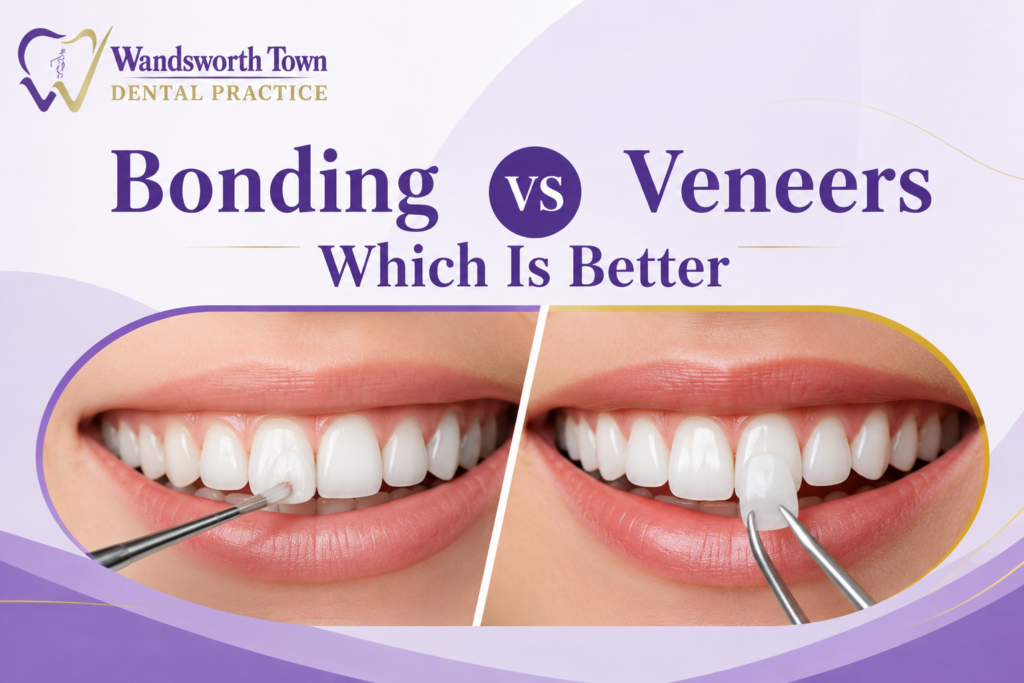
Bonding vs Veneers: Which Is Better?
If you are unhappy with the shape, colour, or appearance of your teeth, cosmetic dentistry can help create a more confident smile. Two popular options are composite bonding and dental veneers.
Both treatments can improve the appearance of teeth, but they work in different ways. The right choice depends on your smile goals, dental health, budget, and how long you want the results to last.
So, bonding vs veneers: which is better? Let’s compare the two treatments to help you understand your options.
What Is Composite Bonding?
Composite bonding is a cosmetic dental treatment that uses a tooth-coloured resin to improve the appearance of teeth. Your dentist carefully applies the material to the tooth and shapes it to create the desired look.
Bonding can be use to:
- Repair small chips and cracks
- Improve the shape of uneven teeth
- Close small gaps between teeth
- Make teeth look more even
- Improve the appearance of slightly discoloured teeth
One of the main benefits of bonding is that it usually requires little or no removal of natural tooth structure.
What Are Dental Veneers?
Dental veneers are thin shells that are attach to the front surface of teeth. They are usually made from porcelain or other high-quality dental materials.
Veneers can help improve:
- Tooth colour
- Tooth shape
- Minor gaps
- Uneven or worn teeth
- The overall appearance of your smile
Veneers can provide a more uniform and highly polished smile. Your dentist will assess your teeth and gums before recommending treatment.
Bonding vs Veneers: Key Differences
Although both treatments can improve your smile, there are some important differences.
1. Material
Composite bonding: Uses tooth-coloured composite resin applied directly to the tooth.
Veneers: Usually use porcelain or another durable dental material that is made to fit the tooth.
2. Treatment Time
Composite bonding can often be complete in fewer appointments because the material is shape directly on the tooth.
Veneers normally involve more planning. Your dentist may take impressions or digital scans before your veneers are create and fit.
3. Tooth Preparation
Bonding usually requires minimal preparation.
Veneers may require some preparation of the tooth surface, depending on the type of veneer and your individual needs. Your dentist will explain how much preparation is require before treatment.
4. Durability
Both bonding and veneers can provide long-lasting results when properly cared for.
However, porcelain veneers are generally more resistant to staining and can be more durable than composite bonding. Bonding can sometimes chip or wear over time, particularly if you bite your nails or use your teeth to open objects.
5. Appearance
Both treatments can create natural-looking results.
Composite bonding can be match to your existing teeth and carefully shape by your dentist. Porcelain veneers can provide a smooth, consistent appearance and are often choose by people who want a more noticeable smile transformation.
6. Cost
The cost of treatment varies depending on the number of teeth being treat, the material use, and your individual treatment plan.
Composite bonding is generally more affordable than veneers. However, the best option should not be based on price alone. Your dentist can explain the expected benefits, maintenance, and longevity of each treatment.
Is Bonding Better Than Veneers?
Bonding may be a better option if you want a more conservative treatment with minimal tooth preparation. It can work particularly well for small chips, minor gaps, or small changes to tooth shape.
It may also be suitable if you want to improve your smile without committing to a more extensive cosmetic treatment.
However, bonding may not be the best choice for everyone. Composite resin can stain or chip over time, so some patients may eventually need repairs or replacement.
Are Veneers Better Than Bonding?
Veneers may be a better option when you want to make more significant cosmetic changes to several teeth.
They can provide a consistent appearance and are highly resistant to staining, especially porcelain veneers. They may be suitable for people looking to improve tooth colour, shape, size, or overall smile symmetry.
However, veneers require careful planning and may involve some preparation of the natural teeth. They are also usually more expensive than bonding.
Bonding vs Veneers: Which One Should You Choose?
There is no single answer to which treatment is better. The right choice depends on your teeth and your smile goals.
Feature | Composite Bonding | Dental Veneers |
Material | Composite resin | Usually porcelain |
Tooth preparation | Usually minimal | May require some preparation |
Treatment time | Often quicker | Usually requires more planning |
Appearance | Natural-looking | Highly polished and consistent |
Stain resistance | Moderate | Generally high |
Durability | Good with proper care | Generally longer-lasting |
Cost | Usually lower | Usually higher |
Best for | Small cosmetic changes | More extensive smile improvements |
Your dentist can examine your teeth and recommend the most suitable option for you.
What Should You Consider Before Treatment?
Before choosing between bonding and veneers, consider the following:
Your Dental Health
Healthy teeth and gums are important before cosmetic treatment. Existing dental problems may need to be treated first.
Your Smile Goals
Think about what you want to change. If you have a small chip or gap, bonding may be enough. If you want to change the colour and shape of several teeth, veneers may be worth considering.
Your Budget
Bonding is generally less expensive, while veneers usually involve a higher investment. Ask your dentist about the costs and long-term maintenance before making a decision.
Maintenance
Good oral hygiene is important for both treatments. Brush twice a day with fluoride toothpaste, clean between your teeth, and attend regular dental check-ups.
Your Habits
Habits such as nail biting, chewing ice, or using your teeth to open packaging can damage cosmetic dental work. Your dentist can advise you on how to protect your results.
How Long Do Bonding and Veneers Last?
The lifespan of cosmetic dental treatment varies from person to person.
Bonding can last for several years with good care, although it may need repair or replacement if it becomes chipped or worn.
Veneers can also last for many years when properly maintained. Their lifespan depends on factors such as oral hygiene, biting forces, lifestyle habits, and regular dental care.
Your dentist can give you more personalised information based on your teeth and treatment plan.
Can Bonding and Veneers Look Natural?
Yes. Both bonding and veneers can be design to look natural when carefully plan and place.
Your dentist considers factors such as tooth shape, colour, size, and your overall smile when creating the treatment. The aim is to improve your smile while keeping the result balanced and natural-looking.
Book a Cosmetic Dentistry Consultation in Wandsworth
Choosing between bonding vs veneers depends on your teeth, dental health, smile goals, and personal preferences. Both treatments can improve your smile, but they offer different benefits.
At Wandsworth Town Dental Practice, a dental professional can assess your smile and discuss the most suitable cosmetic dentistry option for you.
If you are considering composite bonding or veneers, book a consultation to discuss your goals and treatment options.
Follow up Instagram and Facebook for more information.
Frequently Asked Questions
Is bonding cheaper than veneers?
Generally, composite bonding costs less than veneers. However, prices vary depending on the number of teeth treated and your individual treatment needs.
Which lasts longer, bonding or veneers?
Veneers, particularly porcelain veneers, generally last longer than composite bonding. Proper oral hygiene and regular dental care can help protect both treatments.
Does bonding damage your teeth?
Composite bonding is usually a conservative treatment and often requires little or no removal of natural tooth structure. Your dentist will explain the preparation required for your teeth.
Are veneers permanent?
Veneers are considered a long-term cosmetic treatment. Depending on the type of veneer and preparation required, the teeth may need ongoing restoration once veneers eventually need replacement.
Can bonding fix crooked teeth?
Bonding can sometimes improve the appearance of mildly uneven or misshapen teeth. However, it does not physically straighten teeth. Your dentist can explain whether bonding is suitable for your smile.
Can veneers fix gaps between teeth?
Veneers can sometimes close small gaps between teeth by changing their shape and size. Your dentist will assess your bite and tooth alignment before recommending treatment.