
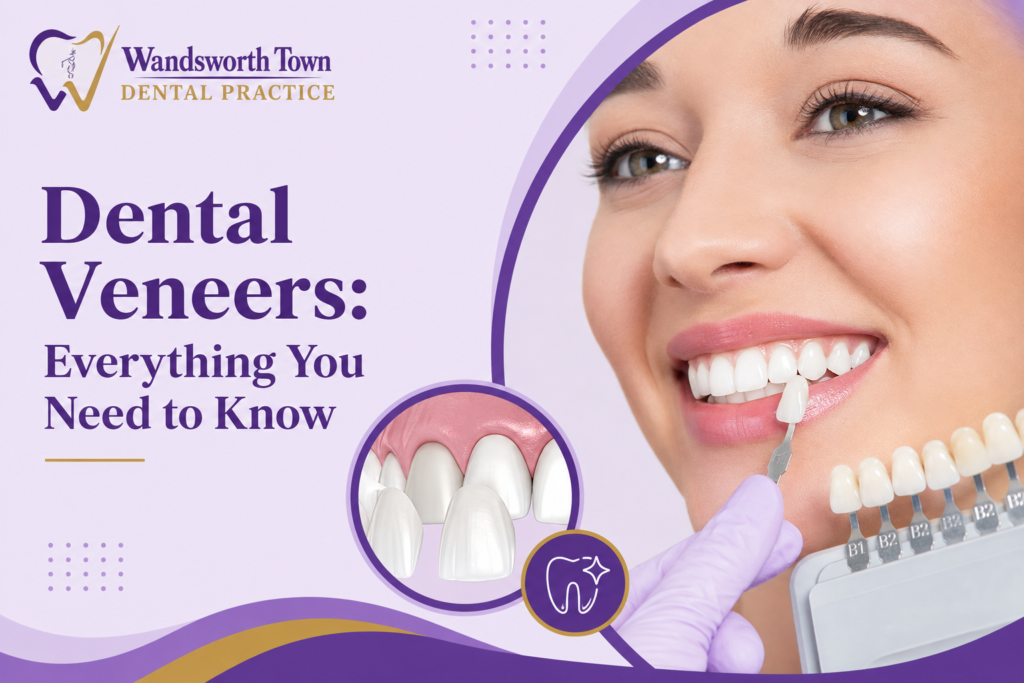
Dental Veneers: Everything You Need to Know
A confident smile can make you feel good about yourself. But chipped, stained, uneven, or misshapen teeth can sometimes affect your confidence. Dental veneers are a cosmetic dentistry treatment that can improve the look of certain teeth. They can help create a more even, natural-looking, and balanced smile.
At Wandsworth Town Dental Practice, patients can discuss their smile concerns with a dental professional and explore whether veneers are suitable for their individual needs.
Veneers are thin coverings that are bond to the front of your teeth. They are usually made from porcelain or tooth-coloured composite material. Veneers can improve the colour, shape, and overall appearance of your teeth.
What Are Dental Veneers?
Dental veneers are custom-made coverings placed on the front of a tooth. Unlike dental crowns, which cover the whole tooth, veneers usually cover only the visible front surface.
Depending on the material and treatment plan, veneers may help improve the appearance of:
- Stained or discoloured teeth
- Chipped or worn teeth
- Unevenly shaped teeth
- Slightly crooked-looking teeth
- Small gaps between teeth
- Teeth that appear smaller or different in shape
Veneers are mainly use to improve the appearance of your teeth. They do not replace good oral care or treat problems like tooth decay or gum disease. Any existing dental problems should be check and treat before getting veneers.
What Types of Dental Veneers Are Available?
The two common types of dental veneers are porcelain veneers and composite veneers.
Porcelain Veneers
Porcelain veneers are thin, custom-made shells designed to fit over the front of your teeth. They look natural and can provide a long-lasting cosmetic option when properly planned and cared for.
The process usually involves preparing the tooth, taking an impression or digital scan, creating the veneer and then bonding it to the tooth.
Composite Veneers
Composite veneers use tooth-colour resin that is bond and shape directly onto the tooth. They may need less removal of the natural tooth and can sometimes be completed in fewer appointments.
However, composite veneers may stain and wear more easily than porcelain veneers. Your dentist can help you choose the best option for your smile and needs.
Who Can Benefit From Dental Veneers?
Dental veneers may be suitable for adults who have healthy teeth and gums and want to improve specific cosmetic concerns.
They may be consider when you have:
- Persistent tooth discolouration
- Minor chips or worn edges
- Uneven tooth shapes
- Small spaces between front teeth
- Teeth that look irregular or disproportionate
- Cosmetic concerns that affect your confidence
However, veneers may not be right for everyone. Your dentist will check your teeth, gums, bite, and overall oral health before recommending treatment.
People with untreated tooth decay, gum disease, major tooth damage, or certain bite and teeth-grinding problems may need other treatment first.
How Does the Dental Veneer Procedure Work?
The exact process depends on the type of veneer you choose and your individual treatment plan. In general, getting veneers involves several simple steps.
1. Dental Consultation
Your dentist will check your teeth and ask what you would like to change about your smile. They will also look at your oral health, bite, tooth structure, and expectations.
This is also the right time to ask about treatment alternatives, expected results, risks and costs.
2. Treatment Planning
Your dentist will decide whether veneers are appropriate and discuss the type of veneer that may work best for you.
The colour, shape, and size of your veneers should be planned carefully. This helps create a natural-looking smile that suits your facial features.
3. Tooth Preparation
Some veneers require a small amount of enamel to be remove from the tooth surface to create enough space for the veneer.
The amount of tooth preparation can vary depending on the type of veneer and your individual needs. Some veneers may need very little or no tooth preparation.
4. Impressions or Digital Scanning
Your dentist may take traditional impressions or use digital scanning technology to create an accurate model of your teeth.
For porcelain veneers, this information can be use to create custom-made veneers.
5. Fitting the Veneers
Once the veneers are ready, your dentist will check their fit, shape, and colour. They may make adjustments before permanently bonding the veneers to your teeth.
6. Final Review
After the veneers are place, your dentist will check your bite and make sure you are comfortable. It may take a little time to get use to the new shape of your teeth.
What Are the Benefits of Dental Veneers?
Dental veneers can provide several cosmetic benefits when carefully planned.
Improve Tooth Colour
Veneers can help disguise certain types of discolouration that may not respond as expected to conventional whitening.
Create a More Even Smile
They can improve the appearance of teeth that are uneven in shape or size.
Address Minor Chips
Veneers can cover certain small chips and worn areas, depending on the condition of the tooth.
Improve Small Gaps
In suitable cases, veneers can make small spaces between teeth less noticeable.
Natural-Looking Results
Well-design veneers can be made to complement your surrounding teeth and create a natural-looking smile.
Are Dental Veneers Permanent?
Dental veneers should be consider a long-term cosmetic treatment rather than a temporary change.
Some veneer procedures involve removing a small amount of natural enamel. Therefore, once a tooth has been prepare, it may require a veneer or another restoration in the future.
Veneers can also chip, crack, loosen or wear over time and may eventually need repair or replacement.
This is why it is important to discuss the long-term implications with your dentist before treatment.
Do Dental Veneers Damage Your Teeth?
When appropriately plan and professionally fitted, veneers are not intend to damage healthy teeth. However, some veneer treatments require removal of natural enamel.
There can also be risks such as increased sensitivity, veneer damage or loosening. Your natural tooth can still develop decay around or underneath a veneer, which is why regular dental care remains important.
A dental assessment is essential before deciding whether veneers are the right choice for you.
How Do You Care for Dental Veneers?
Good oral hygiene is important for maintaining both your veneers and the natural teeth underneath them.
You should:
- Brush your teeth twice a day with fluoride toothpaste.
- Clean between your teeth every day.
- Attend regular dental check-ups.
- Avoid biting very hard objects.
- Avoid using your teeth to open packaging.
- Discuss a mouthguard with your dentist if you grind your teeth.
- Follow the specific aftercare advice provided by your dental team.
Although veneers can improve the appearance of your smile, they do not make the teeth underneath immune to decay or gum problems.
How Much Do Dental Veneers Cost in Wandsworth?
The cost of dental veneers varies depending on several factors, including:
- The type of veneer
- The number of teeth being treat
- The complexity of the case
- The preparation required
- The materials used
- The individual dental practice
Veneers are generally consider a private cosmetic treatment in the UK rather than a routine NHS treatment. The NHS explains that veneers are generally only available privately unless there is a specific clinical need.
Before proceeding, your dentist should explain the treatment options, risks, expected outcomes and costs so you can make an informed decision.
Dental Veneers vs Other Cosmetic Treatments
Veneers are not the only way to improve the appearance of your smile.
Depending on your concerns, alternatives may include:
Teeth Whitening: Suitable for certain types of tooth discolouration.
Composite Bonding: May improve the appearance of minor chips, gaps or uneven edges using tooth-coloured composite material.
Orthodontic Treatment: May be more appropriate when tooth alignment or bite is the main concern.
Dental Crowns: May be consider when a tooth has significant structural damage and requires more extensive coverage.
Your dentist can compare the options and recommend an approach based on your oral health and cosmetic goals.
Are Dental Veneers Right for You?
Choosing veneers should not be based only on how they look in photographs or on social media. Your teeth, gums, bite and expectations are unique.
A professional consultation can help determine whether veneers are appropriate and whether another treatment could provide a better result with less alteration to your natural teeth.
At Wandsworth Town Dental Practice, patients can discuss their cosmetic concerns and treatment options with a dental professional before making a decision.
Conclusion
Dental veneers can be an effective cosmetic dentistry option for improving the appearance of stained, chip, uneven or misshapen teeth. Porcelain and composite veneers offer different advantages, and the best option depends on your dental health, smile goals and treatment needs.
Because veneers can involve changes to natural tooth structure and may require future maintenance or replacement, it is important to understand the benefits, risks, alternatives and costs before treatment.
If you are considering veneers in Wandsworth, book a consultation with a qualified dental professional to discuss whether they are suitable for your smile.
Follow up Instagram and Facebook for more information.
FAQs About Dental Veneers
Are dental veneers painful?
The experience varies depending on the type of veneer and amount of tooth preparation required. Your dentist can discuss sensitivity and pain management before treatment.
How long do dental veneers last?
Veneers can last for many years, but they may eventually need repair or replacement because of wear, chips, cracks or other changes. Proper oral hygiene and regular dental appointments can help maintain them.
Can veneers fix crooked teeth?
Veneers can sometimes improve the appearance of mildly uneven or slightly crooked-looking teeth. However, they do not actually move teeth or correct significant alignment or bite problems. Orthodontic treatment may be more appropriate in those situations.
Can I eat normally with veneers?
Most people can eat normally after becoming accustomed to their veneers. However, it is sensible to avoid biting very hard objects and follow your dentist’s individual advice.
Can veneers stain?
Porcelain veneers are generally resistant to staining, while composite veneers can be more susceptible to staining and wear. Good oral hygiene and regular dental care are important for maintaining their appearance.
Can veneers be remove?
Because some veneer treatments involve removing natural enamel, they should not be considered completely reversible. Your dentist should explain this before treatment.
Are veneers available on the NHS?
Veneers are generally a private cosmetic treatment in the UK. They may only be available through the NHS in certain circumstances where there is a clinical need.
How many teeth should I get veneers on?
There is no single number that is right for everyone. The number of veneers depends on your smile, cosmetic goals, tooth condition and treatment plan. Your dentist can recommend the appropriate approach after an assessment.
Can I get veneers if I grind my teeth?
Teeth grinding or clenching may affect the suitability and longevity of veneers. Your dentist should assess your bite and discuss protective options, such as a night guard, if appropriate.
Should I whiten my teeth before veneers?
This depends on your treatment plan. Because the colour of a veneer cannot simply be changed after it has been bonded, your dentist can help you decide on the appropriate shade before treatment.