
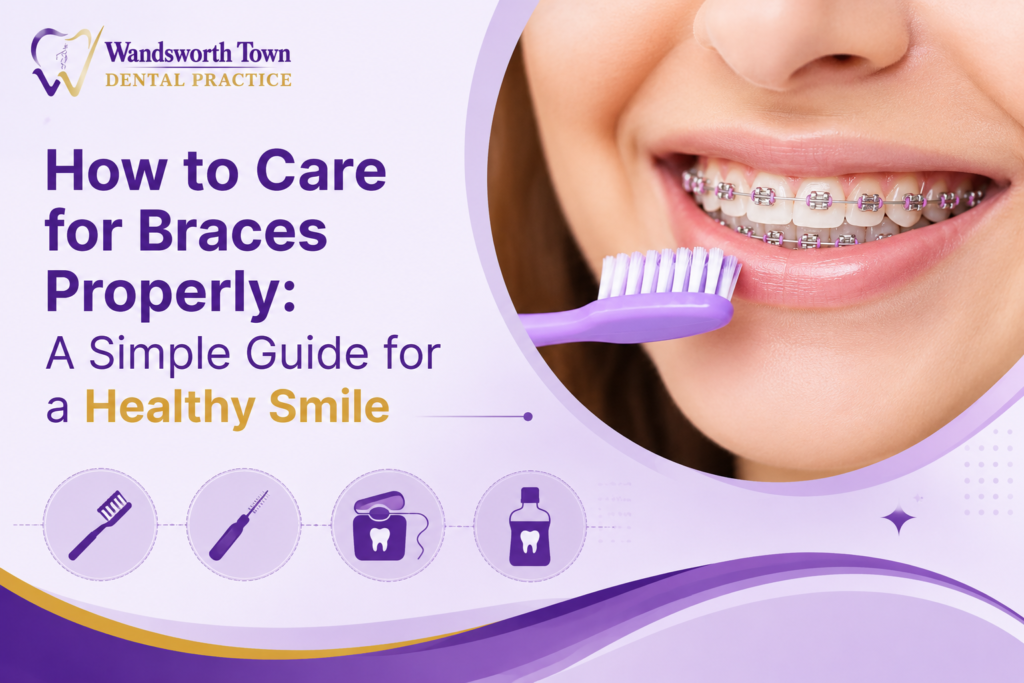
How to Care for Braces Properly: A Simple Guide for a Healthy Smile
Braces can help straighten your teeth, improve your bite, and create a healthier-looking smile. However, getting the best results from orthodontic treatment requires good daily care.
Knowing how to care for braces properly can help keep your teeth and gums healthy while reducing the risk of plaque, tooth decay, gum problems, and damaged brackets or wires.
Whether you have traditional metal braces, ceramic braces, or another type of fixed orthodontic appliance, simple daily habits can make a big difference.
Why Is Braces Care Important?
Braces create small spaces around brackets and wires where food particles and plaque can collect. These areas can be harder to clean than normal teeth.
Poor oral hygiene during orthodontic treatment may increase the risk of:
- Plaque buildup
- Tooth decay
- Gum inflammation
- Bad breath
- White spots on teeth
- Staining around brackets
- Damaged braces
Taking a few extra minutes each day to clean your teeth and braces can help protect your smile throughout treatment.
1. Brush Your Teeth Carefully
Brushing is one of the most important parts of caring for braces.
Brush your teeth at least twice a day, especially before going to bed. Use a fluoride toothpaste and a soft-bristled toothbrush.
When brushing:
- Clean above and below each bracket.
- Brush gently around the gumline.
- Clean the front, back, and chewing surfaces of your teeth.
- Take your time instead of brushing too quickly.
An interdental brush can also help clean areas around brackets and wires that a normal toothbrush may miss.
2. Clean Between Your Teeth Every Day
Flossing can be more difficult when you have braces, but it is still important.
Food can become trapped between teeth and around orthodontic wires. If it remains there, bacteria can contribute to plaque and gum problems.
You may find orthodontic flossers, floss threaders, or interdental brushes useful. Ask your dentist or orthodontic professional which cleaning method is suitable for your braces.
3. Be Careful About What You Eat
Some foods can damage brackets, bend wires, or become trapped around your braces.
Try to avoid or limit hard, sticky, and chewy foods such as:
- Hard sweets
- Chewing gum
- Toffee and caramel
- Popcorn kernels
- Ice
- Very hard nuts
- Hard crusts
- Sticky sweets
You should also avoid biting directly into very hard foods.
Instead, cut foods such as apples, carrots, and other firm foods into smaller pieces before eating them.
4. Reduce Sugary Foods and Drinks
Sugary foods and drinks can increase the risk of tooth decay. This is especially important when you have braces because food and plaque can collect around brackets.
Try to limit frequent sugary snacks and drinks. Water is a good everyday choice for keeping your mouth hydrate and helping wash away food particles.
If you have a sugary drink, avoid slowly sipping it over a long period.
5. Use Fluoride Toothpaste
Fluoride helps strengthen tooth enamel and protect against decay.
Use a fluoride toothpaste when brushing your teeth. Your dentist may recommend a stronger fluoride product if you have a higher risk of tooth decay.
Do not rinse your mouth excessively with water immediately after brushing, as this can wash away some of the fluoride left on your teeth.
6. Check Your Braces Regularly
While cleaning your teeth, look at your braces and check for anything unusual.
Pay attention to:
- Loose brackets
- Broken wires
- Sharp wire ends
- Loose bands
- Irritation inside your cheeks or lips
If something breaks or becomes loose, contact your dental or orthodontic team for advice. Avoid trying to fix braces yourself.
7. Protect Your Braces During Sports
If you play contact sports, protecting your teeth is particularly important.
Ask your dentist or orthodontic professional about a suitable mouthguard that can be used with your braces.
A properly designed mouthguard can help protect your teeth, gums, and orthodontic appliances from injury.
8. Keep Your Orthodontic Appointments
Regular appointments are an important part of successful orthodontic treatment.
Your dental or orthodontic team can check how your teeth are moving, adjust your braces when needed, and identify potential problems.
Missing appointments may affect your treatment progress. Always follow the appointment schedule recommended by your dental professional.
9. Avoid Bad Habits
Certain habits can put unnecessary pressure on your braces and teeth.
Try to avoid:
- Biting your nails
- Chewing pens or pencils
- Biting hard objects
- Opening packages with your teeth
- Playing with your braces using your fingers or tongue
These habits may damage brackets or wires and could potentially delay treatment.
10. Keep Your Mouth Clean After Eating
It is common for food to become trapped around braces after meals.
If possible, brush your teeth after eating. If you cannot brush immediately, rinse your mouth with water and clean your teeth properly when you can.
Carrying a small dental kit with a toothbrush, toothpaste, and interdental brush can make cleaning easier when you are away from home.
What Should You Do If a Bracket or Wire Breaks?
A broken bracket or wire does not always mean that your treatment has failed. However, it is important to contact your dental or orthodontic team and explain what happened.
If a wire is irritating your cheek or tongue, orthodontic wax may provide temporary comfort until you receive professional advice.
Do not cut, pull, or adjust the wire yourself unless your dental professional specifically tells you to do so.
How Often Should You Visit the Dentist With Braces?
Your dentist and orthodontic professional will recommend how often you should have check-ups.
Orthodontic appointments focus on your braces and treatment progress, while regular dental check-ups help monitor your overall oral health.
Both are important because straightening your teeth does not replace the need for routine dental care.
Can You Whiten Your Teeth While Wearing Braces?
It is generally better to discuss teeth whitening with your dentist before starting any whitening treatment during orthodontic treatment.
Whitening products may not reach areas underneath brackets. This can potentially result in uneven tooth colour when the braces are remove.
Your dentist can advise you about the most suitable time for professional or home whitening.
Conclusion
Learning how to care for braces properly is an important part of orthodontic treatment. Good brushing, daily cleaning between your teeth, careful food choices, and regular dental appointments can help protect your teeth while your smile is being straightened.
If you have braces and are unsure about cleaning, food choices, or a problem with your orthodontic appliance, speak with your dental professional for personalised advice.
At Wandsworth Town Dental Practice, patients can receive professional guidance to help maintain good oral health throughout their dental care.
Follow up Instagram and Facebook for more information.
FAQs
How do I care for my braces properly?
Brush at least twice a day with fluoride toothpaste, clean between your teeth daily, avoid hard and sticky foods, and attend your regular dental and orthodontic appointments.
Can I eat normally with braces?
You can eat many normal foods, but you should avoid hard, sticky, and chewy foods that may damage brackets or wires. Cutting firm foods into smaller pieces can also make eating easier.
How often should I brush my teeth with braces?
Brush your teeth at least twice a day. Cleaning after meals can also help remove food trapped around brackets and wires.
Can I floss with braces?
Yes. Flossing or using an appropriate interdental cleaning method is important when you have braces. Your dentist can show you the best technique for your orthodontic appliance.
What should I do if my braces break?
Contact your dentist or orthodontic team for advice. Do not try to repair or adjust broken braces yourself.
Can braces cause tooth decay?
Braces themselves do not cause tooth decay. However, plaque and food can collect around brackets, making cleaning more difficult. Good oral hygiene is therefore very important during treatment.
Should I still visit my regular dentist while wearing braces?
Yes. Orthodontic appointments and routine dental check-ups serve different purposes. Regular dental visits help monitor your teeth and gums during orthodontic treatment.
Can I play sports with braces?
Yes, but protecting your teeth is important. Ask your dentist or orthodontic professional about using a suitable mouthguard designed for people wearing braces.