
Do You Really Need a Root Canal? A Clear Guide to Your Treatment Options
A root canal can sound worrying, especially if you have been told that you may need one. However, root canal treatment is a common dental procedure that can save a damaged or infected tooth and help you avoid extraction.
But does every painful or damaged tooth really need a root canal? Not necessarily. The right treatment depends on what is causing the problem and how severely the tooth has been affected.
If you are experiencing tooth pain, sensitivity, swelling, or discomfort when biting, a dentist can examine your tooth and recommend the most suitable treatment.
What Is a Root Canal?
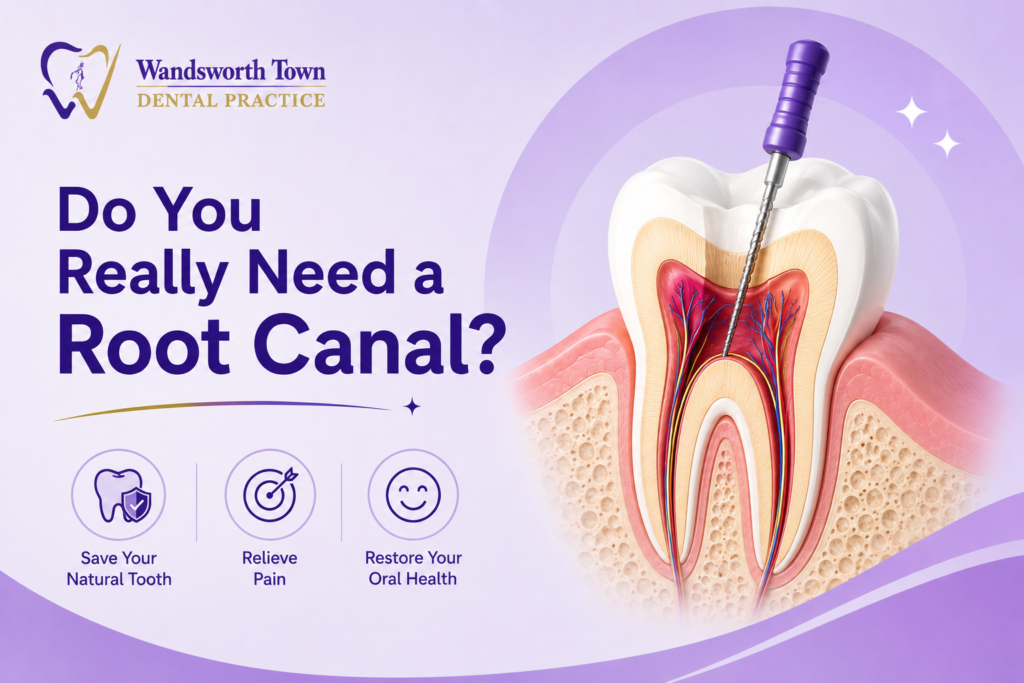
A root canal is a dental treatment use when the soft tissue inside a tooth, called the pulp, becomes inflame or infect.
The pulp contains nerves and blood vessels. Deep decay, cracks, repeated dental procedures, or an injury can damage this area. If the infection is left untreat, it may spread and cause an abscess or further damage.
During root canal treatment, the dentist removes the infected pulp, cleans and disinfects the inside of the tooth, and seals it. The tooth may then be restore with a filling or dental crown, depending on its condition.
Do You Really Need a Root Canal?
The answer depends on the condition of your tooth.
A root canal may be recommend when the tooth pulp is irreversibly inflame or infect. Common signs include:
- Persistent or severe toothache
- Strong sensitivity to hot or cold
- Pain when biting or chewing
- Swelling around the tooth or gums
- A dental abscess
- Darkening or discolouration of the tooth
- A deep cavity that has reached the pulp
- A cracked or injured tooth
However, tooth pain does not automatically mean you need a root canal.
For example, mild sensitivity caused by early tooth decay, gum problems, enamel wear, or temporary irritation may be treated without root canal therapy.
A thorough dental examination and, where appropriate, an X-ray can help determine whether the tooth can be treated with a simpler option.
When Can a Tooth Be Treat Without a Root Canal?
In some cases, your dentist may recommend an alternative treatment.
1. Dental Filling
If decay has not reached the tooth’s pulp, removing the damaged portion and placing a filling may be enough to restore the tooth.
2. Dental Crown
A crown may be suitable when a tooth is significantly weaken but the pulp remains healthy. It covers and protects the remaining tooth structure.
3. Treatment for Gum Problems
Sometimes, pain or sensitivity may be related to gum disease rather than an infected tooth pulp. Treating the underlying gum problem may improve your symptoms.
4. Monitoring
If symptoms are mild and the tooth does not show signs of serious infection, your dentist may recommend monitoring it and reviewing the situation.
The best treatment is always based on an individual dental assessment rather than symptoms alone.
Why Might a Dentist Recommend a Root Canal?
Your dentist may recommend root canal treatment when keeping the natural tooth is still possible but the pulp is too damage to recover.
The main goal is to remove infection, relieve pain, protect the tooth, and preserve your natural smile.
Saving your natural tooth can often help maintain normal chewing and prevent neighbouring teeth from shifting into the space.
What Happens If You Avoid a Needed Root Canal?
If an infect tooth is not treat, the problem may become more serious.
An untreated infection can potentially lead to:
- Increasing tooth pain
- Gum swelling
- An abscess
- Damage to surrounding tissues
- Difficulty eating or biting
- Possible tooth loss
Importantly, pain sometimes disappears even when an infection is still present. This can happen when the nerve inside the tooth becomes damaged or dies. Therefore, feeling better does not always mean the problem has gone away.
Root Canal vs Tooth Extraction
If a tooth cannot be successfully restore, extraction may sometimes be recommend. However, when a tooth can be save, root canal treatment may offer an alternative to removing it.
Root Canal Treatment | Tooth Extraction |
Aims to save the natural tooth | Removes the natural tooth |
Removes infected pulp | Removes the entire tooth |
May require a crown or restoration | May require replacement later |
Helps maintain natural chewing function | Can leave a gap if not replaced |
Your dentist can explain the advantages and disadvantages of each option based on your specific dental condition.
Is Root Canal Treatment Painful?
Many people worry that root canal treatment will be painful. Modern dental techniques and local anaesthesia are designe to keep you comfortable during the procedure.
You may experience some sensitivity or discomfort after treatment, particularly for a few days. Your dentist can advise you on appropriate aftercare.
In many cases, treating the source of the infection can help relieve the pain that brought you to the dentist in the first place.
How Can You Tell If You Need a Root Canal?
You cannot reliably diagnose the need for a root canal based on symptoms alone.
Your dentist may assess:
- Your dental and pain history
- The affected tooth
- Your response to temperature or other tests
- Signs of swelling or infection
- The condition of the surrounding gums
- Dental X-rays when clinically appropriate
This assessment helps your dentist determine whether root canal treatment, a filling, a crown, monitoring, extraction, or another treatment is appropriate.
When Should You See a Dentist?
Do not ignore persistent tooth pain or sensitivity. Arrange a dental appointment if you experience:
- Severe or ongoing toothache
- Pain when chewing
- Prolonged hot or cold sensitivity
- Swollen gums
- Facial swelling
- A broken or cracked tooth
- A recurring dental problem
If you develop significant facial swelling, difficulty breathing or swallowing, or other severe symptoms, seek urgent dental or medical care.
Protect Your Teeth From Root Canal Problems
You cannot prevent every dental problem, but good oral care can reduce your risk of severe tooth decay and infection.
Try to:
- Brush your teeth twice a day with fluoride toothpaste.
- Clean between your teeth every day.
- Limit frequent sugary foods and drinks.
- Attend regular dental check-ups.
- Treat cavities before they become more advanced.
- Wear a mouthguard during suitable sports activities.
- Contact your dentist after a dental injury.
Early treatment can often make dental problems easier to manage.
Conclusion
Not every toothache requires a root canal. However, when the pulp inside a tooth is seriously infect or damage, root canal treatment may be an effective way to save the natural tooth.
The only reliable way to know whether you need one is to have your tooth properly assessed by a qualified dentist.
If you are experiencing persistent tooth pain or have been advise that you may need a root canal, Wandsworth Town Dental Practice can assess your dental health and discuss the treatment options available to you.
Follow up Instagram and Facebook for more information.