
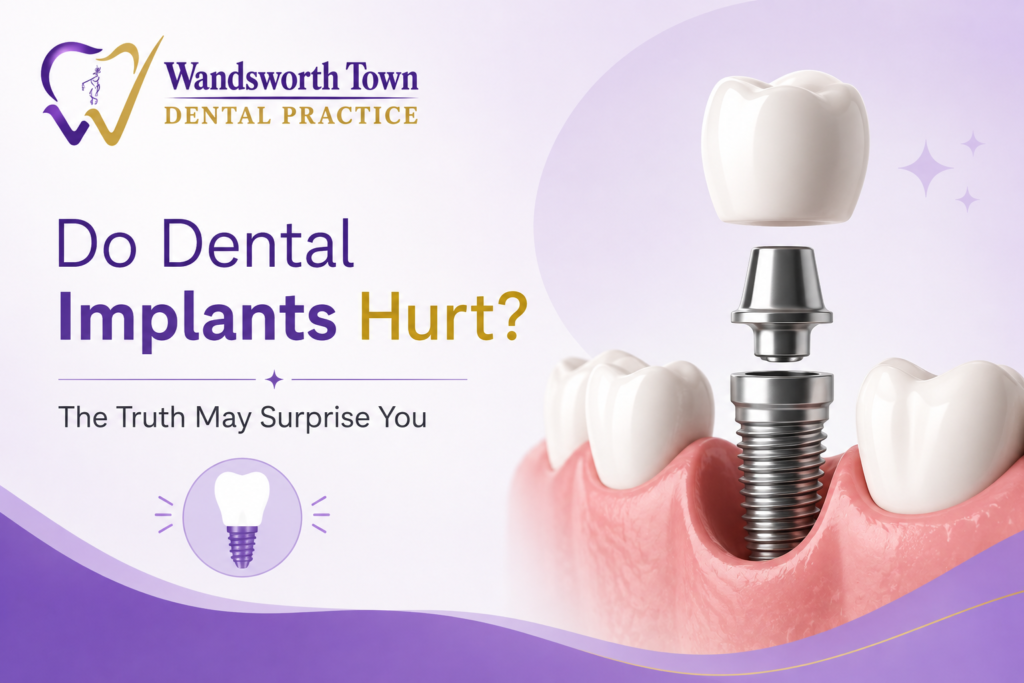
Do Dental Implants Hurt? An Honest Answer
Dental implants are a popular way to replace missing teeth and restore a natural-looking smile. However, one of the biggest concerns people have before treatment is simple: Do dental implants hurt?
The honest answer is that you may feel some discomfort, but dental implants are usually not painful during the procedure. Your dentist will use local anaesthesia to numb the area, so you should not feel pain while the implant is placed.
Understanding what happens before, during, and after dental implant treatment can help you feel more comfortable and confident about your treatment.
Do Dental Implants Hurt During the Procedure?
For most patients, dental implant surgery is done under local anaesthesia. This numbs the area around the tooth and jaw before the treatment begins.
You should not feel sharp pain during the procedure. However, you may notice some pressure, movement, or vibration while your dentist works.
If you feel uncomfortable at any point, tell your dentist. They can check the area and make sure you are adequately comfortable before continuing.
What Does a Dental Implant Procedure Involve?
A dental implant replaces the root of a missing tooth with a small titanium implant. After the implant heals and joins with the jawbone, a dental crown is placed on top to replace the visible part of the tooth.
The treatment usually involves several stages:
- Consultation and assessment: Your dentist checks your teeth, gums, jawbone, and overall oral health.
- Implant placement: The implant is carefully place into the jawbone while the area is numb.
- Healing period: The jawbone gradually bonds with the implant.
- Abutment placement: An abutment connects the implant to the replacement tooth.
- Crown placement: A custom-made crown is fit to complete your new smile.
The exact process can vary depending on your dental health and treatment plan.
What Does Dental Implant Pain Feel Like After Surgery?
Once the anaesthetic wears off, you may experience mild soreness, swelling, or tenderness around the implant site. This is a normal part of the healing process.
Some patients say it feels similar to having a tooth removed. Any discomfort is usually mild and should get better as your mouth heals.
Your dentist will give you specific aftercare instructions. Following these carefully can help support a smoother recovery.
How Long Does Dental Implant Pain Last?
Discomfort is often most noticeable during the first few days after implant surgery. Swelling and tenderness may also occur during this period.
As healing continues, these symptoms should gradually settle. Your recovery time can depend on factors such as:
- The number of implants placed
- The location of the implant
- Your general oral health
- Whether bone grafting was require
- How well you follow aftercare instructions
Everyone heals differently, so your dentist can give you a more personalised idea of what to expect.
Is Dental Implant Pain Worse Than Tooth Extraction?
This can be different for each person. Both treatments may cause some temporary discomfort, but dental implant surgery is usually done while the area is completely numb.
The important difference is that an implant procedure is design to replace a missing tooth and provide a long-term solution.
Your dentist can explain what level of discomfort you may reasonably expect based on your specific treatment.
What Can Help With Dental Implant Discomfort?
After the procedure, your dentist may suggest pain relief and give you simple instructions to care for the treated area.
You can also help your recovery by:
- Following your dentist’s aftercare advice
- Eating softer foods initially
- Avoiding unnecessary pressure around the implant
- Keeping your mouth clean as advised
- Avoiding smoking, as it can interfere with healing
- Attending your follow-up appointments
Do not take medication that has not been recommended or approved by your dentist or healthcare professional.
When Should You Contact Your Dentist?
Some discomfort after implant surgery is normal. However, contact your dentist if you have severe or increasing pain, a lot of swelling, ongoing bleeding, fever, or any other worrying symptoms.
Early assessment can help identify potential complications and ensure you receive appropriate treatment.
Are Dental Implants Worth the Temporary Discomfort?
For many people, dental implants can provide a stable and natural-looking way to replace missing teeth. They can also help restore chewing ability and support confidence when smiling.
Although there may be temporary discomfort during recovery, the long-term benefits can make dental implants an attractive option for suitable patients.
However, implants are not right for everyone. Your dentist should assess your oral health, gums, jawbone, and individual needs before recommending treatment.
How Can You Make Dental Implant Treatment More Comfortable?
Choosing an experienced dental professional and discussing your concerns before treatment can make a big difference.
Do not be afraid to tell your dentist if you are nervous about pain. They can explain the procedure, discuss anaesthesia options, and provide clear aftercare instructions.
Knowing what to expect can make the experience feel much less stressful.
Final Answer: Do Dental Implants Hurt?
So, do dental implants hurt? Usually, the procedure itself should not be painful because the treatment area is numb with local anaesthetic. Some soreness, swelling, and tenderness can occur afterwards, but this is generally temporary.
If you are considering dental implants, the best way to understand your options is to have a professional dental assessment. Your dentist can explain the procedure, expected recovery, and whether implants are suitable for you.
Considering dental implants in Wandsworth? Contact Wandsworth Town Dental Practice to arrange a consultation and discuss your treatment options.
Follow up Instagram and Facebook for more information.