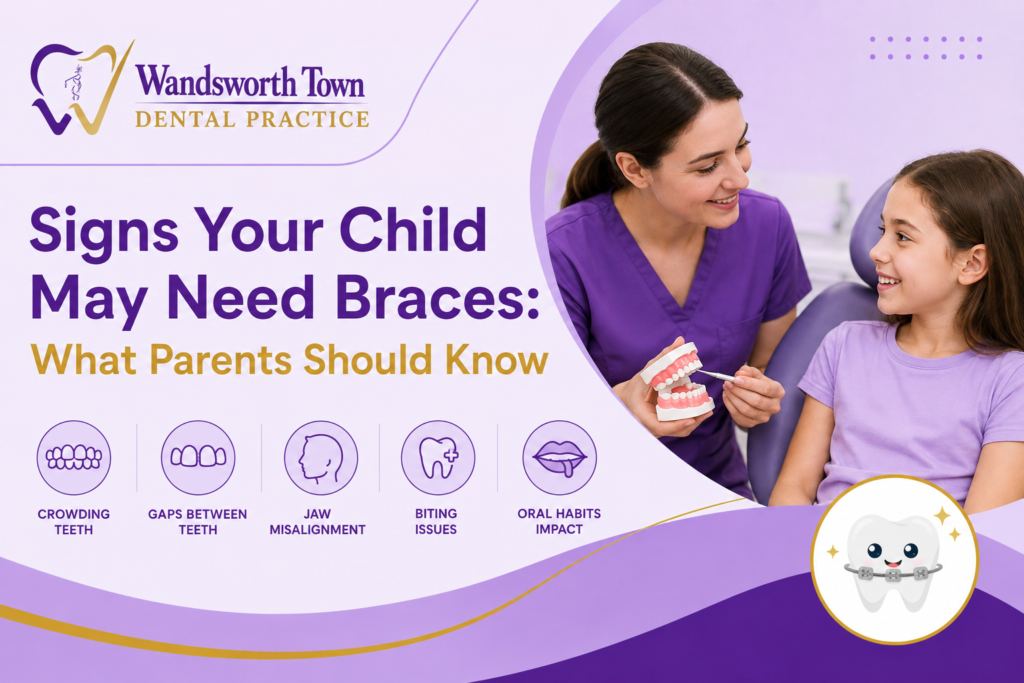
Signs Your Child May Need Braces: What Parents Should Know
Every child’s teeth grow at their own pace. Some children naturally have straight teeth, while others may have crowded, crooked, or uneven teeth. In some cases, braces can help straighten the teeth, improve their position, and support good oral health.
But how do you know if your child may need braces?
There are several signs parents can watch for. Seeing these signs early can help a dentist or orthodontist find tooth alignment problems and suggest the right treatment at the right time.
What Are Braces?
Braces are dental appliances that slowly move teeth into a better position. They can help fix crooked teeth, crowded teeth, gaps, and some bite problems.
Children do not always need braces just because their teeth are not perfectly straight. A dentist or orthodontist should check their teeth, jaw growth, and bite before suggesting braces or other orthodontic treatment.
7 Signs Your Child May Need Braces
1. Crowded or Overlapping Teeth
One of the most noticeable signs is crowded teeth. This happens when there is not enough space in the mouth for all the teeth to fit properly.
You may notice that your child’s teeth:
- Overlap each other
- Twist or turn
- Appear pushed forward or backward
- Are difficult to clean between
Crowding can sometimes make brushing and flossing harder, which may increase the risk of plaque buildup and tooth decay.
2. Crooked or Uneven Teeth
Crooked teeth are another common reason children may be assessed for braces.
A small amount of unevenness does not always require orthodontic treatment. However, if several teeth are significantly out of position, an orthodontic assessment can help determine whether treatment could improve their alignment.
3. Difficulty Biting or Chewing
Pay attention to how your child bites and eats food.
If they regularly struggle to bite into food or find chewing uncomfortable, their teeth or jaw alignment may need to be checked.
Orthodontic problems can sometimes affect how the upper and lower teeth come together. This is known as a malocclusion, or an uneven bite.
4. Teeth That Stick Out
If your child’s upper front teeth appear noticeably prominent, it may be worth discussing this with their dentist.
Protruding teeth can sometimes be more vulnerable to accidental damage. An orthodontic assessment can determine whether braces or another treatment could help improve their position.
5. Gaps Between Teeth
Small gaps between developing teeth can be completely normal, especially while children are losing baby teeth and their adult teeth are coming through.
However, larger or persistent gaps may sometimes be linked to the position or size of the teeth, missing teeth, or other dental factors.
A dentist can assess whether the gaps are part of normal development or need further attention.
6. Early, Late, or Uneven Loss of Baby Teeth
The timing of baby teeth falling out can provide useful information about your child’s dental development.
If baby teeth are lost unusually early or late, or adult teeth appear to be coming through in an unusual position, your dentist may recommend monitoring the development more closely.
This does not necessarily mean your child needs braces. However, early assessment can help identify potential orthodontic concerns.
7. Jaw or Bite Problems
Some children develop noticeable bite differences, such as:
- An overbite, where the upper teeth extend too far over the lower teeth
- An underbite, where the lower teeth sit in front of the upper teeth
- An open bite, where some teeth do not meet when the mouth is closed
- A crossbite, where some upper teeth sit inside the lower teeth
These issues can affect how the teeth function and may require orthodontic assessment.
Does Every Child With Crooked Teeth Need Braces?
No. Crooked teeth do not automatically mean that your child needs braces.
Children’s teeth and jaws continue developing as they grow. Some alignment concerns may improve naturally, while others may become more noticeable over time.
A dental professional can assess your child’s:
- Tooth alignment
- Bite
- Jaw development
- Oral hygiene
- Dental growth
- Available space for adult teeth
Based on this assessment, they can explain whether orthodontic treatment may be beneficial.
When Should Your Child See a Dentist About Braces?
Parents do not need to wait until all their child’s permanent teeth have appeared before asking about orthodontics.
If you notice crowded teeth, unusual bite patterns, prominent teeth, or other concerns, mention them during your child’s regular dental appointment.
Your dentist can monitor their development and advise whether an orthodontic referral may be appropriate.
Why Early Assessment Can Be Helpful
An early assessment does not always mean that treatment needs to start immediately.
In some cases, the best approach is simply to monitor how the teeth and jaws develop. If treatment is likely to be needed later, monitoring can help parents understand what to expect.
Early professional advice can also help identify certain orthodontic problems before they become more complicated.
How Long Do Children Need Braces?
The length of orthodontic treatment varies from child to child.
It depends on factors such as:
- The type of dental problem
- The position of the teeth
- Jaw development
- The type of orthodontic treatment
- How well your child follows their dentist or orthodontist’s instructions
Your dental professional can provide a more personalised estimate after examining your child.
How Can Parents Support Good Oral Health During Braces?
If your child does need braces, good oral hygiene becomes especially important.
Encourage your child to:
- Brush their teeth thoroughly twice a day
- Clean carefully around brackets and wires
- Follow their dentist’s cleaning advice
- Limit sugary snacks and drinks
- Attend regular dental check-ups
- Follow orthodontic instructions carefully
Keeping teeth and gums clean during orthodontic treatment can help reduce the risk of plaque buildup and tooth decay.
Book a Dental Assessment for Your Child in Wandsworth
If you have noticed crooked teeth, overcrowding, gaps, prominent teeth, or bite problems, it is worth discussing your concerns with a dental professional.
At Wandsworth Town Dental Practice, we can assess your child’s dental development and help you understand whether they may benefit from an orthodontic assessment.
Don’t wait for dental concerns to become bigger problems. Book a children’s dental appointment in Wandsworth and get professional advice about your child’s growing smile.
Follow up Instagram and Facebook for more information.