
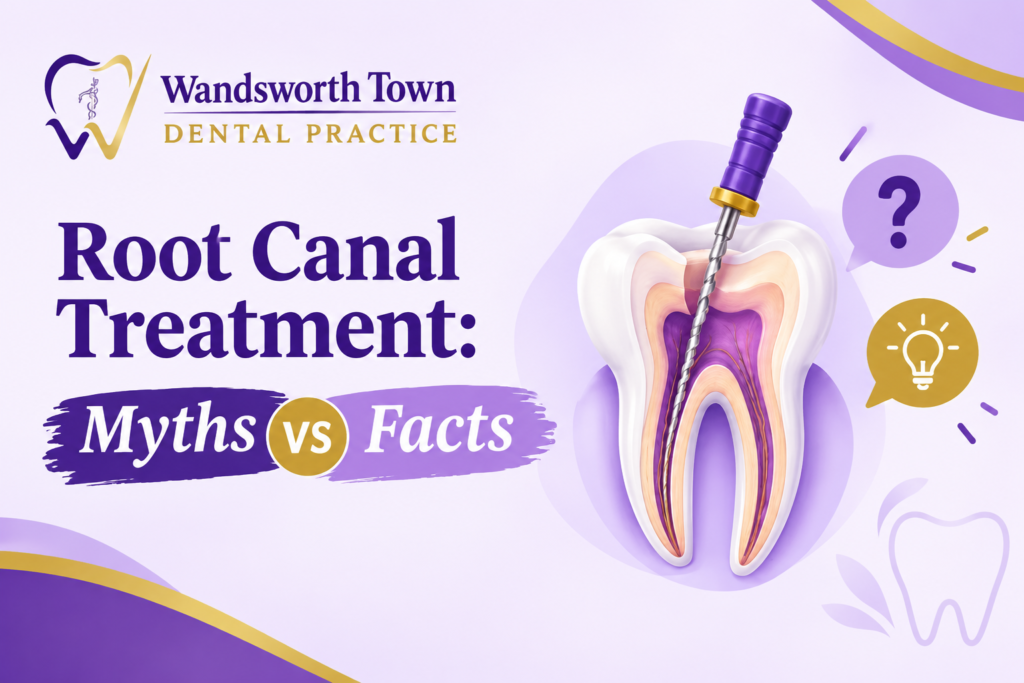
Root Canal Treatment: Myths vs Facts
Root canal treatment is a common dental procedure that can help save a damaged or infected tooth. However, many people feel worried when they hear the words “root canal treatment”.
Over time, several myths about root canal treatment have made patients more anxious about the procedure. In reality, modern dental care can make root canal treatment much more comfortable than many people expect.
At Wandsworth Town Dental Practice, we believe patients should understand their treatment before making a decision. Therefore, this guide explains some common root canal myths and the facts behind them.
What Is Root Canal Treatment?
Root canal treatment is a dental procedure used to treat infection or inflammation inside a tooth. The inside of a tooth contains soft tissue called the dental pulp. If decay, cracks, or injury damage the pulp, bacteria can enter and cause an infection.
During root canal treatment, your dentist removes the infected or damaged pulp. The dentist then cleans and disinfects the inside of the tooth before filling and sealing it.
As a result, root canal treatment can help remove infection and preserve the natural tooth.
Root Canal Treatment: Myths vs Facts
Myth 1: Root Canal Treatment Is Extremely Painful
Fact: Root canal treatment is not designed to cause severe pain.
Your dentist will usually use local anaesthetic to numb the affected area before starting treatment. This helps make the procedure more comfortable.
You may experience some tenderness or discomfort after treatment. However, this usually improves with time. If you have concerns about pain, speak with your dentist before the procedure.
Myth 2: Tooth Extraction Is Better Than Root Canal Treatment
Fact: Saving your natural tooth is often preferable when it can be safely treated.
Root canal treatment can remove infection while allowing you to keep your natural tooth. In comparison, removing a tooth creates a gap that may need further treatment, such as a bridge, denture, or dental implant.
However, not every tooth can be saved. Your dentist will examine the tooth and explain which treatment is appropriate for you.
Myth 3: Root Canal Treatment Always Requires Many Visits
Fact: The number of appointments can vary.
Some root canal treatments may be completed in one appointment, while others may require more than one visit. The number of appointments depends on factors such as the tooth involved, the severity of infection, and the complexity of the root canals.
Your dentist will explain the expected treatment process during your assessment.
Myth 4: Root Canal Treatment Removes the Whole Tooth
Fact: Root canal treatment is performed to save the tooth, not remove it.
During the procedure, the dentist removes the infected or damaged pulp from inside the tooth. The outer structure of the tooth remains.
After the root canal is completed, the tooth is restored with a suitable filling or, in some cases, a crown. This helps protect the tooth and restore its function.
Myth 5: Root Canal Treatment Is Only Needed When You Have Severe Pain
Fact: A tooth can need root canal treatment even when pain is not severe.
Some dental infections may cause little or no noticeable pain. Other symptoms can include sensitivity to hot or cold, swelling, tenderness when biting, or a change in tooth colour.
Therefore, regular dental check-ups are important. Your dentist can identify dental problems before they become more serious.
Myth 6: Root Canal Treatment Is Not Successful
Fact: Root canal treatment can be an effective way to treat an infected or damaged tooth.
The outcome depends on factors such as the condition of the tooth, the extent of infection, the quality of the treatment, and how well the tooth is restored and cared for afterwards.
Good oral hygiene and regular dental check-ups can also help protect the treated tooth.
Myth 7: You Cannot Eat Normally After Root Canal Treatment
Fact: Your dentist will advise you when and how to eat after treatment.
You may have some tenderness after the procedure. If your tooth has a temporary filling, your dentist may recommend avoiding certain foods until the final restoration is placed.
Once the tooth has been properly restored, you can generally use it normally. Always follow the specific advice provided by your dentist.
Myth 8: Root Canal Treatment Is Only for Older Adults
Fact: Root canal treatment can be needed by people of different ages.
Children, teenagers, and adults may need root canal treatment if the pulp of a permanent tooth becomes damaged or infected.
Tooth decay, dental trauma, cracks, and other problems can affect people at different stages of life.
When Might You Need Root Canal Treatment?
Your dentist may recommend root canal treatment when the pulp inside your tooth becomes infected or inflamed.
Common causes include:
- Deep tooth decay
- A cracked or damaged tooth
- Dental injury
- Repeated dental procedures on the same tooth
- Infection inside the tooth
Possible symptoms may include:
- Persistent toothache
- Sensitivity to hot or cold
- Pain when biting or chewing
- Swelling around the tooth
- Tender gums
- A dental abscess
- Darkening or discolouration of the tooth
However, symptoms can vary. Some infections may not cause obvious symptoms, so a dental examination may be needed to identify the problem.
What Happens During Root Canal Treatment?
The exact process can vary depending on your tooth and its condition. Generally, your dentist will:
- Examine the tooth and assess the problem.
- Use local anaesthetic to numb the area.
- Create an opening in the tooth.
- Remove the infected or damaged pulp.
- Clean and disinfect the root canals.
- Fill and seal the canals.
- Restore the tooth with a filling or other suitable restoration.
Your dentist will explain each stage and answer any questions before treatment begins.
Is Root Canal Treatment Safe?
Root canal treatment is a well-established dental procedure. Like any dental treatment, it has potential risks and may not be suitable for every tooth.
Your dentist will assess your oral health and explain the benefits, risks, alternatives, and expected outcome before recommending treatment.
If you have concerns about root canal treatment, discussing them with your dentist can help you understand what to expect.
How Can You Care for a Root-Treated Tooth?
After root canal treatment, good oral care remains important. You should:
- Brush your teeth twice a day with fluoride toothpaste.
- Clean between your teeth regularly.
- Attend routine dental check-ups.
- Follow your dentist’s aftercare instructions.
- Avoid damaging habits such as biting very hard objects.
- Have the tooth restored as recommended by your dentist.
These steps can help maintain your treated tooth and support your overall oral health.
When Should You See a Dentist?
Do not ignore ongoing tooth pain, swelling, or sensitivity. A dental infection can become more serious if it is left untreated.
You should contact a dentist if you experience persistent toothache, swelling, pain when biting, or other unusual dental symptoms.
If you have severe swelling that affects breathing or swallowing, seek urgent medical attention.
Root Canal Treatment in Wandsworth
If you are looking for root canal treatment in Wandsworth, Wandsworth Town Dental Practice provides personalised dental care based on your individual needs.
Our dental team can assess your symptoms, explain your treatment options, and help you understand what to expect. Whether you have tooth pain, sensitivity, or concerns about an infected tooth, an assessment can help identify the cause.
Conclusion
Root canal treatment does not need to be something you fear. Many common beliefs about the procedure are based on outdated experiences or misunderstandings.
Most importantly, early dental assessment can help identify problems and provide suitable treatment options. If you have persistent tooth pain, sensitivity, swelling, or other concerns, speak with a dental professional.
For patients seeking root canal treatment in Wandsworth, Wandsworth Town Dental Practice can assess your dental needs and explain the available treatment options.
Follow up Instagram and Facebook for more information.
Frequently Asked Questions
Is root canal treatment painful?
Modern root canal treatment is performed using local anaesthetic to numb the area. Some tenderness may occur after treatment, but your dentist can advise you on managing any discomfort.
How long does root canal treatment take?
Treatment time varies depending on the tooth and the complexity of the case. Some treatments may require one appointment, while others may need additional visits.
Can a root canal save my tooth?
Root canal treatment is designed to remove infection from inside a tooth and help preserve the natural tooth when possible. Your dentist will determine whether the tooth can be treated successfully.
What happens if I do not have root canal treatment?
An untreated infection can become more serious and may damage the surrounding tissues. In some cases, the tooth may eventually need to be removed.
Do all tooth infections need root canal treatment?
No. The appropriate treatment depends on the cause and extent of the problem. Your dentist will assess the tooth and recommend the most suitable option.