
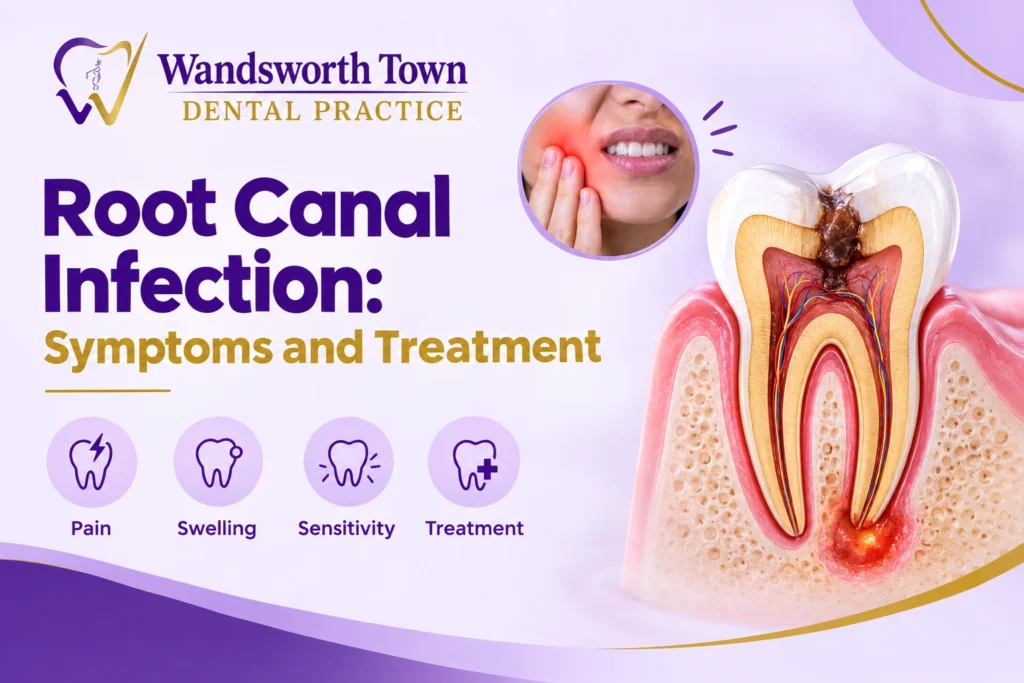
Root Canal Infection: Symptoms and Treatment
A root canal infection can cause toothache, sensitivity, swelling and discomfort when eating. It usually develops when bacteria enter the inner part of a tooth, known as the pulp. This can happen because of deep tooth decay, a cracked tooth or an untreated dental injury.
Early treatment can help relieve pain and may save your natural tooth. Therefore, it is important to recognise the warning signs and seek dental advice.
At Wandsworth Town Dental Practice in London, patients can learn about root canal treatment and suitable options for protecting their oral health.
What Is a Root Canal Infection?
A root canal infection occurs when bacteria reach the soft tissue inside a tooth. This tissue contains nerves and blood vessels and is called the dental pulp.
When bacteria enter the pulp, they can cause inflammation and infection. If the infection spreads beyond the root, it may lead to an abscess, which is a pocket of pus.
Without suitable treatment, the infection can damage the surrounding tissues and may eventually result in tooth loss.
Common Symptoms of a Root Canal Infection
The symptoms of a root canal infection can vary from person to person. Some people experience severe pain, while others may notice only mild discomfort.
Here are some common warning signs to look out for.
1. Persistent Toothache
A continuous or throbbing toothache may indicate a problem inside the tooth. The pain can become worse when chewing or lying down. It may also spread to the jaw or nearby areas.
2. Sensitivity to Hot and Cold
You may experience sharp pain when drinking hot tea or eating cold foods. If the discomfort continues after the hot or cold item has been removed, it may indicate damage to the dental pulp.
3. Swollen or Tender Gums
Infected teeth can cause swelling and tenderness in the surrounding gums. You may also notice a small pimple-like bump on the gum near the affected tooth.
This bump may indicate a dental abscess and requires prompt dental assessment.
4. Pain When Biting or Chewing
An infected or damaged tooth may feel painful when you bite down. This discomfort can make eating difficult and may gradually become worse.
5. Tooth Discolouration
An infected tooth may turn grey or darker than the surrounding teeth. This can happen when the pulp becomes damaged or dies.
However, tooth discolouration can have other causes, so a dentist should assess the tooth.
6. Bad Taste or Bad Breath
An infection that drains into the mouth may cause an unpleasant taste or persistent bad breath. You might also notice fluid coming from a swollen area of the gum.
7. Facial Swelling or Fever
A spreading dental infection can cause swelling in the face or jaw. You may also develop a fever or feel generally unwell.
Important: Facial swelling, fever or rapidly worsening symptoms need urgent dental assessment. If you have difficulty breathing or swallowing, or significant swelling around your mouth or neck, seek emergency medical care immediately.
What Causes a Root Canal Infection?
Several dental problems can allow bacteria to reach the pulp inside a tooth.
Common causes include:
- Deep tooth decay: Untreated cavities can allow bacteria to reach the pulp.
- Cracked or broken teeth: Cracks can provide a pathway for bacteria to enter the tooth.
- Dental injuries: A blow to the mouth may damage the pulp, even if the tooth looks normal.
- Repeated dental procedures: Extensive treatment on the same tooth may sometimes affect the pulp.
- Untreated tooth damage: Delaying dental care can allow the problem to progress.
Regular dental check-ups and early treatment of cavities can help reduce the risk of infection.
How Is a Root Canal Infection Diagnosed?
A dentist will examine the affected tooth and ask about your symptoms. They may check your response to temperature, gently test the tooth and examine the surrounding gums.
A dental X-ray may also be needed to look for changes around the root or signs of infection in the surrounding bone.
Based on these findings, the dentist can recommend the most suitable treatment. Not every painful tooth needs a root canal, so an accurate diagnosis is important.
Root Canal Infection Treatment Options
The treatment depends on the extent of the infection, the condition of the tooth and your overall dental health.
1. Root Canal Treatment
Root canal treatment is often recommended when the pulp is infected or irreversibly damaged, but the tooth can still be saved.
During the procedure, the dentist:
- Numbs the affected area with local anaesthetic.
- Creates a small opening in the tooth.
- Removes the infected or damaged pulp.
- Cleans and disinfects the root canals.
- Fills and seals the canals to help prevent further infection.
- Restores the tooth with a suitable filling or, when needed, a crown.
Root canal treatment aims to remove the source of infection while preserving your natural tooth. Depending on the tooth and the complexity of the case, treatment may require one or more appointments.
2. Dental Crown or Filling
After root canal treatment, the tooth needs a suitable restoration to protect it and restore its function.
A filling may be sufficient in some cases. However, a crown may be recommended for teeth that have lost significant structure or need additional protection against fracture.
Your dentist will assess the tooth and explain the appropriate option.
3. Tooth Extraction
Sometimes, a tooth is too damaged to restore successfully. In these cases, the dentist may recommend extraction.
Where possible, saving the natural tooth may be preferable. However, the right choice depends on the tooth’s condition, the expected treatment outcome and your individual needs.
4. Antibiotics for Certain Infections
Antibiotics are not routinely required for every root canal infection. Root canal treatment or another procedure is usually needed to address the source of the problem.
A dentist or doctor may prescribe antibiotics when there are signs of spreading infection or particular systemic symptoms. Do not take leftover antibiotics or use them without professional advice.
Can a Root Canal Infection Go Away on Its Own?
A true infection inside the dental pulp will not reliably clear up on its own. Pain may temporarily improve if the nerve dies, but this does not necessarily mean the infection has gone.
The infection can continue to develop and may spread into the surrounding tissues. Therefore, even if your tooth stops hurting, you should arrange a dental assessment if you suspect an infection.
Early treatment can help prevent complications and improve the chance of saving the tooth.
How Can You Prevent a Root Canal Infection?
Although not every infection can be prevented, good oral hygiene can reduce your risk.
Follow these simple steps:
- Brush your teeth twice a day with fluoride toothpaste.
- Clean between your teeth daily using floss or interdental brushes.
- Limit sugary snacks and drinks.
- Attend regular dental check-ups.
- Seek treatment for cavities, cracks or damaged teeth as early as possible.
- Wear a suitable mouthguard during contact sports.
Most importantly, do not ignore persistent toothache or unusual sensitivity.
When Should You See a Dentist?
Arrange a dental appointment if you experience persistent toothache, prolonged sensitivity, pain when biting, gum swelling or unexplained tooth discolouration.
Seek urgent dental care if you notice pus, facial swelling, fever or worsening pain. Do not wait for symptoms to become severe.
If you experience difficulty breathing or swallowing, or severe swelling involving the mouth or neck, seek emergency medical care immediately.
Root Canal Treatment at Wandsworth Town Dental Practice
If you are experiencing symptoms of a root canal infection, a dental assessment can help identify the cause and determine the next steps.
At Wandsworth Town Dental Practice in Wandsworth, London, patients can discuss their symptoms, suitable treatment options and ways to protect their natural teeth.
Whether you are concerned about persistent toothache, sensitivity or a possible dental abscess, seeking advice early can help you understand your options.
Book a dental appointment to have your symptoms assessed and receive advice tailored to your needs. Urgent appointments are subject to availability and clinical assessment.
Conclusion
A root canal infection can cause persistent pain, sensitivity and swelling. However, timely dental assessment can help identify the problem and guide the right treatment.
Do not ignore warning signs or assume that pain disappearing means the infection has cleared. If you are concerned about a tooth, contact Wandsworth Town Dental Practice in London to discuss an appropriate dental assessment.
Follow up Instagram and Facebook for more information.
Frequently Asked Questions
What is the first sign of a root canal infection?
Persistent toothache or sensitivity to hot and cold may be an early sign. However, some infections cause few symptoms, so a dental examination may be needed to identify the problem.
How painful is root canal treatment?
Root canal treatment is usually carried out under local anaesthetic to keep you comfortable. You may experience mild tenderness afterwards, but your dentist can advise you on suitable pain relief and aftercare.
Can a root canal infection spread to other parts of the body?
Yes. In some cases, an untreated dental infection can spread into nearby tissues and, rarely, cause a serious systemic infection. Prompt dental care is important, particularly if swelling or fever develops.
Do I always need a crown after root canal treatment?
No. The need for a crown depends on the tooth’s location, the amount of remaining tooth structure and the risk of fracture. Your dentist will recommend a suitable restoration after assessing the tooth.
How long can you leave a root canal infection untreated?
You should not deliberately delay treatment. The infection may worsen even if the pain temporarily disappears. Contact a dentist as soon as you suspect a root canal infection.
Is root canal treatment better than tooth extraction?
When a tooth can be restored successfully, root canal treatment may help preserve your natural tooth. However, extraction may be more appropriate when the damage is too extensive. Your dentist can explain the benefits and limitations of each option.
Can antibiotics cure a root canal infection?
Antibiotics alone generally cannot eliminate an infection inside the root canal. Treatment to address the source of the infection is usually necessary. Antibiotics may be appropriate in selected cases.