
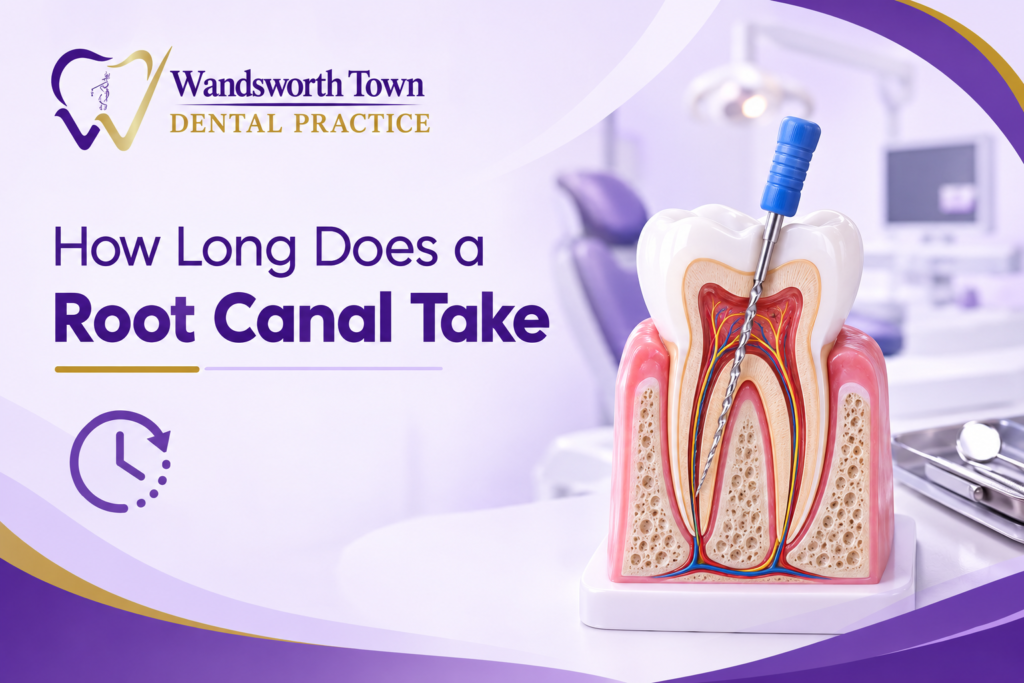
How Long Does a Root Canal Take?
A root canal is a common dental treatment use to save a tooth affect by infection or damage inside the tooth. Many people worry about how long the procedure will take.
So, how long does a root canal take? In many cases, treatment can take around 60 to 90 minutes per appointment. However, the exact time depends on the tooth, the level of infection, and the complexity of the treatment.
If you are looking for root canal treatment in Wandsworth, your dentist can examine your tooth and explain how many appointments you may need.
What Is a Root Canal Treatment?
A root canal treats infection or inflammation inside the tooth. The dentist removes the infected or damaged pulp, cleans the inside of the tooth, and seals it to help prevent further infection.
The treatment can help save your natural tooth and may reduce pain caused by an infected tooth.
How Long Does a Root Canal Take?
The time needed for a root canal varies from person to person.
Generally:
- A straightforward root canal may take about 60 to 90 minutes.
- Some teeth may need more than one appointment.
- Complex cases may take longer.
- A tooth with significant infection may require additional treatment before it can be permanently restore.
Your dentist will assess your tooth before treatment and give you a more accurate estimate.
How Many Appointments Does a Root Canal Need?
Some root canal treatments can be complete in one appointment. However, other cases may need two or more appointments.
Your dentist may recommend additional appointments when:
- The tooth has a significant infection.
- The root canals are difficult to access.
- The tooth has several canals.
- Further cleaning or medication is need.
- The tooth needs a crown or another restoration after treatment.
Therefore, the number of appointments depends on your individual dental needs.
What Happens During a Root Canal?
A root canal usually involves several steps.
1. Examination and X-ray
First, your dentist checks the tooth. They may also take an X-ray to see the roots and look for signs of infection.
2. Local Anaesthetic
The dentist uses local anaesthetic to numb the area. This helps make the procedure more comfortable.
3. Removing the Infected Pulp
Next, the dentist makes a small opening in the tooth and carefully removes the infected or damaged pulp.
4. Cleaning the Root Canals
The dentist cleans and shapes the root canals to remove bacteria and infected material.
5. Sealing the Tooth
After cleaning the tooth, the dentist fills and seals the root canals. This helps stop bacteria from getting back into the tooth.
6. Restoring the Tooth
Finally, the dentist may recommend a filling or crown to protect the treated tooth. The best option depends on how much healthy tooth structure remains.
Does a Root Canal Hurt?
Many people worry that root canal treatment will be painful. However, modern dental techniques and local anaesthetic help make the procedure more comfortable.
You may have some mild pain or sensitivity after treatment. However, it usually gets better as the area heals.
If you experience severe or persistent pain after treatment, contact your dentist for advice.
How Long Does It Take to Recover From a Root Canal?
Most people can return to their normal routine soon after a root canal. However, the treated tooth may feel tender for a few days.
Your dentist may give you specific aftercare advice. You should follow these instructions carefully and avoid putting excessive pressure on the treated tooth until your dentist confirms that it is ready for normal use.
When Should You See a Dentist?
You should arrange a dental appointment if you have symptoms such as:
- Severe or persistent toothache
- Pain when biting or chewing
- Sensitivity to hot or cold
- Swelling around the tooth
- Tender or swollen gums
- A darkened tooth
- A recurring dental abscess
Sometimes, an infected tooth may not cause obvious symptoms. Therefore, regular dental examinations can help identify problems early.
If you develop significant facial swelling or have difficulty swallowing or breathing, seek urgent medical help immediately. In particular, difficulty breathing is a medical emergency and requires prompt attention.
Root Canal Treatment in Wandsworth
If you have tooth pain or symptoms that may indicate an infection, a dental examination can help identify the cause.
At Wandsworth Town Dental Practice, patients can discuss their symptoms with the dental team and receive advice based on their individual needs. The dentist can assess the tooth and explain whether root canal treatment is appropriate.
Conclusion
So, how long does a root canal take? A typical appointment may take around 60 to 90 minutes, but treatment time varies depending on the tooth and the complexity of the case.
If you have ongoing tooth pain, sensitivity, swelling, or other symptoms, do not ignore them. Instead, arrange a dental examination to help identify the problem. In addition, your dentist can determine whether root canal treatment may be suitable for your tooth.
Follow up Instagram and Facebook for more information.
Frequently Asked Questions
How long does a root canal take?
A root canal usually takes about 60 to 90 minutes per appointment. However, the time may vary depending on the tooth and how complex the treatment is.
Can a root canal be complete in one visit?
Yes, some root canals can be complete in one appointment. However, complex cases or teeth with significant infection may require additional appointments.
Is a root canal painful?
Local anaesthetic is normally use during the procedure to keep the area numb. Some tenderness may occur after treatment.
How long does a root canal tooth last?
A properly treated and restored tooth can remain functional for many years. However, good oral hygiene, regular dental check-ups, and protecting the tooth can help maintain its health and function over time.
Do I need a crown after a root canal?
Not every tooth needs a crown. However, a crown may be recommende when the tooth has lost significant structure or needs additional protection.
Can I go back to work after a root canal?
Many people can return to their normal activities after treatment. Your dentist can advise you based on the treatment performed and how you feel afterwards.