
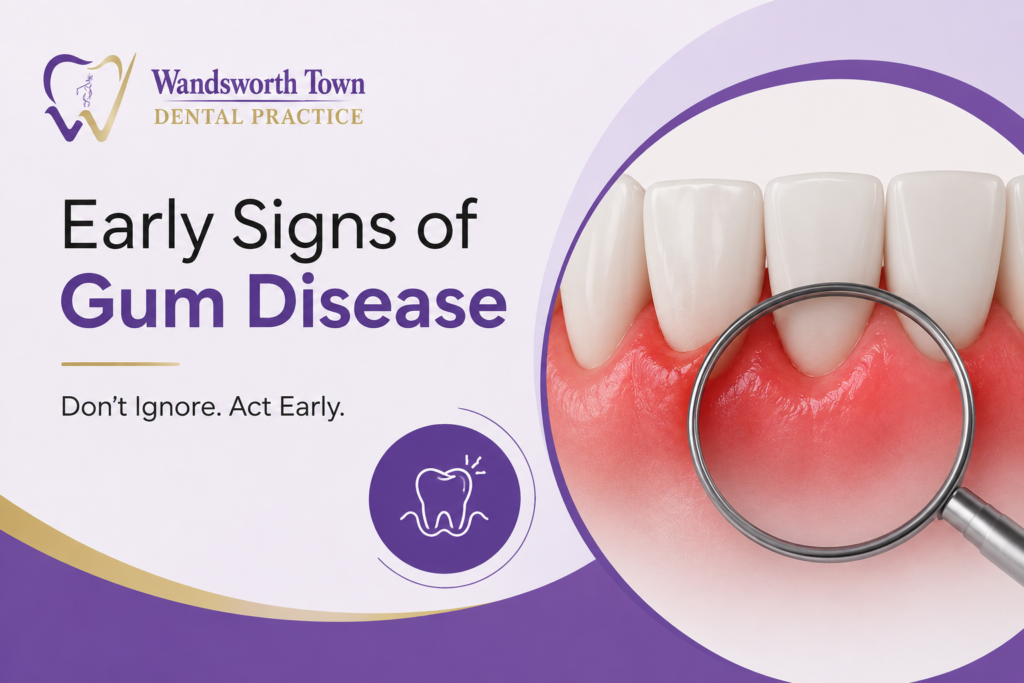
Early Signs of Gum Disease: How to Spot Problems Before They Become Serious
Healthy gums are the foundation of a healthy smile. However, gum disease often develops gradually, and many people do not notice the warning signs until the condition has progressed. Recognising the early signs of gum disease can help you seek treatment sooner, prevent tooth loss, and protect your overall oral health.
At Wandsworth Town Dental Practice, we encourage patients to attend regular dental check-ups because early detection makes gum disease much easier to treat. The sooner gum problems are identify, the better the chances of maintaining healthy teeth and gums for life.
What Is Gum Disease?
Gum disease, also known as periodontal disease, is an infection of the gums cause by plaque bacteria. Plaque is a sticky film that forms on your teeth every day. If it is not remove through brushing, flossing, and professional dental cleaning, it hardens into tartar, which can only be remove by a dental professional.
The early stage of gum disease is call gingivitis. At this stage, the damage is usually reversible with good oral hygiene and professional treatment. If left untreated, gingivitis can progress to periodontitis, a more serious condition that affects the bone supporting your teeth.
Early Signs of Gum Disease
Knowing what to look for can help you take action before permanent damage occurs.
Bleeding Gums
One of the most common early signs is bleeding while brushing or flossing. Healthy gums should not bleed regularly. If you notice blood when cleaning your teeth, it may indicate inflammation caused by plaque build-up.
Red or Swollen Gums
Healthy gums are firm and light pink. Inflamed gums often appear red, swollen, or tender to the touch. This is your body’s response to bacterial infection.
Persistent Bad Breath
Bad breath that does not improve after brushing or using mouthwash could be a sign of bacteria collecting beneath the gum line. Professional treatment may be need to remove the source of the infection.
Sensitive or Tender Gums
If your gums feel sore while eating, brushing, or flossing, this could be an early indication of gum inflammation.
Gum Recession
As gum disease develops, the gums may begin to pull away from the teeth, making your teeth appear longer than before. Gum recession can also increase tooth sensitivity.
Plaque and Tartar Build-Up
Visible plaque or yellowish tartar near the gum line increases the risk of developing gum disease. Regular professional cleaning helps remove these deposits before they cause more serious problems.
Mild Tooth Sensitivity
You may notice increased sensitivity to hot, cold, or sweet foods. While sensitivity has many possible causes, gum disease can expose the roots of your teeth, leading to discomfort.
What Causes Gum Disease?
Several factors can increase your risk of developing gum disease, including:
- Poor oral hygiene
- Smoking or tobacco use
- Diabetes
- Hormonal changes during pregnancy or menopause
- Certain medications that less saliva
- Stress
- Family history of gum disease
- Poor nutrition
- Infrequent dental visits
Understanding these risk factors allows you to take preventive steps before problems develop.
Why Early Treatment Is Important
Ignoring the early signs of gum disease can allow the infection to spread deeper below the gum line. Over time, untreated gum disease may lead to:
- Severe gum infections
- Gum recession
- Loose teeth
- Bone loss around the teeth
- Tooth loss
- More complex and expensive dental treatment
Early diagnosis helps prevent these complications and keeps treatment simple and effective.
How Dentists Diagnose Gum Disease
During your routine dental examination, your dentist will carefully assess the health of your gums by:
- Checking for bleeding and inflammation
- Measuring the depth of the gum pockets
- Looking for signs of gum recession
- Examining plaque and tartar build-up
- Taking dental X-rays if necessary to assess bone health
Regular dental examinations allow problems to be identify before they become painful or advance.
How Gum Disease Is Treat
Treatment depends on the severity of the condition.
Professional Dental Cleaning
For early-stage gingivitis, professional cleaning removes plaque and tartar that cannot be removed at home.
Scale and Polish
A thorough scale and polish helps eliminate harmful bacteria and creates a cleaner surface that makes plaque less likely to accumulate.
Deep Cleaning (Scaling and Root Planing)
If gum disease has progressed, deep cleaning below the gum line removes bacteria and encourages the gums to heal.
Improved Home Care
Your dentist may recommend better brushing techniques, daily flossing, and interdental brushes to change your oral hygiene routine.
Regular Maintenance Appointments
Patients with a history of gum disease may benefit from more frequent hygiene appointments to prevent recurrence.
How to Prevent Gum Disease
Most cases of gum disease can be prevent with regular oral care.
Follow these simple habits:
- Brush your teeth twice daily using fluoride toothpaste.
- Clean between your teeth every day using floss or interdental brushes.
- Attend regular dental check-ups and hygiene appointments.
- Limit sugary foods and drinks.
- Ignore smoking and tobacco products.
- Eat a balanced diet rich in vitamins and minerals.
- Replace your toothbrush every three months or sooner if the bristles become worn.
Small daily habits make a significant difference in keeping your gums healthy.
When Should You See a Dentist?
Do not ignore symptoms such as bleeding gums, persistent bad breath, swollen gums, or gum recession. Even mild signs can indicate the beginning of gum disease.
Booking an appointment as soon as you notice these warning signs allows treatment to begin before permanent damage occurs.
Protect Your Gum Health with Wandsworth Town Dental Practice
At Wandsworth Town Dental Practice, we believe prevention is the best treatment. Our experienced dental team provides comprehensive gum health assessments, professional hygiene treatments, and personalised advice to help you maintain healthy gums and a confident smile.
If you have noticed any early signs of gum disease, contact our friendly team today to arrange a dental examination. Early treatment can protect your teeth, change your oral health, and help you enjoy a healthier smile for years to come. Follow up Instagram and Facebook for more information.
Frequently Asked Questions
Can gum disease be reverse?
Yes. Early-stage gum disease (gingivitis) can often be reverse with professional dental cleaning, change oral hygiene, and regular dental visits.
Do bleeding gums always mean gum disease?
Not always, but frequent bleeding while brushing or flossing is a common sign of gum inflammation and should be checked by a dentist.
Is gum disease painful?
In its early stages, gum disease is often painless. This is why regular dental check-ups are essential for early detection.
How often should I have my teeth professionally cleaned?
Most people benefit from professional cleaning every six months, although some patients may require more frequent hygiene appointments depending on their oral health.
Can gum disease cause tooth loss?
Yes. Untreated gum disease can damage the tissues and bone supporting your teeth, eventually leading to loose teeth and tooth loss.