
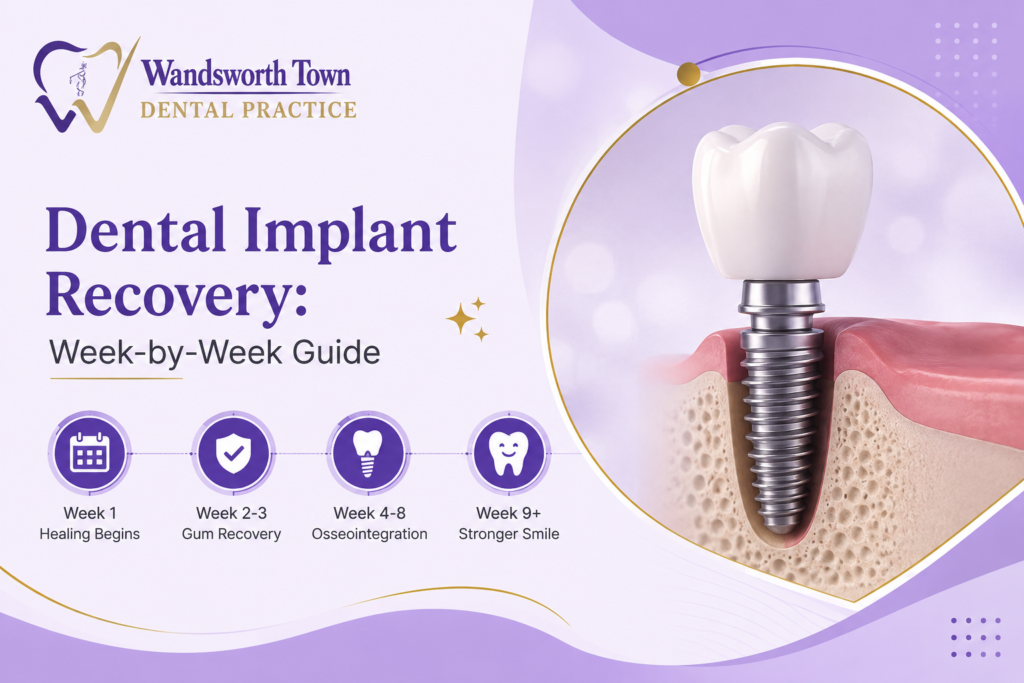
Dental Implant Recovery: Week-by-Week Guide
During dental implant treatment, a small implant is place into the jawbone to act as an artificial tooth root. Your gum is then close, usually with stitches.
Some soreness, swelling, bruising, or slight bleeding is common after the procedure. These symptoms are usually stronger during the first few days and gradually improve as you heal.
The gum may heal within around 1–2 weeks, but the bone takes much longer to bond with the implant. This process, known as osseointegration, can take several months.
Dental Implant Recovery Week by Week
Week 1: Protect the Implant and Manage Swelling
The first week is mainly about allowing the surgical area to settle and protecting the implant.
You may experience:
- Mild to moderate discomfort
- Swelling around the gums or face
- Some bruising
- Minor bleeding
- Tenderness around the implant area
Swelling can be most noticeable during the first 24–48 hours before gradually improving.
Dental Implant Aftercare During Week 1
Follow the specific instructions provided by your dentist. Depending on your treatment, you may be advise to:
- Take recommended pain relief as directed.
- Eat softer foods if chewing is uncomfortable.
- Keep the surgical area clean according to your dentist’s instructions.
- Avoid smoking because it can increase risks associated with implant healing.
- Avoid disturbing the implant or surgical site.
- Attend your scheduled follow-up appointment.
Some patients can return to work the following day, while others may prefer additional rest depending on the complexity of their procedure and type of work.
Week 2: Gum Healing and Follow-Up
By the second week, many patients notice that swelling and discomfort have reduced significantly.
The gums should continue healing, and your dentist may check the surgical site and remove non-dissolving stitches if necessary. Follow-up is commonly arrange around 7–14 days after implant surgery.
Although the gums may look much better, the implant is still healing beneath the surface. This means you should continue following your dentist’s instructions even if you feel completely comfortable.
Weeks 3–4: Healing Continues
During weeks three and four, everyday activities often feel more comfortable. However, the implant is still going through an important healing stage.
The jawbone needs to gradually bond with the implant. This process provides the stability need for the replacement tooth that will eventually be attach.
Good oral hygiene remains important. Your dentist or hygienist can explain how to clean around the implant safely without irritating the healing tissues.
Do not assume that feeling better means the implant has completely healed. Bone healing takes considerably longer than gum healing.
Months 2–3: Osseointegration
During the following months, the implant continues to integrate with your jawbone.
This stage is called osseointegration. It is an important part of dental implant treatment. During this stage, the implant joins with the surrounding bone and becomes strong enough to support the final restoration.
The length of this stage varies from person to person. Some implants may be ready for the next step after about three months, while others may need more time to heal. If bone grafting is needed, it may also make the overall treatment take longer.
Months 3–6 and Beyond: Preparing for Your New Tooth
Once your dentist confirms that the implant has healed sufficiently, treatment can move towards the restorative stage.
Depending on your treatment plan, this may involve:
- Checking the implant and surrounding tissues.
- Attaching an abutment if required.
- Taking impressions or digital scans.
- Designing your crown, bridge or implant-supported denture.
- Fitting and adjusting your final restoration.
Not every patient follows exactly the same timeline. Some implants can be restore sooner, while others require additional healing time.
For this reason, your dentist will monitor your progress and decide when it is appropriate to move to the next stage.
How Long Does Dental Implant Recovery Take?
There is no single recovery timeline that applies to everyone.
The gums may heal in about 1–2 weeks, but the implant can take several months to fully join with the jawbone. In many cases, this healing period takes around 2–6 months, although some people may need more time depending on their individual treatment and healing.
If you need a bone graft, your overall treatment may take longer. Your dentist will explain your expected timeline before treatment.
Tips for a Smooth Dental Implant Recovery
Following your dentist’s aftercare advice is one of the best ways to support healing.
1. Follow Your Dentist’s Instructions
Your dental team will give you personalised advice based on your procedure. Follow these instructions rather than relying on a general recovery timeline.
2. Keep Your Mouth Clean
Good oral hygiene helps keep the treated area and nearby teeth healthy. However, follow your dentist’s instructions when cleaning around the implant, especially during the early healing stage.
3. Avoid Smoking
Smoking can increase the risk of complications and slow down implant healing. Quitting smoking before treatment and avoiding it after treatment can help support better healing and oral health.
4. Choose Comfortable Foods
Soft foods are often easier to eat during the first few days of recovery. As your mouth heals, your dentist can tell you when it is safe to return to your normal diet.
5. Attend Follow-Up Appointments
Follow-up appointments allow your dentist to monitor healing, check the implant and address concerns early.
When Should You Contact Your Dentist?
Some discomfort and swelling are normal after implant surgery. However, contact your dentist if you have any worrying symptoms or feel that your recovery is not going as expected.
Seek professional advice if you experience:
- Increasing rather than improving pain
- Persistent or significant swelling
- Heavy or ongoing bleeding
- Signs of infection
- A loose-feeling implant
- Unusual discharge
- A high temperature or feeling unwell
Persistent or worsening symptoms should not be ignored. Your dental team can assess the area and recommend appropriate treatment.
Does Dental Implant Recovery Hurt?
Some discomfort is normal after dental implant surgery, especially during the first few days. Pain and swelling usually get better as your mouth heals. In some cases, discomfort may last for about a week, but recovery can vary from person to person.
Your dentist can recommend suitable pain relief and explain how to manage discomfort safely.
Can You Return to Normal Activities After Dental Implants?
Many patients can return to normal daily activities relatively quickly, but this depends on the type and extent of treatment.
For a simple implant procedure, some people may be able to return to work the next day. However, more complex treatment, multiple implants, bone grafting, or sedation may mean you need more time to recover.
Always follow the specific advice given by your dental team.
Your Dental Implant Recovery Is a Process
Dental implant recovery does not end when the swelling goes away. Your gums may feel better within a few weeks, but the implant can take several months to fully join with the jawbone.
The best approach is to be patient, maintain good oral hygiene, avoid smoking, attend follow-up appointments and follow your dentist’s personalised instructions.
If you are considering dental implants in Wandsworth to replace missing teeth, speak with a qualified dentist. They can assess your needs and explain whether implants are right for you.