
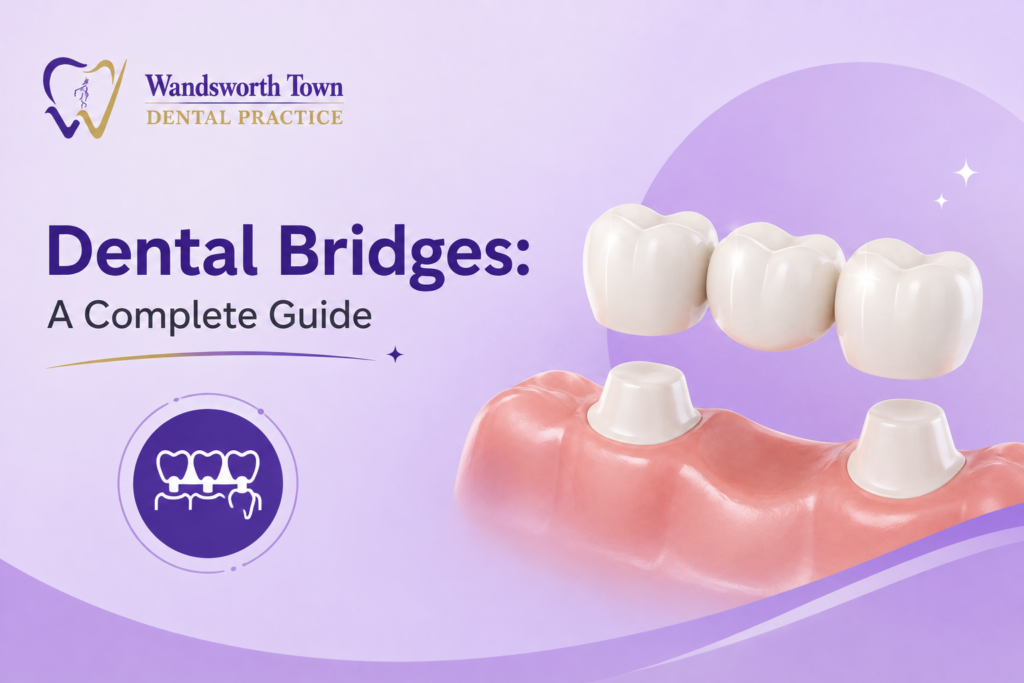
Dental Bridges: A Complete Guide
Missing teeth can affect much more than your smile. They can make eating difficult, change the way you speak, and reduce your confidence. Fortunately, dental bridges offer a reliable and natural-looking solution to replace one or more missing teeth.
At Wandsworth Town Dental Practice, we provide high-quality dental bridges that restore both the appearance and function of your smile. This complete guide explains everything you need to know about dental bridges, including how they work, their benefits, the treatment process, and how to care for them.
What Is a Dental Bridge?
A dental bridge is a fix dental restoration use to replace one or more missing teeth. It literally “bridges” the gap created by missing teeth using one or more artificial teeth, known as pontics.
The bridge is support by the natural teeth on either side of the gap or by dental implants, depending on your individual needs. As a result, your smile looks complete, and your bite feels more comfortable and balanced.
Why Is It Important to Replace Missing Teeth?
Many people believe that replacing a missing tooth is only for cosmetic reasons. However, untreated tooth loss can lead to several oral health problems.
When a tooth is missing:
- Nearby teeth can shift out of position.
- Biting and chewing become more difficult.
- Speaking clearly may become challenging.
- Bone loss can occur in the jaw.
- The risk of gum disease and tooth decay may increase.
- Facial appearance may change over time.
Therefore, replacing missing teeth with a dental bridge helps maintain your oral health while improving your smile.
Types of Dental Bridges
Different types of dental bridges are available, and your dentist will recommend the most suitable option after examining your teeth.
Traditional Dental Bridge
A traditional bridge is the most common type. It uses dental crowns placed on the healthy teeth on either side of the gap to support the artificial tooth.
This option is ideal when strong natural teeth are present on both sides.
Cantilever Bridge
A cantilever bridge is use when there is only one supporting tooth next to the gap. Although less common, it can be suitable in certain cases.
Maryland Bridge
A Maryland bridge uses metal or porcelain wings bonded to the back of the supporting teeth instead of crowns.
Because less tooth preparation is need, this option is consider more conservative.
Implant-Supported Bridge
Instead of relying on natural teeth, this type of bridge is support by dental implants.
Implant-support bridges provide excellent stability, preserve jawbone health, and are often recommend when several teeth are missing.
Benefits of Dental Bridges
Dental bridges provide many functional and cosmetic advantages.
Restore Your Smile
A bridge fills the gap left by missing teeth, giving you a complete and natural-looking smile.
Improve Chewing
You can enjoy a wider variety of foods because your bite becomes stronger and more balanced.
Speak Clearly
Replacing missing teeth often improves speech by helping you pronounce words more naturally.
Prevent Teeth from Moving
Without treatment, surrounding teeth may drift into the empty space. A dental bridge helps keep your teeth properly aligned.
Maintain Facial Shape
Replacing missing teeth supports your facial structure and may help reduce the sunken appearance caused by tooth loss.
Long-Lasting Solution
With proper care, dental bridges can last for many years while providing reliable daily function.
Who Is a Good Candidate for a Dental Bridge?
You may be a suitable candidate if you:
- Have one or more missing teeth.
- Have healthy teeth or dental implants to support the bridge.
- Maintain good oral hygiene.
- Have healthy gums.
- Want a fixed replacement rather than a removable denture.
During your consultation, your dentist will assess your oral health and discuss the most appropriate treatment option.
What Happens During the Dental Bridge Procedure?
The treatment usually takes two appointments.
Initial Consultation
First, your dentist examines your teeth, gums, and bite. Digital X-rays may also be take to evaluate your oral health and plan your treatment.
Tooth Preparation
If a traditional bridge is being place, the supporting teeth are gently reshape so that crowns can fit comfortably.
Impressions
Digital or traditional impressions are take to create a bridge that matches your natural teeth in colour, shape, and size.
Temporary Bridge
Your dentist may place a temporary bridge to protect your prepare teeth while your custom bridge is being create.
Final Placement
Once your permanent bridge is ready, your dentist carefully checks the fit, comfort, and appearance before securely cementing it into place.
How Long Do Dental Bridges Last?
Most dental bridges last between 10 and 15 years, and many last even longer with excellent oral hygiene and regular dental check-ups.
Several factors influence their lifespan, including:
- Daily brushing and flossing
- Regular professional cleanings
- Avoiding hard foods and chewing ice
- Not using your teeth to open packaging
- Wearing a mouthguard if you grind your teeth
How to Care for Your Dental Bridge
Proper care helps your bridge remain healthy and functional.
Follow these simple tips:
- Brush your teeth twice daily using fluoride toothpaste.
- Clean underneath the bridge with floss threaders or interdental brushes.
- Attend regular dental check-ups and professional cleanings.
- Limit sugary foods and drinks.
- Avoid biting very hard objects.
Good oral hygiene protects both your bridge and the supporting teeth.
Dental Bridges vs Dental Implants
Both options replace missing teeth, but they have different advantages.
Dental Bridges | Dental Implants |
Fixed restoration | Fixed restoration |
Usually completed faster | Longer treatment time |
Lower initial cost | Higher initial investment |
Supported by nearby teeth | Supported by the jawbone |
Suitable for many patients | Helps preserve jawbone density |
Your dentist will explain which treatment best suits your oral health, budget, and long-term goals.
How Much Do Dental Bridges Cost?
The cost of a dental bridge depends on several factors, including:
- Type of bridge
- Number of missing teeth
- Materials used
- Complexity of treatment
- Whether additional procedures are need
During your consultation, you will receive a personalised treatment plan and a clear cost estimate before treatment begins.
Follow up Instagram and Facebook for more information.
Frequently Asked Questions
Are dental bridges painful?
The procedure is perform under local anaesthetic, making treatment comfortable. Mild sensitivity afterwards usually settles within a few days.
How long does it take to get a dental bridge?
Most traditional dental bridges are complete in two appointments over two to three weeks.
Can I eat normally with a dental bridge?
Yes. After a short adjustment period, most patients return to eating comfortably. Initially, softer foods are recommend.
Will my dental bridge look natural?
Yes. Modern bridges are custom-made to match the colour, shape, and size of your natural teeth for a seamless appearance.
Can a dental bridge be repair?
Minor issues can sometimes be repair. However, if a bridge becomes damaged or worn, replacement may be the best option.