
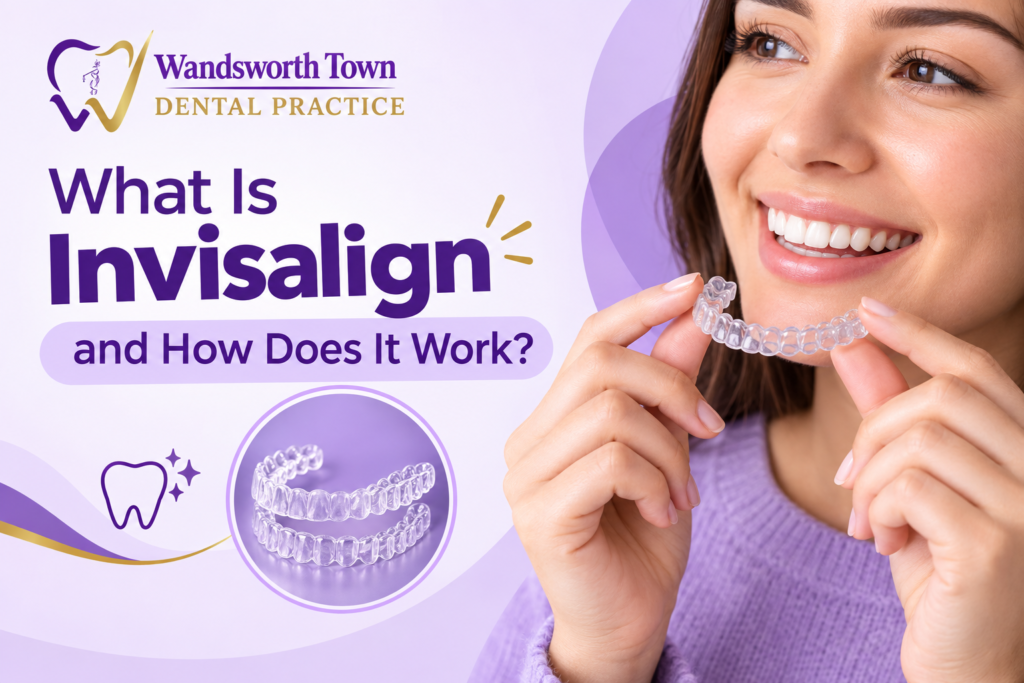
What Is Invisalign and How Does It Work? A Complete Guide
If you want straighter teeth without traditional metal braces, Invisalign may be a good option to discuss with your dentist. It uses a series of clear, removable aligners to gently move your teeth into the planned position.
At Wandsworth Town Dental Practice, your dental team can check your teeth and discuss whether clear aligners are right for you.
What Is Invisalign?
Invisalign is a clear aligner treatment that can help straighten teeth and improve some bite problems. Instead of metal brackets and wires, it uses a series of clear, custom-made aligners.
Each aligner fits over your teeth and gently guides them into position. As you move to the next aligner, your teeth gradually move towards their planned positions.
Because the aligners are clear, many people find them less noticeable than traditional braces.
How Does Invisalign Work?
Invisalign treatment follows a planned process. First, your dentist or orthodontic professional will check your teeth, gums, bite, and overall oral health.
If clear aligners are suitable for you, the treatment may involve the following steps:
1. Dental Assessment
Your dentist will check your teeth and bite. They may also take photos, digital scans, X-rays, or other dental records if needed.
This assessment helps your dental team understand your orthodontic needs.
2. Treatment Planning
Your dentist creates an individual treatment plan based on your teeth and bite.
The plan shows how your teeth should move during treatment. Your dentist can also explain the treatment process and what you need to do during your Invisalign journey.
3. Custom Clear Aligners
Your dentist designs the aligners to fit your teeth and treatment plan.
Each aligner gently guides specific teeth into position. You usually move through a series of aligners based on your dentist’s instructions.
4. Wearing Your Aligners
You should wear your Invisalign aligners for the amount of time recommended by your dental professional.
You usually remove your aligners when eating, drinking anything other than water, and cleaning your teeth. Put them back in after cleaning your teeth and the aligners.
Following your dentist’s instructions can help keep your treatment on track.
5. Regular Dental Reviews
Your dental team may arrange regular appointments to monitor your progress.
These reviews allow your dentist to check how your teeth are responding and make changes to your treatment plan if needed.
What Dental Problems Can Invisalign Help With?
Clear aligner treatment can help manage certain mild to moderate orthodontic concerns. Depending on your individual case, Invisalign may help with:
- Crowded teeth
- Gaps between teeth
- Certain cases of crooked teeth
- Some bite problems
- Teeth that have shifted over time
However, Invisalign may not suit everyone or every orthodontic problem. Your dentist will check your teeth and bite before recommending this treatment.
What Are the Benefits of Invisalign?
Many patients choose clear aligners because they offer several practical benefits.
Clear Appearance
The aligners are transparent, making them less noticeable than traditional braces.
Removable Design
You can remove the aligners when eating and cleaning your teeth, following your dentist’s instructions.
Easier Oral Hygiene
You can remove the aligners to brush and floss your teeth normally. Good oral hygiene remains important throughout your treatment.
Comfortable Everyday Use
Clear aligners do not use traditional metal brackets or wires. However, you may feel some pressure or mild discomfort when you start wearing a new aligner.
Personalised Treatment
Your aligners are create according to your individual treatment plan and dental needs.
How Long Does Invisalign Treatment Take?
The length of Invisalign treatment varies from person to person.
Your treatment time can depend on factors such as:
- The position of your teeth
- Your bite
- The complexity of your case
- How consistently you wear your aligners
- How your teeth respond to treatment
Your dentist can give you a more personalised estimate after assessing your teeth.
Is Invisalign Painful?
Invisalign treatment should not usually cause much pain. However, you may feel some pressure, tightness, or mild discomfort when you start wearing a new set of aligners.
This feeling usually comes from the gentle pressure that moves your teeth. If you have severe or ongoing pain, contact your dental team for advice.
Can I Eat While Wearing Invisalign?
You should generally remove your aligners before eating.
After eating, clean your teeth before putting the aligners back in. This can help reduce the build-up of food particles and plaque around your teeth.
You can usually drink water while wearing your aligners. Follow your dentist’s specific instructions about other drinks.
How Do You Clean Invisalign Aligners?
Keeping your aligners clean is an important part of treatment.
You can:
- Rinse your aligners regularly
- Clean them as recommended by your dental professional
- Brush your teeth before putting the aligners back in
- Keep your aligners in their case when you remove them
- Avoid exposing them to excessive heat
Your dental team can explain the most suitable cleaning routine for your aligners.
Who Can Have Invisalign?
Invisalign may be suitable for many teenagers and adults, but suitability depends on your individual dental needs.
Your dentist will consider factors such as your teeth, gums, bite, oral health, and the type of movement required.
If you have untreated dental problems, your dentist may recommend addressing them before starting orthodontic treatment.
Invisalign vs Traditional Braces
Both Invisalign and traditional braces can help straighten teeth, but they work differently.
Invisalign | Traditional Braces |
Uses clear removable aligners | Uses brackets and wires |
Less noticeable | More visible |
Aligners can be remove for eating and cleaning | Braces remain in place during treatment |
Requires consistent wear | Does not rely on removable appliances |
Suitable for selected orthodontic cases | Can treat a wide range of orthodontic problems |
Your dentist can help you understand which treatment options may be appropriate for your teeth and bite.
What Happens After Invisalign Treatment?
After your teeth reach their planned positions, your dentist may recommend retainers.
Retainers help maintain the position of your teeth after orthodontic treatment. Your dental professional will explain how and when to wear them.
Following your retainer instructions is important because teeth can naturally move over time.
Start Your Invisalign Journey in Wandsworth
If you are considering Invisalign in Wandsworth, the first step is a dental assessment. Your dental team can check your teeth, discuss your concerns, and explain whether clear aligner treatment may be suitable for you.
Wandsworth Town Dental Practice provides personalised dental care and can discuss available treatment options based on your individual needs.
Book an appointment today to discuss your smile and explore your orthodontic options.
Follow up Instagram and Facebook for more information.
Frequently Asked Questions About Invisalign
Is Invisalign better than braces?
Invisalign and traditional braces work in different ways and may suit different orthodontic needs. Your dentist can explain both options based on your individual needs.
How many hours a day should I wear Invisalign?
Your dentist will tell you how long to wear your aligners each day. Wearing them as advised can help you stay on track with your treatment plan.
Can I sleep with Invisalign?
Yes, patients generally wear their aligners while sleeping as part of their prescribed treatment schedule.
Can Invisalign fix crowded teeth?
Invisalign can help treat some cases of crowded teeth. However, your dentist will check how severe the crowding is and what causes it before recommending treatment.
Does Invisalign work for gaps between teeth?
Clear aligners can help close certain gaps between teeth. Suitability depends on the size, location, and cause of the gap.
Do I need retainers after Invisalign?
Your dentist may recommend retainers after treatment to help maintain your new tooth positions.