
Who Is Eligible for Dental Implants? A Complete Guide
Losing one or more teeth can affect your smile, eating, and confidence. Fortunately, dental implants can offer a long-term way to replace missing teeth. However, not everyone is suitable for dental implant treatment.
So, who can get dental implants? Your dentist will check your teeth, gums, jawbone, overall health, and treatment needs before recommending implants.
What Are Dental Implants?
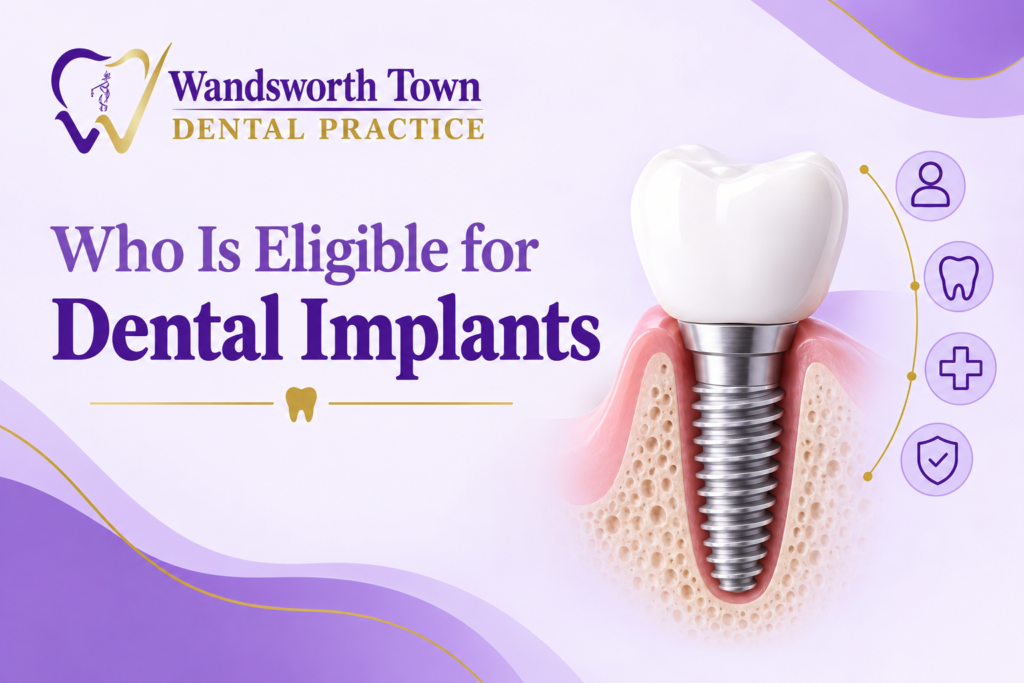
Dental implants are small posts that typically use titanium or another suitable material. A dentist places them into the jawbone. They act like artificial tooth roots and support a crown, bridge, or denture.
Unlike traditional removable dentures, implants stay firmly in place after treatment and healing.
Who Is Usually Eligible for Dental Implants?
Dental implants may be suitable for adults who:
- Have one or more teeth missing
- Have healthy gums or gums that can be treated
- Have sufficient jawbone to support a dental implant
- Maintain good oral hygiene
- Are willing to follow dental advice during treatment and healing
- Have realistic expectations about the treatment and results
However, eligibility depends on your individual circumstances. Your dentist will carry out a detailed assessment before treatment.
1. People With Missing Teeth
Dental implants can replace one or more missing teeth. They can also support bridges or dentures when several teeth are missing.
Your dentist can discuss the most suitable option based on the number and location of missing teeth.
2. People With Healthy Gums
Healthy gums are important for successful implant treatment. Gum disease can weaken the tissues that support your teeth and implants.
If you have gum disease, your dentist may treat it first and make sure it is under control before considering implants.
3. People With Sufficient Jawbone
Dental implants need enough healthy bone for support. When a tooth is missing for a long time, the jawbone can slowly lose volume.
If you do not have enough bone, your dentist may suggest a procedure such as bone grafting. However, not everyone needs this treatment.
4. People With Good Oral Hygiene
Good oral hygiene plays an important role before and after implant treatment.
You should be able to care for your teeth, gums, and implants by brushing regularly, cleaning between your teeth, and visiting your dentist for regular check-ups.
5. People Who Have Completed Dental Growth
Dentists usually consider implant treatment after the jaw has finished growing. Therefore, they usually recommend dental implants for adults rather than children or teenagers whose jaws are still growing.
Your dentist will assess your individual development and circumstances.
Can Smokers Have Dental Implants?
Smoking does not always prevent implant treatment. However, it can increase the risk of problems and slow down healing.
Your dentist may suggest stopping or reducing smoking before and during treatment. They can explain how smoking may affect your treatment and healing.
Can People With Diabetes Have Dental Implants?
Having diabetes does not automatically prevent implant treatment. However, good diabetes control is important because high blood sugar levels can affect healing and increase the risk of complications.
Your dentist may check your overall health and diabetes control before recommending treatment.
What If I Have Bone Loss?
Bone loss does not always mean you cannot have dental implants.
Your dentist may use dental X-rays or other scans to check the amount and quality of your jawbone. In some cases, your dentist may suggest additional treatment to improve the bone before placing an implant.
However, these treatments may not suit everyone and depend on your individual needs.
Who May Not Be Suitable for Dental Implants?
Some patients may need to wait before having implants or have other treatment first.
This may include people with:
- Active gum disease
- Poor oral hygiene
- Insufficient bone support
- Certain uncontrolled medical conditions
- Conditions or medicines that may affect healing
- Heavy smoking habits
- Unrealistic expectations about treatment
This does not always mean you cannot have implants. In some cases, improving your oral health or treating an underlying problem may make implant treatment possible.
How Does a Dentist Check Implant Eligibility?
Your dentist will usually check your dental and medical history and examine your teeth and gums.
They may also use dental scans to check your jawbone and nearby structures.
Your dentist will then discuss:
- The condition of your teeth and gums
- Available bone support
- Your general health
- Your oral hygiene
- Possible treatment options
- Expected treatment stages
- Potential risks and benefits
- The likely maintenance required
This assessment helps your dental team decide if dental implants are suitable for you.
How Long Do Dental Implants Last?
Dental implants can offer a long-term way to replace missing teeth when they heal well with the jawbone and receive proper care. However, the implant and the crown or other restoration may have different lifespans.
Regular dental check-ups, good oral hygiene, and professional care can help keep your implant and nearby tissues healthy.
Are Dental Implants Right for You?
The answer depends on your oral and overall health. A dentist cannot confirm your eligibility based only on symptoms or an online checklist.
If you have missing teeth and are thinking about implants, a dental check-up can help determine if they are right for you. Your dentist can also explain other options if implants are not suitable.
Conclusion
Who is eligible for dental implants? People with missing teeth may be suitable for dental implants if they have healthy gums, enough jawbone, good oral hygiene, and suitable overall health. However, every patient is different.
At Wandsworth Town Dental Practice, a dental assessment can help determine if dental implants are suitable for you and which treatment options may be available.
Follow up Instagram and Facebook for more information.
Frequently Asked Questions
Can anyone get dental implants?
Not everyone is suitable for dental implants. Your dentist will check your oral health, jawbone, overall health, and other factors before recommending treatment.Lorem ipsum dolor sit amet, consectetur adipiscing elit. Ut elit tellus, luctus nec ullamcorper mattis, pulvinar dapibus leo.
How old do you have to be for dental implants?
Dentists usually consider implants after the jaw has finished growing. Your dentist can check your development and decide if implants are suitable for you.
Can I get implants if I have gum disease?
You usually need to treat and control active gum disease before your dentist considers implant treatment.
Can I get dental implants if I have bone loss?
Possibly. Your dentist will check your jawbone and may suggest additional treatment if needed.
Are dental implants suitable for smokers?
Smoking can increase the risk of problems and slow healing. Your dentist can explain the risks and suggest steps to take before treatment.