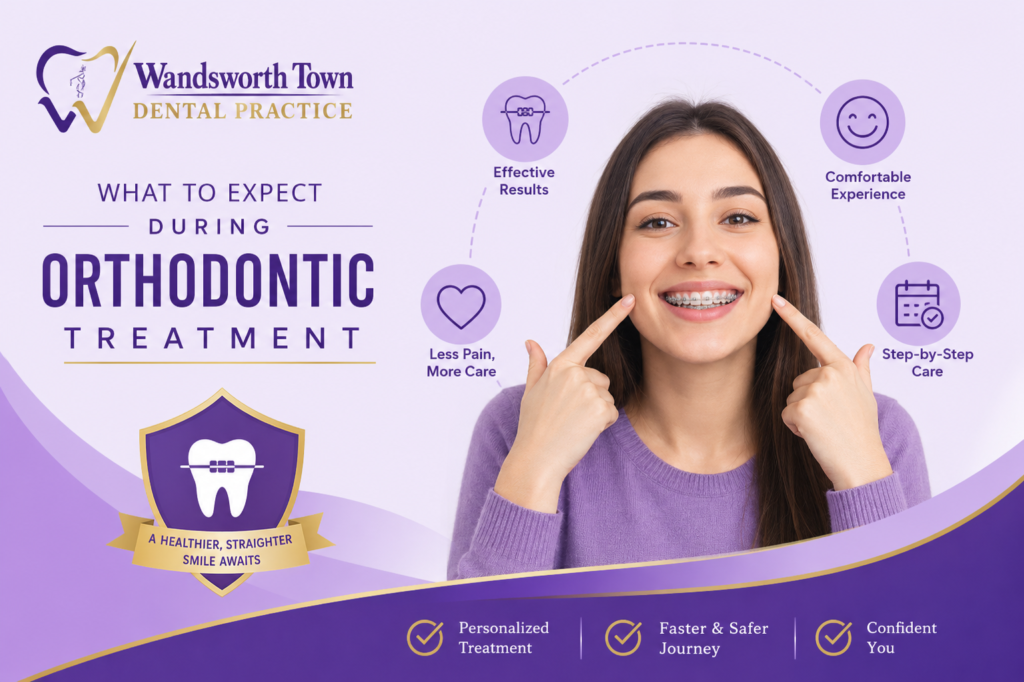
What to Expect During Orthodontic Treatment
Starting orthodontic treatment can feel exciting, but you may also have questions about what will happen along the way. Whether you are considering braces, clear aligners, or another orthodontic option, knowing what to expect can make the process easier and more comfortable.
Orthodontic treatment helps improve the position of your teeth and, in some cases, your bite. A straighter smile can also make it easier to clean your teeth and maintain good oral health.
At Wandsworth Town Dental Practice, we believe patients should understand their treatment before it begins. Here is what you can generally expect during orthodontic treatment.
1. Your Initial Orthodontic Consultation
Your treatment usually begins with a consultation. During this appointment, your dentist or orthodontic professional will examine your teeth, gums, bite, and overall oral health.
They may also take photographs, dental X-rays, or digital scans to understand the position of your teeth and jaw.
Your dental professional will discuss your concerns and explain which treatment options may suit your needs. This is also a good time to ask questions about treatment length, costs, appointments, and expected results.
2. Creating Your Treatment Plan
After your assessment, your dental professional will create a personalised treatment plan.
Your plan may depend on:
- The position of your teeth
- Your bite and jaw alignment
- Your age and oral health
- The type of orthodontic treatment needed
- Your treatment goals
- How your teeth respond to treatment
You may be offered traditional fixed braces, clear aligners, or another suitable option.
Your dentist will explain how the recommended treatment works and what you can expect throughout the process.
3. Getting Your Braces or Aligners
Once you decide to start treatment, your orthodontic appliance will be fitted or provided.
Fixed Braces
If you have fixed braces, small brackets are attached to your teeth and connected with wires. These wires apply gentle pressure to gradually move your teeth into better positions.
Clear Aligners
Clear aligners are removable trays designed to gradually move your teeth. You usually need to wear them for most of the day and remove them when eating and cleaning your teeth, following your dental professional’s instructions.
Your dental team will explain how to use and care for your braces or aligners properly.
4. You May Feel Some Discomfort
It is normal to experience some pressure or mild discomfort when orthodontic treatment begins or after adjustments.
You may notice that your teeth feel slightly tender as they start moving. Your cheeks, lips, or tongue may also take some time to get used to braces.
This discomfort is usually temporary. If you experience severe or ongoing pain, speak with your dental team for advice.
5. Regular Orthodontic Appointments
Orthodontic treatment requires regular check-ups. These appointments allow your dental professional to monitor your progress and make adjustments when needed.
For fixed braces, your wires or other components may be adjusted to continue guiding your teeth.
For clear aligners, you may receive new sets of aligners as your teeth gradually move.
Regular appointments are important because they help your dental team check that your treatment is progressing as planned.
6. Good Oral Hygiene Becomes Even More Important
Keeping your teeth clean is an important part of orthodontic treatment.
Braces can create additional areas where food and plaque can collect. This means you need to take extra care when brushing and cleaning between your teeth.
Your dental team may recommend:
- Brushing twice a day with fluoride toothpaste
- Cleaning carefully around brackets and wires
- Using interdental brushes or other cleaning aids
- Cleaning your aligners as instructed
- Attending regular dental check-ups
Good oral hygiene can help reduce the risk of tooth decay, gum problems, and staining during treatment.
7. You May Need to Adjust Your Diet
If you have fixed braces, you may need to avoid or limit hard, sticky, and chewy foods. These foods can damage brackets or wires.
You may find it easier to choose softer foods, particularly during the first few days after an adjustment.
If you wear clear aligners, you normally remove them before eating. However, you should follow your dentist’s instructions about what you can drink while wearing them.
8. Your Teeth Will Gradually Move
Orthodontic treatment does not usually produce instant results. Your teeth move gradually over time as controlled pressure guides them into new positions.
The length of treatment varies from person to person. Some patients may complete treatment relatively quickly, while others may need longer treatment.
Your dental professional can give you an estimated treatment time based on your individual needs.
Following your treatment instructions and attending your appointments can help keep your treatment on track.
9. What Happens If You Have a Problem?
Sometimes orthodontic appliances can cause problems.
For example, a wire may become loose or a bracket may come away from a tooth. Clear aligners can also become lost or damaged.
If something goes wrong, contact your dental team for advice. Do not try to repair orthodontic appliances yourself unless your dental professional has specifically instructed you to do so.
Getting advice early can help prevent unnecessary delays in treatment.
10. Finishing Your Orthodontic Treatment
Once your teeth have reached their planned positions, your active orthodontic treatment will come to an end.
However, this does not mean your teeth no longer need support.
You will usually need to wear a retainer to help keep your teeth in their new positions. Your dental professional will explain how often you should wear it and how to care for it.
Wearing your retainer as advised is an important part of maintaining your results.
How Can You Make Orthodontic Treatment Easier?
A few simple habits can help you have a smoother treatment experience:
- Follow your dentist’s instructions carefully.
- Keep your teeth and orthodontic appliances clean.
- Attend all scheduled appointments.
- Avoid foods that could damage fixed braces.
- Wear clear aligners for the recommended amount of time.
- Look after your retainers after treatment.
- Contact your dental team if you have concerns.
Remember that every orthodontic treatment plan is different. Your dental professional can provide advice based on your teeth, bite, oral health, and treatment goals.
Conclusion
Knowing what to expect during orthodontic treatment can help you feel more prepared and confident. From your first consultation and treatment planning to regular appointments and wearing a retainer, each stage plays an important role in achieving a healthier, straighter smile.
If you are considering orthodontic treatment, speak with a dental professional to discuss your options and find out which approach may be suitable for your needs. Wandsworth Town Dental Practice can help you understand the treatment process and the care required throughout your orthodontic journey.
Follow up Instagram and Facebook for more information.
Frequently Asked Questions
Is orthodontic treatment painful?
Orthodontic treatment may cause mild pressure or tenderness, especially when treatment starts or braces are adjusted. This usually improves as your mouth gets used to the changes.
How long does orthodontic treatment take?
Treatment time varies depending on your individual needs and the type of orthodontic treatment you receive. Your dental professional can provide an estimated timeframe during your consultation.
Can I eat normally with braces?
You can eat many foods with braces, but you may need to avoid hard, sticky, and chewy foods that could damage the appliance. Your dental team can give you specific dietary advice.
How often do I need orthodontic appointments?
Your appointments will depend on your treatment plan. Regular visits allow your dental professional to monitor tooth movement and make adjustments when needed.
Do I need a retainer after orthodontic treatment?
In many cases, retainers are recommended after active orthodontic treatment. They help maintain your teeth in their new positions and reduce the risk of unwanted tooth movement.
Can I play sports while wearing braces?
You can generally continue many activities during orthodontic treatment. If you play contact sports, ask your dental professional about using a suitable mouthguard to help protect your teeth and orthodontic appliance.