
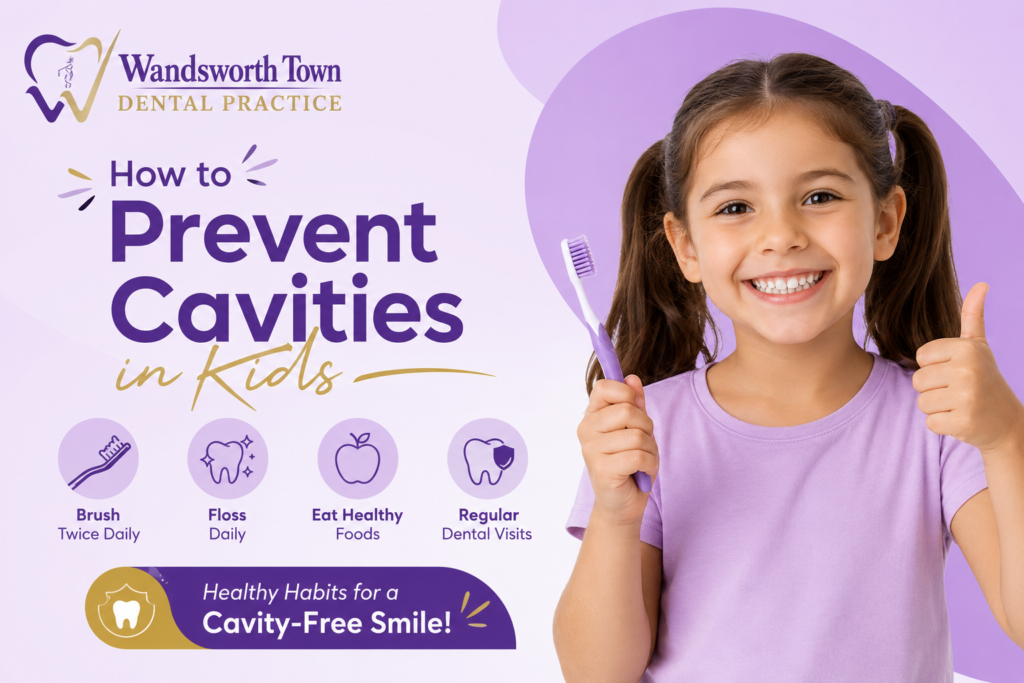
How to Prevent Cavities in Kids: 10 Simple Tips for Healthy Teeth
Cavities are one of the most common dental problems in children. They can cause toothache, sensitivity, difficulty eating, and discomfort if left untreated. The good news is that many childhood cavities can be prevented with good oral hygiene, healthy eating habits, and regular dental visits.
For parents looking after their child’s smile, understanding how to prevent cavities in kids can help protect their teeth and support good oral health as they grow.
What Causes Cavities in Children?
Cavities develop when bacteria in the mouth feed on sugars and produce acids that gradually weaken the tooth enamel. Frequent sugary snacks and drinks can increase the risk of tooth decay.
Children may be more likely to develop cavities because they are still learning how to brush properly and may consume foods or drinks that contain added sugar.
10 Ways to Prevent Cavities in Kids
1. Start Brushing Early
Good oral care should begin as soon as your child’s first tooth appears. Parents should help young children brush their teeth until they have the skills to do it properly on their own.
Brush twice a day using fluoride toothpaste suitable for your child’s age.
2. Teach Children to Brush Properly
Brushing should cover all tooth surfaces, including the front, back, and chewing surfaces. Encourage your child to brush gently for around two minutes.
Make brushing fun by using a timer, brushing together, or allowing your child to choose their toothbrush.
3. Use Fluoride Toothpaste
Fluoride helps strengthen tooth enamel and can help protect teeth from decay. Use an age-appropriate amount of fluoride toothpaste and encourage your child to spit it out after brushing rather than rinsing immediately.
Your dentist can advise you on the right fluoride toothpaste and amount for your child.
4. Limit Sugary Foods and Drinks
Frequent sugar exposure can increase the risk of cavities. Try to limit sweets, chocolate, biscuits, cakes, sugary cereals, fizzy drinks, and other foods with added sugar.
Instead, offer healthier snacks such as fruit, vegetables, cheese, or plain yoghurt.
5. Choose Water Between Meals
Water is a simple choice for keeping children hydrated between meals. It does not contain the added sugar found in many soft drinks and fruit juices.
Encouraging children to drink water regularly can support their overall oral health.
6. Avoid Frequent Snacking
It is not only the amount of sugar children eat that matters. How often their teeth are exposed to sugar is also important.
Try to keep sugary foods and drinks to mealtimes rather than allowing children to snack on them throughout the day.
7. Help Children Clean Between Their Teeth
As children grow, food and plaque can build up between teeth where a toothbrush cannot reach easily. Cleaning between the teeth can help remove plaque from these areas.
Ask your dentist when your child should start using floss or another suitable interdental cleaning method.
8. Do Not Put Children to Bed With Sugary Drinks
Giving a child a bottle or cup containing sugary drinks before bed can increase the risk of tooth decay. When teeth are exposed to sugar for long periods, bacteria can produce acids that damage enamel.
Water is generally a better choice if your child needs a drink at bedtime.
9. Schedule Regular Dental Check-Ups
Regular dental visits allow your dentist to monitor your child’s teeth and identify early signs of tooth decay. These appointments also give parents an opportunity to ask questions about brushing, fluoride, diet, and other aspects of children’s oral health.
Early dental visits can also help children become comfortable with visiting the dentist.
10. Lead by Example
Children often copy their parents. Make brushing part of your family’s daily routine and show your child that looking after your teeth is important.
Brushing together can make oral care easier and help your child develop healthy habits that can last into adulthood.
Can Baby Teeth Get Cavities?
Yes. Baby teeth can develop cavities even though they eventually fall out. Healthy baby teeth help children chew food, speak clearly, and maintain space for permanent teeth.
Untreated decay in baby teeth can cause pain and may affect a child’s comfort and oral health. For this reason, baby teeth should be cared for just as carefully as permanent teeth.
Signs Your Child May Have a Cavity
Watch for possible signs of tooth decay, including:
- White, brown, or dark spots on the teeth
- Tooth sensitivity
- Toothache or pain
- Pain when eating or drinking
- Avoiding certain foods
- Swelling around a tooth
- Bad breath that does not improve with brushing
If you notice any of these signs, arrange a dental appointment so your child can be assessed.
When Should Children Visit the Dentist?
Children should have regular dental check-ups as recommended by their dentist. Starting dental visits early helps the dentist monitor tooth development and identify potential problems before they become more serious.
It also helps children become familiar with the dental environment and develop a positive attitude towards dental care.
How Parents Can Make Dental Care Easier
Creating a consistent routine can make oral care easier for both parents and children. Try to brush at the same times every day and make the process positive rather than stressful.
Praise your child for good brushing habits and explain why healthy teeth are important. Avoid using sweets as a reward, as this can encourage unhealthy eating habits.
Protect Your Child’s Smile With Good Dental Habits
Preventing cavities in kids starts with simple daily habits. Brushing twice a day with fluoride toothpaste, limiting sugary foods and drinks, cleaning between teeth, drinking water, and attending regular dental check-ups can all help reduce the risk of tooth decay.
If you are concerned about your child’s teeth or want advice on preventing cavities, speak with your dental team at Wandsworth Town Dental Practice. Professional guidance can help you create an oral care routine that suits your child’s age and needs.
Follow up Instagram and Facebook for more information.