
Root Canal Recovery: What to Expect Each Day
A root canal treatment can save a damaged or infected tooth and help you return to normal oral health. However, many patients wonder what happens after the procedure: How long does root canal recovery take? What should you eat? Is pain normal? When can you return to work?
The good news is that most people recover well after a root canal. You may experience some tenderness or sensitivity for a few days, but this usually improves gradually.
In this guide, Wandsworth Town Dental Practice explains what you can expect during root canal recovery, day by day, and how to care for your tooth while it heals.
What Is a Root Canal Treatment?
A root canal treatment is a dental procedure used to treat infection or inflammation inside a tooth.
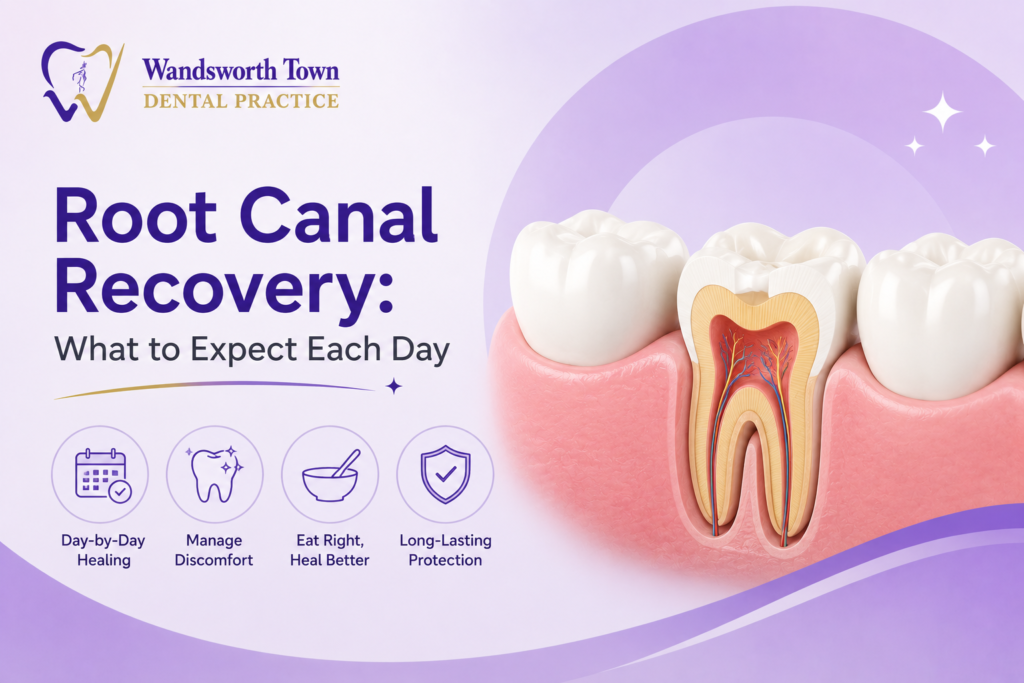
Inside every tooth is a soft area called the dental pulp, which contains nerves and blood vessels. If deep decay, cracks, trauma, or repeated dental treatment damages the pulp, bacteria can enter and cause infection.
During a root canal, your dentist removes the infected or damaged pulp, cleans and disinfects the root canals, and seals the tooth. A filling or dental crown may then be used to protect the tooth and restore its function.
The aim is to remove infection, relieve pain, and save your natural tooth.
Root Canal Recovery: What to Expect Each Day
Every patient heals differently. Your recovery may depend on the condition of your tooth, the complexity of the treatment, and whether you need additional restoration.
Here is a general guide to what you may experience.
Day 1: Immediately After Root Canal Treatment
On the first day, your mouth may still feel numb because of the local anaesthetic. Avoid eating until the numbness has mostly disappeared so you do not accidentally bite your cheek, tongue, or lip.
Once the numbness wears off, you may notice:
- Mild tenderness around the treated tooth
- Sensitivity when biting
- Slight jaw discomfort
- A feeling that the tooth is different from your other teeth
This is generally normal after treatment.
Your dentist may recommend suitable pain relief if necessary. Follow the instructions provided by your dental professional rather than taking more medication than recommended.
Day 2: Mild Discomfort May Continue
By the second day, the anaesthetic will have completely worn off. You may still experience mild soreness, particularly when chewing.
Try to:
- Eat softer foods if chewing feels uncomfortable
- Avoid biting hard foods directly on the treated tooth
- Keep brushing and flossing your teeth gently
- Follow your dentist’s aftercare instructions
You should generally notice that the discomfort begins to settle rather than become progressively worse.
Day 3: Recovery Should Start Feeling Easier
For many patients, tenderness starts improving around the third day.
You may still notice slight sensitivity when putting pressure on the tooth, especially if the area was significantly inflamed before treatment.
Continue maintaining good oral hygiene and avoid unnecessary pressure on the treated tooth until your dentist confirms that it is safe to use normally.
If you have a temporary filling, take extra care when eating because the tooth may still require a permanent restoration.
Days 4–5: Gradual Return to Normal
At this stage, most patients feel considerably more comfortable.
You can usually begin returning to your normal routine if you feel well. However, your treated tooth may still need protection.
If your dentist has recommended a dental crown, make sure you attend your follow-up appointment. A root-treated tooth can require additional protection, particularly when a significant amount of tooth structure has been lost.
Avoid delaying your final restoration, as this can increase the risk of the tooth becoming damaged.
Days 6–7: Getting Back to Normal
By the end of the first week, many patients have little or no discomfort.
You should be able to eat and brush normally, provided your dentist has not given you different instructions.
If pain or swelling is continuing, becoming stronger, or interfering with your daily activities, contact your dentist for advice.
Remember, recovery times vary. Some teeth may take longer to settle, particularly when there was a significant infection or inflammation before treatment.
Is Pain Normal After a Root Canal?
Some discomfort after root canal treatment can be normal. The tissues around the treated tooth can remain slightly inflamed for a short period after the procedure.
However, severe, persistent, or worsening pain should not be ignored.
Contact your dentist if you experience:
- Increasing pain after several days
- Significant swelling
- Fever or feeling unwell
- Difficulty swallowing or breathing
- A tooth that feels unusually high when you bite
- Symptoms that are not improving as expected
Your dentist can assess the tooth and determine whether further treatment is required.
What Can You Eat After a Root Canal?
Choosing softer foods can make the first few days more comfortable.
Good options may include:
- Scrambled eggs
- Pasta
- Yoghurt
- Mashed potatoes
- Soft vegetables
- Smooth soups
- Oatmeal
- Soft rice dishes
Try to avoid very hard, sticky, or crunchy foods around the treated tooth until your dentist advises that it is safe.
If you have received a temporary filling or are waiting for a crown, protecting the tooth from excessive pressure is particularly important.
Can You Brush Your Teeth After a Root Canal?
Yes. Maintaining good oral hygiene remains important after root canal treatment.
Brush your teeth gently with a fluoride toothpaste and clean between your teeth as usual, unless your dentist has advised otherwise.
Good oral hygiene helps keep the surrounding teeth and gums healthy while your treated tooth recovers.
Do not avoid brushing simply because the tooth feels slightly tender.
When Can You Return to Work After a Root Canal?
Most people can return to their normal daily activities shortly after a root canal, especially if the procedure was straightforward.
You may want to take it easy for the rest of the day if your mouth feels sore or you feel tired after treatment.
If your job involves physical activity, speaking for long periods, or other demands that make you uncomfortable, ask your dentist when it is appropriate to return.
Why Does a Root-Treated Tooth Need a Crown?
A root canal removes infected pulp and helps preserve the natural tooth. However, the tooth may have lost a significant amount of structure because of decay, cracks, or the treatment itself.
Depending on the tooth and its condition, your dentist may recommend a dental crown to provide additional protection.
A crown can help restore the tooth’s strength, appearance, and function.
Your dentist will assess your individual situation and explain whether a crown or another restoration is appropriate.
How to Speed Up Root Canal Recovery
You cannot make the healing process happen instantly, but you can support a smoother recovery by following your dentist’s instructions.
1. Follow Your Dentist’s Advice
Your dentist understands the condition of your tooth and can provide personalised aftercare instructions.
2. Avoid Chewing Hard Foods on the Tooth
Protect the treated tooth, particularly while a temporary restoration is in place.
3. Maintain Good Oral Hygiene
Continue brushing and cleaning between your teeth to reduce the risk of further dental problems.
4. Attend Your Follow-Up Appointment
If a permanent filling, crown, or additional treatment is recommended, complete the treatment as advised.
5. Pay Attention to Unusual Symptoms
Some tenderness can be expected, but increasing pain, swelling, or other concerning symptoms should be checked by your dentist.
How Long Does Root Canal Recovery Take?
For many patients, the initial soreness improves within a few days, and the tooth feels much more comfortable within about a week.
However, there is no single recovery time that applies to everyone.
A tooth with a significant infection may take longer to settle. Your dentist can give you a better idea of what to expect based on your individual treatment.
The important thing is that symptoms should generally improve rather than progressively worsen.
When Should You Contact Your Dentist?
You should contact your dentist if you are concerned about your recovery or if symptoms are getting worse.
Seek professional advice if you experience:
- Severe or increasing tooth pain
- Persistent swelling
- Fever
- Difficulty opening your mouth
- Problems swallowing or breathing
- A damaged or lost temporary filling
- Symptoms that continue without improvement
Prompt assessment can help identify problems early and prevent complications.
Root Canal Recovery: The Bottom Line
Root canal recovery is usually straightforward, and many patients return to their normal routine within a short period. Mild tenderness during the first few days can be expected, while significant or worsening symptoms should be assessed by a dental professional.
Taking care of your tooth, maintaining good oral hygiene, choosing suitable foods, and attending recommended follow-up appointments can help support a smooth recovery.
If you are experiencing tooth pain or have been advised that you may need root canal treatment, Wandsworth Town Dental Practice can assess your dental health and discuss the most appropriate treatment options for you.